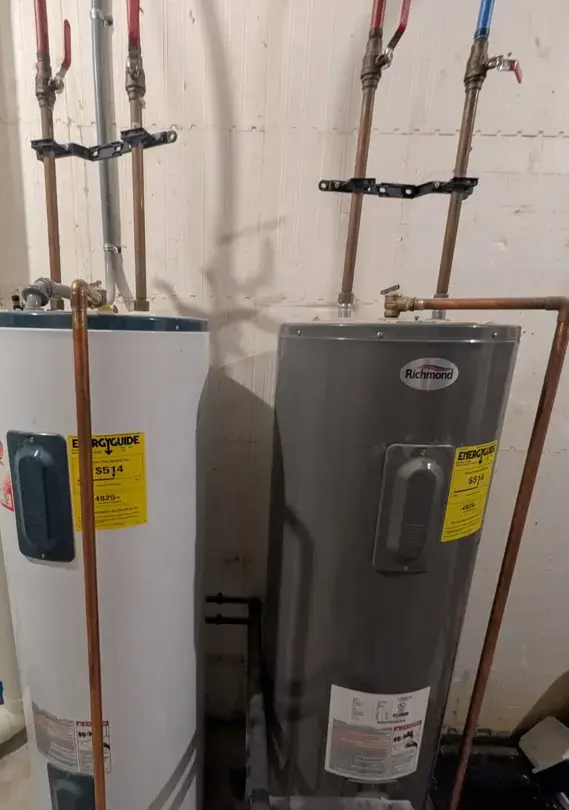
A water heater tank holds a lot of water, and when it fails the water goes looking for the lowest, easiest path. In a ranch home, that path often runs from the utility room into the hallway, the kitchen and the bedrooms. This post follows the water and explains what the restoration team removes and dries.
Key takeaways
- A failed tank can release its whole load into a utility room, and the water spreads on a single level ranch floor plan.
- Shut off the water supply to the heater, and the power or gas as well, before anything else.
- Flooring, baseboards, the base of the walls and cabinets nearby are the usual casualties.
- The extraction crew removes the water first, then the restoration team removes materials that cannot be dried.
- Drying is confirmed by moisture readings in the walls, the framing and the subfloor.
Ranch homes in Ralston and how water moves in them
The median home in Ralston was built in 1972. Of its 2,987 housing units, 702 were built in the 1960s and 655 in the 1970s.
Neighborhoods such as Bay Meadows, with mainly single family ranch homes near Oak Park, Ralston Park and Bay Meadows Park, and the midcentury ranch style streets of Mockingbird Hills, show how common that era is.
Why a ranch floor plan matters
A ranch has its main living space on one level. Water from a utility room is not stopped by a stair or a landing, so it can reach the hallway and the rooms beside it.
A heater near a kitchen or laundry area puts cabinets, appliances and flooring in the path.
What this means for a leak
Older ranch homes were built with a mix of flooring, cabinets and finishes, and many have been updated since. Water finds each of them differently, so the restoration team checks the floor, the wall base and the cabinet base room by room.
The first minutes after a tank fails
A tank that leaks slowly may only drip. A tank that fails suddenly empties in minutes, and the first minutes decide how far the water travels.
A pilot light or burner that sits in water is a hazard of its own, so keep away from a gas heater with water around it and call the utility if there is any gas smell.
- Shut the cold water supply valve on the pipe above the tank.
- Turn off the power at the panel for an electric heater, or the gas control for a gas heater.
- Do not step into standing water near an electric heater or an outlet.
- Move rugs, boxes and small furniture off the wet floor.
- Photograph the heater, the water and the damage before cleanup.
What gets wet
Water spreads out in a thin sheet, and that sheet reaches more than people expect. It also wicks upward into anything porous.
Floors and flooring
- Vinyl and laminate flooring that lifts or swells at the seams.
- Carpet and pad that soak up water and hold it against the subfloor.
- Hardwood that cups or buckles when water gets underneath.
Walls and cabinets
- Baseboards and the bottom of drywall, which wick water up.
- Cabinet bases made of particleboard that swell.
- Insulation inside the wall cavity next to the utility room.
What the restoration team removes
The work starts with the standing water. The extraction crew pumps or vacuums it out and pulls water from carpet and pad where possible. The water extraction page describes the process.
Next the team decides what can be dried in place and what has to go. Clean water from a tank is the best case, but it still ruins some materials if it sits.
- Swollen laminate and buckled hardwood that cannot be dried flat.
- Soaked carpet pad and, when needed, the carpet itself.
- Wet baseboards and the lower part of soaked drywall.
- Wet insulation inside the wall next to the heater.
Where the water goes in a ranch layout
Water finds the lowest spot and spreads out from there. In a single level home, a utility room off the kitchen or hallway drains into the neighboring rooms across the floor.
Rooms with carpet take in water fast and hold it, and rooms with hard flooring carry it farther before it soaks in.
- Hallways act as channels and carry water toward the bedrooms.
- Doorways and thresholds let water pass between rooms.
- Cabinets in a nearby kitchen soak up water through their bases.
- Closet floors and the bottoms of closet walls take on water behind the doors.
- Appliances such as a washer or dryer can sit in the path.
Drying the home
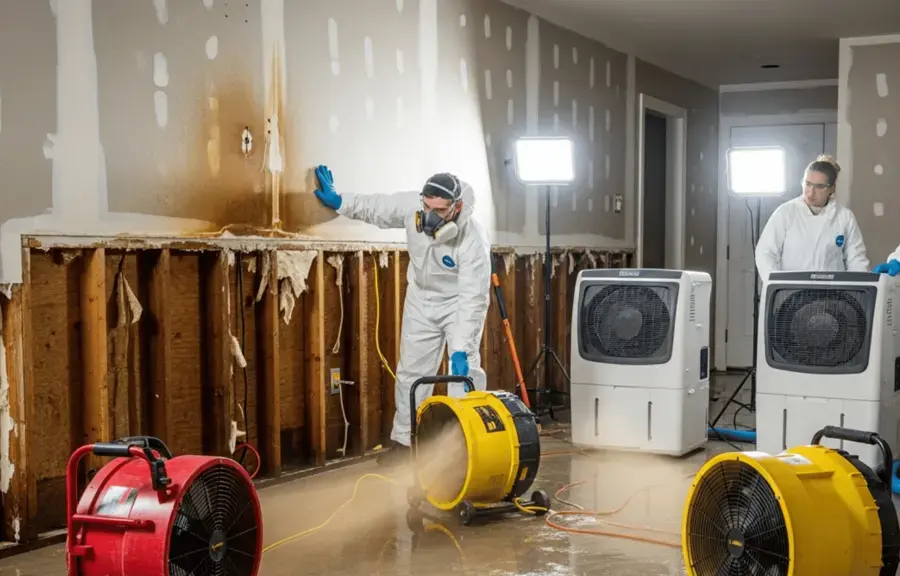
After removal, the drying crew sets air movers and dehumidifiers. They are placed to push air under cabinets, along baseboards and across the subfloor.
Moisture meters and a thermal camera check the walls and floor at each visit, and the readings are logged. The job is finished when the numbers match the drying goal.
Letting wet materials stay in place invites odor and mold, so the first day matters. For the full service, see water heater leak cleanup.
After the cleanup
A plumber has to replace the failed tank. The restoration team can keep drying while the heater is swapped out.
In Ralston, 1,922 households heat with utility gas and 937 with electricity. Either way, the shutoff steps above apply.
For the rest of the services in town, see water damage restoration in Ralston. Homeowners on the Iowa side can read about water heater leak cleanup in Council Bluffs.
- Keep the old tank and its label for the insurer.
- Ask the plumber to check the shutoff valve and the supply connections.
- Save the drying logs and the scope of work.
- Look at the policy for water damage from a sudden failure.