24/7 water removal
Emergency Water Extraction in Council Bluffs, IA
Standing water does its worst damage while it sits. The extraction crew pulls it out with truck-mounted equipment so the drying can start on wet material, not on a puddle.
(888) 599-2961Speak with Council Bluffs 24/7 dispatch- IICRC S500 drying standard
- Truck-mounted extraction
- Daily moisture readings
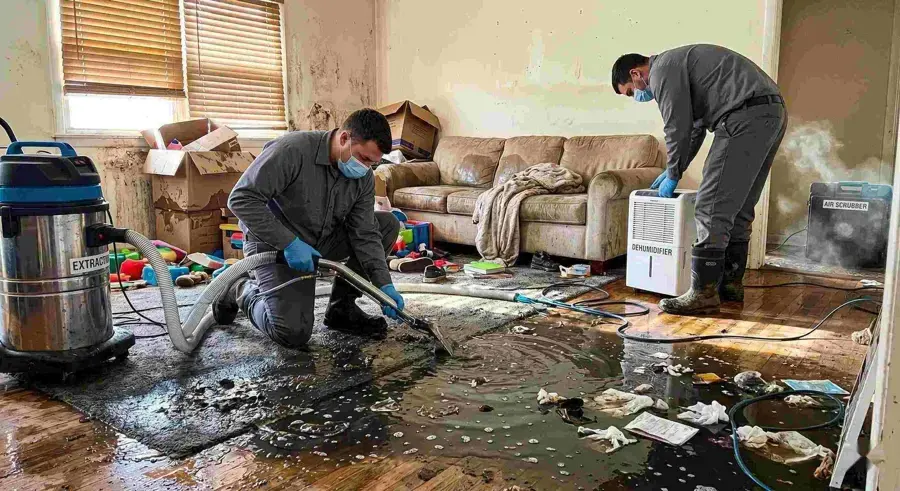
First movePull the water
EquipmentTruck-mounted extraction
Drying standardIICRC S500
Availability24/7, every day
Every water loss in Council Bluffs starts the same way: get the water out. A basement on the West End floodplain, a split pipe in a bluff-side ranch, a washer hose in a newer home near Lake Manawa: until the standing water leaves the building, air movers and dehumidifiers cannot do their job. The extraction crew removes the bulk water first, because extraction pulls far more water out of a floor in one pass than evaporation can in days.
How emergency water extraction is handled in Council Bluffs
- 1
Map the moisture
The tech who does the walkthrough traces the wet edge with pinless meters and thermal imaging.
- 2
Pump and extract
Portable pumps take deep water down, then truck-mounted extraction pulls the rest from floors and carpet.
- 3
Sort materials
Pad, laminate and anything Category 3 is pulled and photographed before removal.
- 4
Hand off to drying
Air movers and LGR dehumidifiers go in, and readings start the same visit.
What does emergency water extraction cost in Council Bluffs, IA?
In Council Bluffs, IA, emergency water extraction typically runs $300 to $2,500, depending on how deep the water is, how many rooms it covers, whether it soaked carpet and pad, and the water category.
Small area
$300 to $800
- One room, clean water
- Carpet extraction
- Moisture check
Basement or several rooms
$800 to $1,800
- Pumping plus extraction
- Pad removal
- Moisture mapping
Deep or contaminated
$1,800 to $2,500+
- Portable pumps
- Category 3 handling
- Disposal of porous flooring
For a closer planning number, try the water damage cost calculator. A firm figure comes after the walkthrough and moisture map.
Why extraction comes before drying
Water that sits on a floor keeps wicking. It climbs drywall, soaks the bottom plate of the wall and moves under vinyl and laminate. Pulling it out fast changes how much material has to come out later.
- Truck-mounted units move the water out of the house instead of into a bucket in the next room
- Weighted extraction tools press water out of carpet and pad
- Portable pumps handle deep water in an unfinished basement
- Moisture mapping marks how far the water traveled before any fans go down
What happens to carpet, pad and flooring
Carpet in a clean water loss can often be extracted and dried in place. Pad usually cannot, because it holds water like a sponge and is cheap to replace. Laminate and engineered flooring often trap water underneath and come up. In a Category 3 loss, sewage or storm water, every porous floor covering that the water touched comes out. The tech who does the walkthrough sorts this out room by room, with photos taken before anything is removed.
The drying goal is a number
The restoration team compares readings in the wet area against a dry reference spot in the same building. Equipment comes out when the wet material sits within 2 to 4 points of that reference, not when the surface feels dry.
After the water is out
Once extraction is done, the job moves to structural drying: air movers sized to the room and LGR dehumidifiers pulling the moisture back out of the air. If the water came from a failed sump pump or a flooded basement, the source gets dealt with first so the room does not refill. For flood safety basics before anyone wades in, see Ready.gov flood guidance, and for storm and river outlooks for the Council Bluffs area, the National Weather Service Omaha/Valley office.
Coverage
Emergency Water Extraction across Council Bluffs and nearby towns
The Council Bluffs restoration crew covers the river bottoms and the bluffs alike, from the West End and Lake Manawa to the Fairmount Park hills, plus Carter Lake, Crescent, Treynor, Underwood, McClelland, Neola and the rest of Pottawattamie County. ZIP codes 51501, 51502 and 51503.
See every area and ZIP coveredRelated water damage services
Questions
Emergency Water Extraction questions in Council Bluffs
How fast does standing water need to come out?
As fast as possible. Drywall and wood keep absorbing water while it sits, and after 24 to 48 hours of wet conditions mold growth becomes a real risk. Extraction is the step that limits how much material has to be removed later.
Can a wet-vac do the same job?
A shop vacuum helps with a small spill, but it holds a few gallons at a time and cannot pull water out of carpet pad or from under flooring. Truck-mounted and portable extraction units move far more water and leave the floor much drier before drying equipment goes in.
Will my carpet be saved?
In a clean water loss the carpet itself is often extracted and dried in place, while the pad is usually replaced. If the water was sewage or storm runoff, carpet and pad both come out because they cannot be cleaned to a safe level.
Do I need to move furniture first?
Lift what you safely can off the wet floor and put foil or blocks under furniture legs so stain does not bleed into carpet. Heavy pieces can wait for the extraction crew.
Is extraction covered by insurance?
Extraction after a sudden, accidental loss such as a burst pipe is commonly part of a covered claim, while rising surface water usually falls under flood coverage. Coverage depends on the policy, so it is worth checking with your own insurer.
What happens after extraction?
Drying equipment goes in, readings are taken daily, and materials that cannot be dried are removed and documented. Extraction is step one of the dry-out, not the whole job.
24/7 emergency dispatch
Emergency Water Extraction in Council Bluffs, around the clock
Standing water keeps moving into wood, drywall and insulation. The restoration team extracts it, dries the structure to the IICRC S500 standard and documents every step for the claim.
(888) 599-2961Get a Council Bluffs restoration pro on the phone
Council Bluffs, IA · Find us on Google