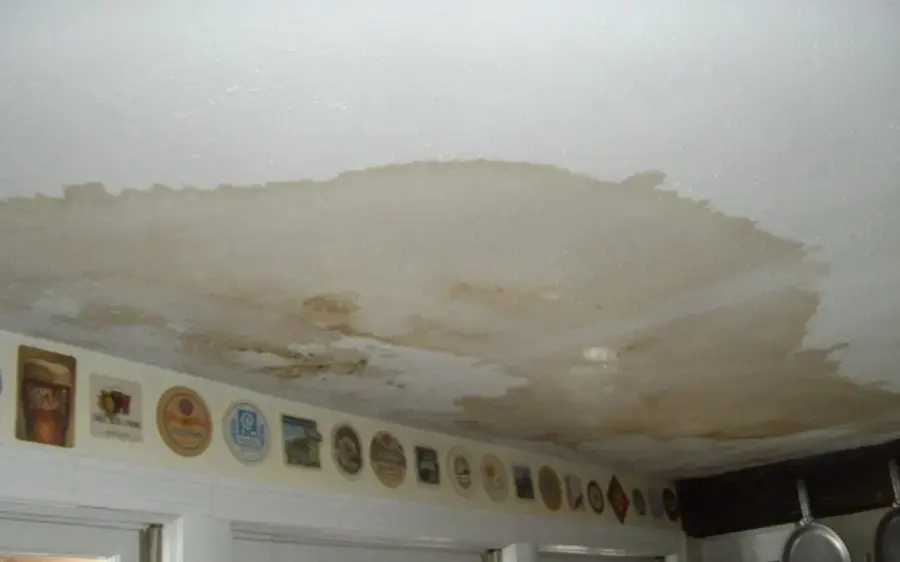
Leaks from the floor above
Ceiling Leak Water Damage in Council Bluffs, IA
A ceiling stain is the last sign of a leak, not the first. The tech who does the walkthrough finds the source with thermal imaging, and the drying team dries the joist bay instead of painting over it.
(888) 599-2961Speak with Council Bluffs 24/7 dispatch- IICRC S500 drying standard
- Truck-mounted extraction
- Daily moisture readings
Common sourcesTubs, toilets, showers
DetectionThermal imaging
Water categoryUsually Category 1
Availability24/7, every day
Most ceiling leaks in Council Bluffs homes come from the floor above: a failed wax ring under a toilet, a cracked shower pan, a tub overflow, a leaking supply pipe or a drain fitting in the joist bay. In the two-story homes around downtown and the older parts of the city, a second-floor bathroom often sits right over the kitchen or living room. Water spreads across the top of the ceiling drywall before it shows, so the stain is usually smaller than the wet area.
How ceiling leak water damage is handled in Council Bluffs
- 1
Find the source
Thermal imaging and fixture-by-fixture checks pin down where the water comes from.
- 2
Release and protect
Bulging drywall is drained and the room below is protected.
- 3
Open the joist bay
Access holes or a section removal let air reach the wet framing.
- 4
Dry and confirm
Air is directed into the ceiling and readings are logged until it is dry.
What does ceiling leak water damage cost in Council Bluffs, IA?
In Council Bluffs, IA, ceiling leak water damage cleanup typically runs $600 to $4,500, depending on whether the ceiling can dry in place, how much drywall or plaster has to come down, and whether the water reached the walls and floor below.
Dry in place
$600 to $1,500
- Leak located
- Access holes
- Joist bay drying
Section removed
$1,500 to $3,000
- Wet ceiling cut out
- Insulation removed
- Framing and subfloor drying
Ceiling, walls and floor
$3,000 to $4,500+
- Two-level drying
- Wall cavities
- Flooring checks
For a closer planning number, try the water damage cost calculator. A firm figure comes after the walkthrough and moisture map.
Finding the source
The tech who does the walkthrough scans the ceiling with a thermal camera, which shows the cool pattern of wet drywall, and confirms with pinless meters. Then the fixtures above get checked one at a time. A stain that grows only when the shower runs points to the shower pan or drain; one that stays wet all the time points to a supply pipe under pressure.
When a ceiling has to come down
- Drywall that is sagging or soft holds water and can fall
- Plaster in older homes can separate from its lath when soaked
- Wet insulation in a ceiling over a garage or porch needs to come out
- A ceiling that is only stained and firm can often be dried in place
When the ceiling stays up, small holes let air into the joist bay. When it comes down, the drying team removes only the wet section and dries the joists and subfloor above from below.
Do not paint over it yet
Stain blocker over a wet ceiling traps the moisture. Wait until readings show the drywall and framing are dry, then prime and paint.
Related problems
If the water came through the roof rather than from a fixture, see roof leak water damage. If a pipe burst in the ceiling, see burst pipe cleanup. The EPA WaterSense program explains how to check a toilet for leaks with dye tablets, and EPA mold cleanup guidance covers why wet ceilings should be dried within 24 to 48 hours.
Coverage
Ceiling Leak Water Damage across Council Bluffs and nearby towns
The Council Bluffs restoration crew covers the river bottoms and the bluffs alike, from the West End and Lake Manawa to the Fairmount Park hills, plus Carter Lake, Crescent, Treynor, Underwood, McClelland, Neola and the rest of Pottawattamie County. ZIP codes 51501, 51502 and 51503.
See every area and ZIP coveredRelated water damage services
Questions
Ceiling Leak Water Damage questions in Council Bluffs
There is a brown stain on my ceiling. Is it still wet?
A fresh stain usually means the drywall is still wet above it. A thermal camera and a moisture meter tell for sure. A dry, old stain can be sealed and painted; a wet one needs drying first.
The ceiling is bulging with water. What should I do?
Put a bucket under it, keep people away, and poke a small hole in the lowest point of the bulge so it drains in a controlled way. Turn off any light fixture in that area. Then shut off the water feeding the bathroom above.
Will the whole ceiling have to come down?
Usually only the wet section. Firm, stained drywall can often dry in place through small access holes. Sagging or soft sections come out.
How do I know which fixture is leaking?
Run each fixture above the stain one at a time and watch the ceiling. A dye tablet in the toilet tank shows a running leak. The restoration team uses thermal imaging to narrow it down.
Is a ceiling leak covered by insurance?
A sudden leak from a pipe or fixture is commonly covered, while slow, long-term leaks and the plumbing repair often are not. Coverage depends on the policy, so it is worth checking with your own insurer.
How long does a ceiling take to dry?
A contained ceiling leak commonly dries in two to four days with air directed into the joist bay. Plaster ceilings and leaks that soaked the subfloor above take longer.
24/7 emergency dispatch
Ceiling Leak Water Damage in Council Bluffs, around the clock
Standing water keeps moving into wood, drywall and insulation. The restoration team extracts it, dries the structure to the IICRC S500 standard and documents every step for the claim.
(888) 599-2961Get a Council Bluffs restoration pro on the phone
Council Bluffs, IA · Find us on Google