Drying to the IICRC S500 standard
Structural Drying in Council Bluffs, IA
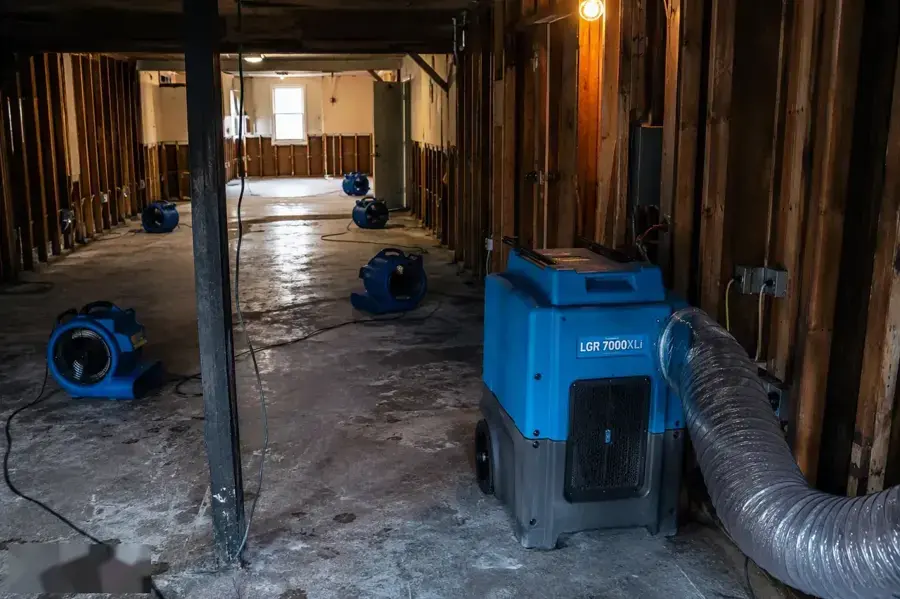
Surface dry is not dry. The drying team dries the framing, subfloor and masonry inside the structure and keeps the equipment running until the readings, not the calendar, say the job is done.
(888) 599-2961Speak with Council Bluffs 24/7 dispatch- IICRC S500 drying standard
- Truck-mounted extraction
- Daily moisture readings
StandardIICRC S500
EquipmentAir movers, LGR units
Proof of dryDaily readings
Availability24/7, every day
Structural drying is the part of a water loss that decides whether the problem is really over. Extraction removes the standing water, but framing, subfloor, drywall, plaster and concrete still hold a lot of it inside. Council Bluffs homes add their own challenges: thick stone and brick foundations in older houses, plaster walls on wood lath, block basement walls and concrete slabs that give up water slowly, and cold basements where drying runs slower than upstairs.
How structural drying is handled in Council Bluffs
- 1
Map and classify
Moisture mapping sets the wet area, and the loss gets a category and a class.
- 2
Set the zone
Containment and air movers are placed for the evaporation load of each room.
- 3
Dehumidify
LGR units, or desiccants for Class 4, pull the water out of the air.
- 4
Log to the goal
Psychrometric and material readings are recorded daily until the drying goal is met.
What does structural drying cost in Council Bluffs, IA?
In Council Bluffs, IA, structural drying typically runs $1,000 to $6,000 on its own, depending on the class of loss, how many rooms are in the drying zone, the number of air movers and dehumidifiers needed, and how many days the readings take to reach the goal.
One or two rooms
$1,000 to $2,500
- Moisture mapping
- Air movers and LGR unit
- Daily readings
Basement or several rooms
$2,500 to $4,500
- Containment
- Multiple LGR units
- Cavity drying
Class 4 materials
$4,500 to $6,000+
- Hardwood or masonry
- Desiccant drying
- Extended monitoring
For a closer planning number, try the water damage cost calculator. A firm figure comes after the walkthrough and moisture map.
How the drying plan is built
- Moisture mapping: pinless meters and thermal imaging mark the wet area before any equipment goes down
- Class of loss: Class 1 through 4 sets how much equipment a room needs, from a small wet area to dense materials like hardwood and masonry
- Air movers sized to the evaporation load of each room
- LGR dehumidifiers to pull the evaporated water out of the air; desiccant units for Class 4 materials and cold spaces
- Containment to shrink the drying zone so the equipment works on the wet area only
Readings, not guesses
Every day the drying team records temperature, relative humidity and grains per pound inside the drying zone and outside it, plus moisture readings on the wet materials. These psychrometric logs show whether the air is pulling water out and whether the materials are moving toward dry. The drying goal is a reading within 2 to 4 points of a dry reference material in an unaffected part of the same building. Equipment comes out when that goal is met.
Why drying usually takes three to five days
A contained Class 1 or 2 loss commonly reaches the goal in three to five days. Hardwood, plaster, thick concrete and block walls hold water deeper and take longer. A schedule that promises a fixed day count ignores what the readings say.
Where structural drying fits
Drying follows emergency water extraction on every job, from a frozen pipe in a bluff-side ranch to foundation seepage in a West End basement. For background on why fast drying limits mold growth, see the EPA mold cleanup guidance; for insulation and air sealing once the structure is dry, the Energy Saver pages.
Coverage
Structural Drying across Council Bluffs and nearby towns
The Council Bluffs restoration crew covers the river bottoms and the bluffs alike, from the West End and Lake Manawa to the Fairmount Park hills, plus Carter Lake, Crescent, Treynor, Underwood, McClelland, Neola and the rest of Pottawattamie County. ZIP codes 51501, 51502 and 51503.
See every area and ZIP coveredRelated water damage services
Questions
Structural Drying questions in Council Bluffs
What is structural drying?
It is drying the building materials themselves: framing, subfloor, drywall, plaster and concrete, not just the visible surface. It uses air movers, dehumidifiers and daily readings to bring those materials back to their normal moisture level.
What is IICRC S500?
It is the industry standard for professional water damage restoration. It sets how water categories and classes are handled, how drying is planned, and how the drying goal is measured.
Why not just open windows and run fans?
Fans move surface moisture around, but without dehumidification the water just goes back into the air and into other materials. In humid Iowa summers, open windows can add moisture instead of removing it.
How do I know the house is really dry?
The drying team compares wet materials to a dry reference in the same building and records the readings daily. When the wet area reads within 2 to 4 points of the reference, the drying goal is met. Ask to see the log.
Is the equipment loud, and can I stay home?
Air movers and dehumidifiers are steady and noisy, and they run around the clock. Most people stay home during a clean water dry-out. Category 3 losses with containment may be a different story.
Who pays for the electricity?
The equipment uses household power. Many claims include an allowance for the extra electric use, so keep your bills. Coverage depends on the policy, so check with your own insurer.
24/7 emergency dispatch
Structural Drying in Council Bluffs, around the clock
Standing water keeps moving into wood, drywall and insulation. The restoration team extracts it, dries the structure to the IICRC S500 standard and documents every step for the claim.
(888) 599-2961Get a Council Bluffs restoration pro on the phone
Council Bluffs, IA · Find us on Google