Overland storm water
Storm Flood Cleanup in Council Bluffs, IA
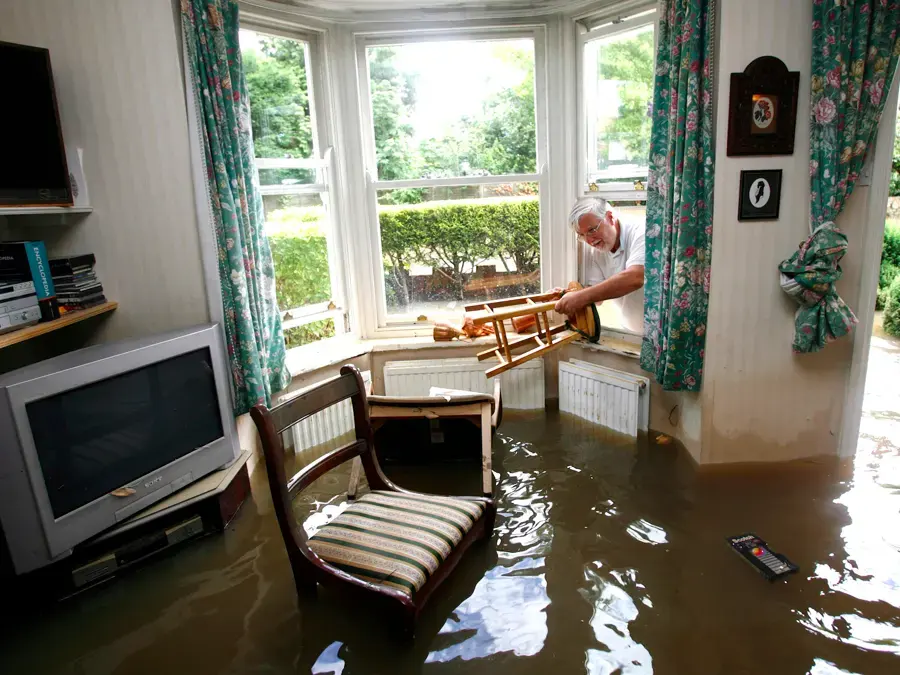
Storm water that comes in across the yard carries soil, fuel and sewage from the street. The mitigation team handles it as Category 3: extraction, removal of soaked porous materials, cleaning and drying.
(888) 599-2961Speak with Council Bluffs 24/7 dispatch- IICRC S500 drying standard
- Truck-mounted extraction
- Daily moisture readings
Water categoryCategory 3
Local driverIndian Creek storms
Porous materialsRemoved, not dried
Availability24/7, every day
Council Bluffs gets hard spring and summer thunderstorms, and a few inches of rain in a short time can overwhelm street drains. Indian Creek runs through the middle of the city in a concrete channel that fills fast in a downpour, and Mosquito Creek drains the east side. Low spots in the West End bottomland collect water, and runoff from the bluffs pours downhill through loess soil that does not soak much in. When that water crosses the yard and comes into a house, it is storm flood water, and it is handled differently from a pipe leak.
How storm flood cleanup is handled in Council Bluffs
- 1
Protect and contain
The mitigation team sets PPE and containment before anyone handles Category 3 water.
- 2
Pump and muck out
Standing water and silt come out first.
- 3
Remove porous materials
Drywall, insulation, carpet and pad that touched the water are cut out and documented.
- 4
Clean, treat, dry
Surfaces get an EPA-registered antimicrobial, then air movers, LGR units and HEPA scrubbers run to the drying goal.
What does storm flood cleanup cost in Council Bluffs, IA?
In Council Bluffs, IA, storm flood cleanup typically runs $3,000 to $15,000 or more, depending on how deep the water got, how many rooms it entered, and how much contaminated drywall, flooring and insulation has to come out.
Shallow, one area
$3,000 to $6,000
- Extraction and silt removal
- Low flood cuts
- Antimicrobial and drying
Basement or main floor
$6,000 to $11,000
- Full Category 3 removal
- Contents logged
- HEPA air scrubbers
Deep or whole level
$11,000 to $15,000+
- Large demolition
- Containment
- Extended structural drying
For a closer planning number, try the water damage cost calculator. A firm figure comes after the walkthrough and moisture map.
Why storm water is Category 3
Overland water picks up whatever it crosses: lawn chemicals, motor oil from the street, animal waste and sometimes sewage from overwhelmed sewers. Under the IICRC S500 standard it is Category 3 water. That means:
- Porous materials it touched, carpet, pad, drywall, insulation, come out rather than being dried
- Crews wear protective gear and set up containment where needed
- Hard surfaces are cleaned and treated with an EPA-registered antimicrobial
- Drying starts only after the contaminated material is gone
The storm cleanup sequence
The response team pumps out standing water, removes mud and silt, and cuts drywall above the high-water mark. Contents that soaked in floodwater are photographed and listed before disposal. Air movers and LGR dehumidifiers then dry framing and concrete, with HEPA air scrubbers running where contamination was heavy. Readings are logged daily until the structure meets the drying goal.
Flood coverage is separate
Water that rises from outside and enters at ground level is usually flood damage, which standard homeowners policies exclude. A separate flood policy may apply. Check with your own insurer and keep every photo.
Staying safe after a storm
Do not walk through floodwater near electrical outlets, and do not drive through water over the road. The Ready.gov flood page and the EPA flooding cleanup guidance cover safe re-entry and cleanup. Iowa storm and flood alerts are posted by Iowa Homeland Security and Emergency Management. For water that came in at the foundation instead, see foundation seepage cleanup, and for sewage from a floor drain, see sewage backup cleanup.
Coverage
Storm Flood Cleanup across Council Bluffs and nearby towns
The Council Bluffs restoration crew covers the river bottoms and the bluffs alike, from the West End and Lake Manawa to the Fairmount Park hills, plus Carter Lake, Crescent, Treynor, Underwood, McClelland, Neola and the rest of Pottawattamie County. ZIP codes 51501, 51502 and 51503.
See every area and ZIP coveredRelated water damage services
Questions
Storm Flood Cleanup questions in Council Bluffs
Floodwater came in from the yard. Is it safe to clean up myself?
Storm water is treated as contaminated. Wear boots and gloves, keep children and pets out, and do not touch electrical equipment while standing in water. Soaked porous materials need to come out, which is heavy, dirty work.
Why does drywall have to be cut out after a storm flood?
Drywall and insulation that touched Category 3 water hold contamination inside the material. They are removed above the high-water mark rather than dried, and the framing behind them is cleaned, treated and dried.
Is storm flooding covered by homeowners insurance?
Water that rises from outside is usually flood damage, excluded on standard policies and covered only by a flood policy. Wind-driven rain through a damaged roof is treated differently. Coverage depends on the policy, so check with your own insurer.
What areas of Council Bluffs flood in storms?
Low spots in the West End and near Indian Creek and Mosquito Creek see the most overland water, along with homes at the foot of the bluffs where runoff collects. Any street can flood when drains are overwhelmed.
How long does storm flood cleanup take?
Removal and cleaning usually happen first, then drying commonly takes three to seven days depending on how much framing and concrete got wet. Equipment leaves when readings reach the drying goal.
Can my furniture be saved?
Solid wood and metal furniture can often be cleaned. Upholstered pieces, mattresses and particleboard that soaked in floodwater usually cannot. Everything is photographed for the claim before it goes.
24/7 emergency dispatch
Storm Flood Cleanup in Council Bluffs, around the clock
Standing water keeps moving into wood, drywall and insulation. The restoration team extracts it, dries the structure to the IICRC S500 standard and documents every step for the claim.
(888) 599-2961Get a Council Bluffs restoration pro on the phone
Council Bluffs, IA · Find us on Google