Business and property water damage
Commercial Water Damage in Council Bluffs, IA
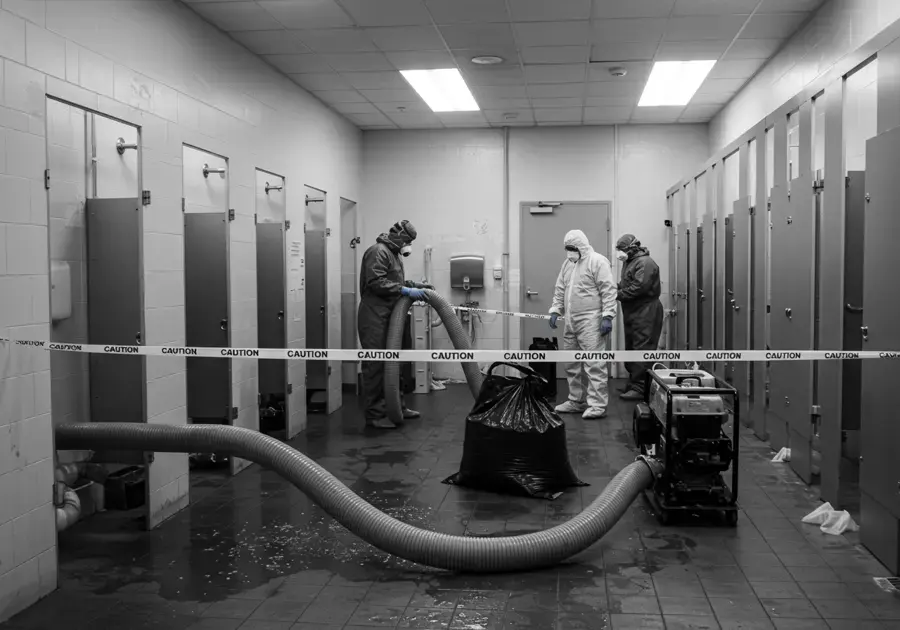
For a business, water damage is also lost hours. The commercial drying team extracts, sets containment around the wet area and plans the work around operations so the doors reopen sooner.
(888) 599-2961Speak with Council Bluffs 24/7 dispatch- IICRC S500 drying standard
- Truck-mounted extraction
- Daily moisture readings
Property typesOffice, retail, warehouse
PlanningAround business hours
Drying standardIICRC S500
Availability24/7, every day
Council Bluffs has a mix of commercial property: older brick storefronts downtown and along Broadway, restaurants and hotels near the river and the casinos, offices, medical buildings, schools and churches, and warehouses and distribution space along the I-29 and I-80 corridor. Each one floods differently. A sprinkler pipe that freezes over a weekend, a roof drain that backs up in a storm, or a restroom overflow on an upper floor can shut down a business until the space is dry.
How commercial water damage is handled in Council Bluffs
- 1
Walk and prioritize
The response team walks the property with the manager and sets priorities.
- 2
Contain and extract
Containment isolates the wet zone while extraction clears the floors.
- 3
Dry by zone
Each zone gets its own equipment plan and daily readings.
- 4
Document for everyone
Photos, moisture maps and logs are organized for owners, tenants and adjusters.
What does commercial water damage cost in Council Bluffs, IA?
In Council Bluffs, IA, commercial water damage restoration typically runs $3,000 to $30,000 or more, depending on the square footage, the type of flooring and walls, the water category, and whether work has to happen around business hours.
Small office or store
$3,000 to $8,000
- Extraction
- Containment
- Drying and readings
Multi-room or multi-tenant
$8,000 to $18,000
- Zoned moisture maps
- Ceiling tile and drywall removal
- After-hours work
Large or contaminated
$18,000 to $30,000+
- Warehouse or Category 3
- Large equipment fleet
- Extended documentation
For a closer planning number, try the water damage cost calculator. A firm figure comes after the walkthrough and moisture map.
What commercial jobs need
- A fast walkthrough with the property manager to set priorities: power, server rooms, inventory, tenant spaces
- Containment to keep the wet area separate so the rest of the building can stay open
- Large-capacity extraction and drying equipment for open floors and warehouses
- Work scheduled around opening hours, overnight where possible
- Documentation the owner, tenants and adjusters can all use
Commercial buildings dry differently
Glue-down commercial carpet, concrete slabs, metal stud walls and suspended ceilings each dry on their own timeline. Commercial carpet glued to concrete can sometimes be dried in place; wet ceiling tiles come down. Masonry walls in older downtown buildings hold water like a sponge and need longer dehumidification. The restoration team maps the moisture, sets the category and class, and records daily readings for every zone.
Multi-tenant buildings
When water crosses from one unit into another, each space gets its own moisture map and photo record, so owners and tenants can sort out their claims clearly.
Planning ahead
Know where the main shutoff and sprinkler control valves are, keep a contact list for after-hours emergencies, and protect fire sprinkler pipes in unheated areas from Iowa freezes. The OSHA flood cleanup page covers worker safety after water damage, and Ready.gov has business continuity planning tools. For sewage in a commercial restroom, see sewage backup cleanup; for the drying phase, structural drying.
Coverage
Commercial Water Damage across Council Bluffs and nearby towns
The Council Bluffs restoration crew covers the river bottoms and the bluffs alike, from the West End and Lake Manawa to the Fairmount Park hills, plus Carter Lake, Crescent, Treynor, Underwood, McClelland, Neola and the rest of Pottawattamie County. ZIP codes 51501, 51502 and 51503.
See every area and ZIP coveredRelated water damage services
Questions
Commercial Water Damage questions in Council Bluffs
Can my business stay open during the dry-out?
Often, yes. Containment walls separate the wet area so customers and staff can use the rest of the building. Noisy work and equipment moves can be scheduled outside business hours.
What should staff do first when water appears?
Shut the water at the main or the fixture, turn off power to wet areas from a dry panel, move inventory and electronics off the floor, and photograph the damage. Then call.
Is commercial carpet always replaced?
Not always. Glue-down carpet on concrete in a clean water loss can sometimes be dried in place. Carpet touched by Category 3 water is removed.
How is a multi-tenant loss documented?
Each unit gets its own moisture map, photo set and daily readings, so the owner, tenants and their insurers can each see what happened in their space.
Does commercial insurance cover water damage?
Sudden water damage is commonly covered, and some policies add business interruption coverage. Flood and sewer backup often need separate coverage. Coverage depends on the policy, so check with your own insurer.
How long does a commercial dry-out take?
A contained office or retail loss commonly dries in three to five days. Warehouses with thick slabs, masonry buildings and large Category 3 losses take longer.
24/7 emergency dispatch
Commercial Water Damage in Council Bluffs, around the clock
Standing water keeps moving into wood, drywall and insulation. The restoration team extracts it, dries the structure to the IICRC S500 standard and documents every step for the claim.
(888) 599-2961Get a Council Bluffs restoration pro on the phone
Council Bluffs, IA · Find us on Google