Category 3 water
Sewage Backup Cleanup in Council Bluffs, IA
Sewage backup is Category 3 the moment it happens. The mitigation team contains the area, removes every porous material the sewage touched, disinfects and dries.
(888) 599-2961Speak with Council Bluffs 24/7 dispatch- IICRC S500 drying standard
- Truck-mounted extraction
- Daily moisture readings
Water categoryCategory 3
Porous materialsRemoved, not dried
AirHEPA air scrubbers
Availability24/7, every day
Sewage usually shows up in a Council Bluffs home at the lowest drain: the basement floor drain, a basement toilet or shower, or the laundry standpipe. Older homes around downtown and the West End often still have cast iron drains and clay sewer pipes between the house and the street, and tree roots, settling and grease narrow them over the years. Heavy rain adds pressure on the sewer system, and a blockage anywhere downstream can push sewage back up into the house.
How sewage backup cleanup is handled in Council Bluffs
- 1
Contain and protect
The mitigation team seals the area, sets HEPA air scrubbers and suits up.
- 2
Extract and remove
Sewage and solids come out, then every porous material it touched is cut out and bagged.
- 3
Clean and disinfect
Hard surfaces are scrubbed and treated with an EPA-registered antimicrobial at its dwell time.
- 4
Dry and verify
Air movers and LGR dehumidifiers dry the framing and slab to the drying goal.
What does sewage backup cleanup cost in Council Bluffs, IA?
In Council Bluffs, IA, sewage backup cleanup typically runs $2,000 to $12,000 or more, depending on how much of the floor the sewage covered, how much drywall, carpet and insulation has to come out, and how long it sat.
Small, bare floor
$2,000 to $4,000
- Extraction and solids removal
- Disinfection
- Drying
Finished basement
$4,000 to $8,000
- Containment and HEPA
- Carpet and drywall removal
- Antimicrobial and drying
Large or long-standing
$8,000 to $12,000+
- Full level removal
- Extended containment
- Verification before rebuild
For a closer planning number, try the water damage cost calculator. A firm figure comes after the walkthrough and moisture map.
Why sewage is handled differently
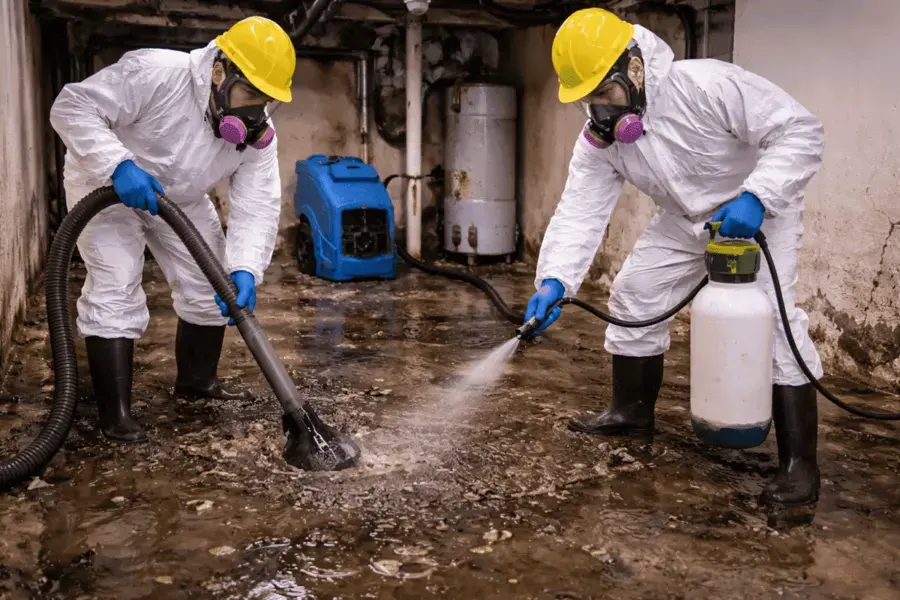
Under the IICRC S500 standard, sewage is Category 3 water from the first minute. It carries bacteria, viruses and other pathogens. That changes the whole job:
- Crews wear respirators, gloves, boots and protective suits
- The work area is sealed off with containment so contamination does not spread through the house
- HEPA air scrubbers clean the air during the work
- Carpet, pad, drywall, insulation and other porous materials the sewage touched come out and are bagged
- Hard surfaces are cleaned and treated with an EPA-registered antimicrobial at its proper dwell time
The cleanup sequence
The mitigation team extracts the sewage and solids first, then removes contaminated materials, cutting drywall well above the highest point the water reached. Concrete and framing are scrubbed, treated and then dried with air movers and LGR dehumidifiers. Everything removed is photographed and listed for the claim. The area is checked again before rebuilding starts.
Keep people and pets out
Do not run fans or the furnace blower through a sewage-affected basement, and keep children and pets upstairs. Moving air spreads contamination to clean rooms.
Stopping the next backup
A plumber can camera the sewer pipe to find roots, breaks or a sag, and a backwater valve on the main drain keeps city sewer water from flowing back into the house. Do not pour grease down drains, and avoid flushing wipes. The EPA flooding and cleanup guidance and the OSHA flood cleanup page cover protective gear and safe cleanup. If storm water also came in from outside, see storm flood cleanup; for a general flooded basement, see basement flooding cleanup.
Coverage
Sewage Backup Cleanup across Council Bluffs and nearby towns
The Council Bluffs restoration crew covers the river bottoms and the bluffs alike, from the West End and Lake Manawa to the Fairmount Park hills, plus Carter Lake, Crescent, Treynor, Underwood, McClelland, Neola and the rest of Pottawattamie County. ZIP codes 51501, 51502 and 51503.
See every area and ZIP coveredRelated water damage services
Questions
Sewage Backup Cleanup questions in Council Bluffs
Sewage is coming up through my floor drain. What should I do?
Stop using water in the house: no flushing, showers, laundry or dishwasher, because everything drains to the same pipe. Keep everyone out of the area, do not run fans, and call for Category 3 cleanup. A plumber may be needed to clear the blockage.
Can I clean a small sewage backup myself?
A very small backup on bare concrete can be cleaned with proper gear and disinfectant, but sewage on carpet, drywall or anything porous needs removal. Health risks are real, so most people call for professional cleanup.
Why do carpet and drywall have to be thrown out?
Porous materials absorb sewage and the pathogens in it, and they cannot be cleaned to a safe level. Under the IICRC S500 standard they are removed, not dried.
Is sewage backup covered by homeowners insurance?
Many standard policies exclude it unless a sewer or water backup endorsement was added. Coverage depends on the policy, so it is worth checking with your own insurer. A complete photo record helps either way.
What is a backwater valve?
A one-way valve on the main sewer pipe that lets waste flow out but closes if sewage tries to come back in. In older Council Bluffs basements it is one of the best protections against repeat backups.
How long does sewage cleanup take?
Removal and disinfection usually take one to two days, then drying commonly takes another three to five. Larger losses and thick concrete take longer.
24/7 emergency dispatch
Sewage Backup Cleanup in Council Bluffs, around the clock
Standing water keeps moving into wood, drywall and insulation. The restoration team extracts it, dries the structure to the IICRC S500 standard and documents every step for the claim.
(888) 599-2961Get a Council Bluffs restoration pro on the phone
Council Bluffs, IA · Find us on Google