Failed tank cleanup
Water Heater Leak Cleanup in Council Bluffs, IA
A water heater keeps refilling as it leaks, so a failed tank can put far more water on the floor than its own size. The extraction crew clears the utility room and the drying team dries everything the water reached.
(888) 599-2961Speak with Council Bluffs 24/7 dispatch- IICRC S500 drying standard
- Truck-mounted extraction
- Daily moisture readings
Usual locationBasement utility room
Typical tank life8 to 12 years
Water categoryCategory 1 at first
Availability24/7, every day
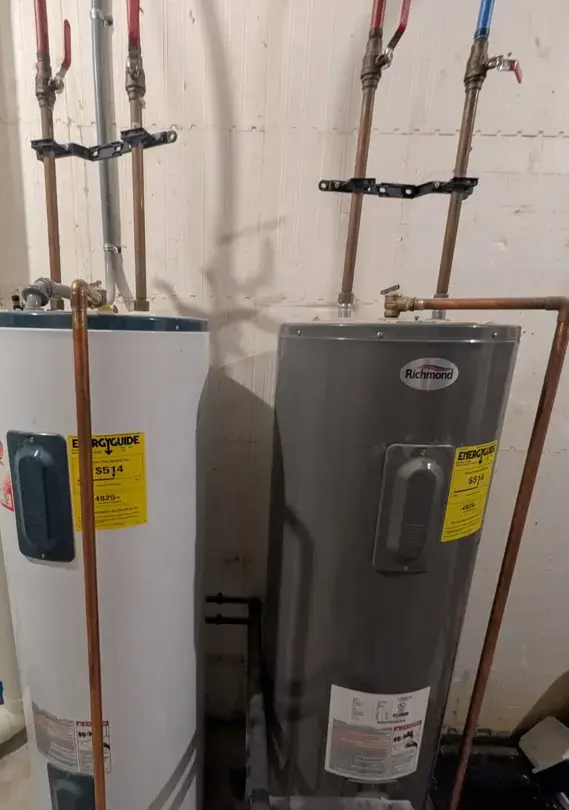
In most Council Bluffs homes the water heater sits in the basement next to the furnace. When a tank rusts through, a relief valve sticks open or a fitting fails, the tank keeps refilling from the cold water supply. A slow drip can soak a finished basement wall for weeks; a ruptured tank can spread water across the whole level in a short time. Hard water speeds up sediment build-up and corrosion in the bottom of the tank.
How water heater leak cleanup is handled in Council Bluffs
- 1
Make it safe
The response team confirms water, gas and power to the heater are off.
- 2
Extract the level
Water comes off the utility room and every room it reached.
- 3
Check hidden spots
Meters check under the furnace, flooring and the bottom of nearby walls.
- 4
Dry and log
Air movers and LGR dehumidifiers run with daily readings until the goal is met.
What does water heater leak cleanup cost in Council Bluffs, IA?
In Council Bluffs, IA, water heater leak cleanup typically runs $800 to $5,000, depending on whether the water stayed in the utility room or spread into finished rooms, and how long a slow leak went unnoticed.
Utility room only
$800 to $1,800
- Extraction
- Slab drying
- Readings to the goal
Into finished rooms
$1,800 to $3,500
- Carpet and pad work
- Low drywall cuts
- Cavity drying
Slow leak, long exposure
$3,500 to $5,000+
- Wider material removal
- Antimicrobial
- Extended drying
For a closer planning number, try the water damage cost calculator. A firm figure comes after the walkthrough and moisture map.
Shut it down safely
- Close the cold water valve on top of the tank, or the main shutoff
- For a gas heater, turn the gas control to off or pilot
- For an electric heater, switch off its breaker, but only from a dry spot
- Keep clear of the hot water around the base of a failed tank
What gets wet
Water heater water is clean at first, but it carries rust and sediment and spreads under anything on the basement floor. It runs under the furnace, into carpeted rooms, under laminate and into the bottom of finished walls next to the utility room. The extraction crew pulls water from all of it, and the drying team checks wall cavities and floor coverings with meters. Carpet pad and the lower drywall in finished rooms often come out; the slab and block walls dry in place.
Check the furnace too
If water reached the furnace or its burner area, have it inspected before it runs again. The same goes for any gas appliance that sat in water.
Preventing the next one
Drain a few gallons from the tank once a year to flush sediment, test the relief valve, and consider a drain pan with a leak alarm. A tank past ten years old is worth replacing before it fails. The Department of Energy Energy Saver pages cover water heater care and replacement, and the OSHA flood cleanup page lists electrical and gas safety basics around wet equipment. For the drying phase, see structural drying, and for a whole flooded level, basement flooding cleanup.
Coverage
Water Heater Leak Cleanup across Council Bluffs and nearby towns
The Council Bluffs restoration crew covers the river bottoms and the bluffs alike, from the West End and Lake Manawa to the Fairmount Park hills, plus Carter Lake, Crescent, Treynor, Underwood, McClelland, Neola and the rest of Pottawattamie County. ZIP codes 51501, 51502 and 51503.
See every area and ZIP coveredRelated water damage services
Questions
Water Heater Leak Cleanup questions in Council Bluffs
My water heater is leaking. How do I stop it?
Close the cold water inlet valve on top of the tank, or the main shutoff. Turn a gas heater to off or pilot, or switch off an electric heater at its breaker if the panel is dry. Then attach a hose to the drain valve if you want to empty the tank.
How much water can a failed water heater release?
More than its tank size, because it keeps refilling from the supply until someone shuts the water off. A ruptured tank can cover a whole basement floor.
Is water heater leak damage covered by insurance?
Sudden water damage from a tank rupture is commonly covered, while the tank itself and slow leaks over time usually are not. Coverage depends on the policy, so it is worth checking with your own insurer.
Will my finished basement carpet be ruined?
The carpet can often be extracted and dried if the water is clean and caught quickly. The pad usually gets replaced. Rusty, sediment-heavy water can stain, which the tech who does the walkthrough will point out.
Can I use hot water again right away?
Not from a failed tank. A plumber needs to replace or repair it. The restoration team handles the water damage and drying while the plumber handles the heater.
How long does drying take after a water heater leak?
A contained utility room loss commonly dries in three to five days. If water spread into finished rooms or sat for weeks from a slow drip, it takes longer.
24/7 emergency dispatch
Water Heater Leak Cleanup in Council Bluffs, around the clock
Standing water keeps moving into wood, drywall and insulation. The restoration team extracts it, dries the structure to the IICRC S500 standard and documents every step for the claim.
(888) 599-2961Get a Council Bluffs restoration pro on the phone
Council Bluffs, IA · Find us on Google