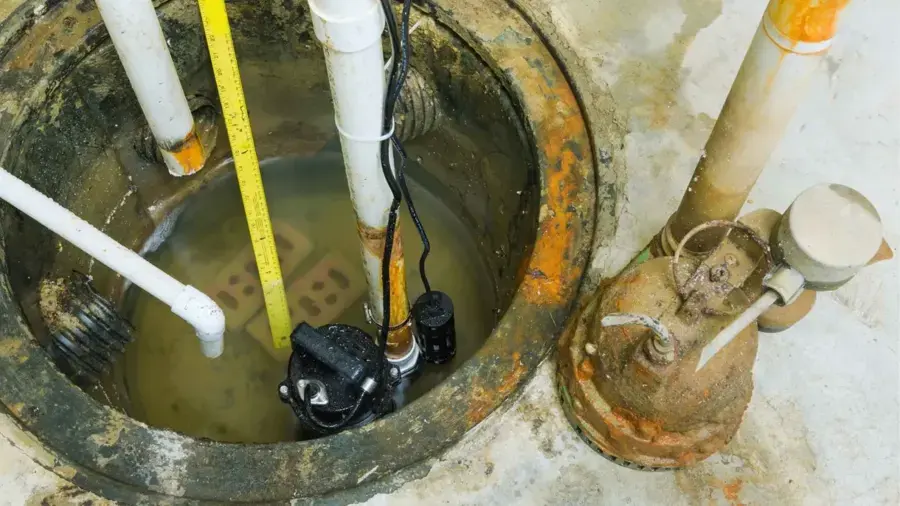
The rain is hard, the pit is full and the pump is silent. In the next few minutes the water goes over the rim and across the basement floor. This post is about that moment: what happens when a sump pump fails during heavy rain in Council Bluffs, and how the restoration team extracts and dries the basement.
Key takeaways
- A sump pump fails when the pump wears out, the float sticks, the power trips or the pit is simply overwhelmed.
- Once the pit overflows, the water covers the floor fast, and it keeps coming as long as the rain and groundwater do.
- Water from a sump pit is ground water, so it is treated as contaminated and porous materials are removed.
- The extraction crew pumps the basement out, and the drying crew dries the floor, walls and framing to readings.
- This is about the overflow itself. Slow, repeated seepage through walls and floors is a different job.
Why Council Bluffs basements rely on their pumps
Basements are the norm in Council Bluffs, and a sump pump is what keeps many of them dry. The pump sits in a pit and moves water out when it rises.
The ground on the west side has a long history with water. The 2011 Missouri River flood left high groundwater under the western floodplain, and Mosquito Creek runs on the east side.
What heavy spring rain does
Spring rain falls on saturated ground. Water that cannot soak in runs toward the lowest point, and that is often a basement pit.
A pump that handles a normal rain may fall behind during a storm that does not let up.
How a pump fails during a storm
A pump rarely fails at a convenient time. It fails when it is working hardest, and that is during heavy rain.
- Power fails or a breaker trips, and the pump stops.
- The float switch sticks, and the pump never turns on.
- A worn motor burns out under a long run.
- The discharge pipe freezes, clogs or kinks.
- The pump is too small for the inflow.
What to do when the pit overflows
Safety comes first, because the pump, its cord and the outlet are all in a wet space.
- Do not step into the water until the power to the basement is off.
- If the panel is dry and reachable, shut off the basement circuits.
- If the panel is wet, stay out and call an electrician or the utility.
- Move valuables off the floor if it can be done safely.
- Photograph the pit, the water level and the damage.
- Call the restoration team and report that the pit has overflowed.
Why the first hours matter
Water on a basement floor does not stay on the floor. It wicks into the base of the walls, the bottoms of doors and anything stored on the ground.
Cardboard boxes, paper and fabric start to break down quickly, and wood trim begins to swell. The sooner the pump is back in service and the water is out, the less has to be thrown away.
The extraction crew sets up a temporary pump if the pit pump is down. That keeps the pit from refilling the room while the repair is made.
- Wet cardboard and paper are the first items to be lost.
- Carpet pad holds water against the floor for a long time.
- Drywall wicks water up the wall above the visible water mark.
What the restoration team extracts
The extraction crew arrives with pumps that can handle the volume. They take the bulk of the water out first, then clear the film that is left.
If the rain is still falling, water may keep coming in, so the team may work in stages. The service is described on the water extraction page, and the cause is covered under sump pump failure cleanup.
The order of the work
- Deep water is pumped out of the basement.
- Wet vacuums clear the floor and the corners.
- Soaked contents are lifted and sorted.
- Porous materials that touched the water are cut out.
Why the water is not treated as clean
Sump water is ground water. It has passed through soil and can carry bacteria and dirt. The restoration team treats it as contaminated, so carpet and pad usually come out and hard surfaces are cleaned.
Drying the basement
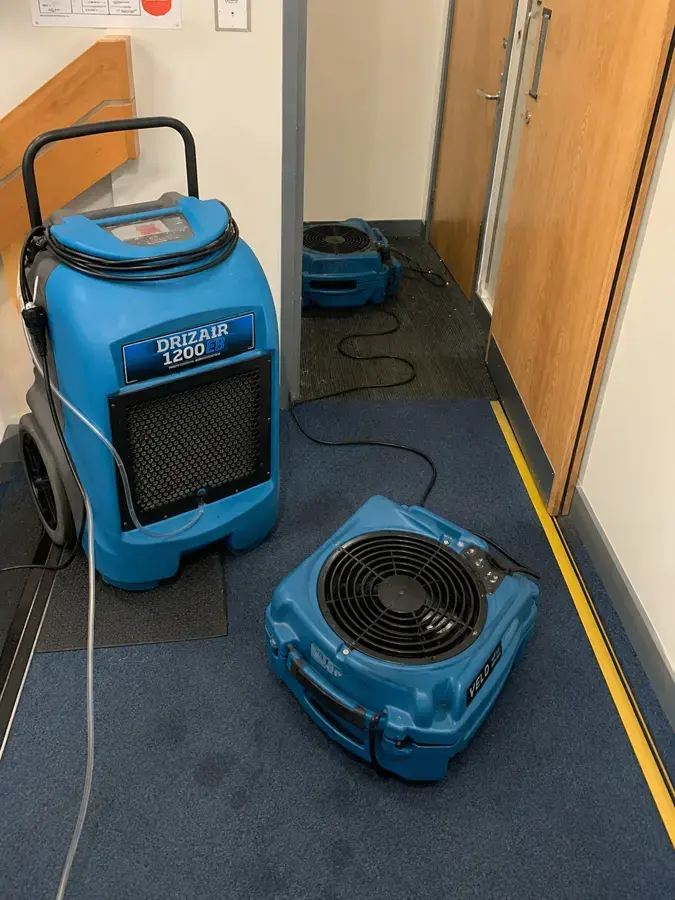
After extraction, the drying crew sets air movers and dehumidifiers. Basements have less airflow, so the equipment is placed to move air through every corner.
Moisture meters check the walls, the framing and the floor, and the numbers are logged each visit. The job is done when the readings reach the goal. The basement flooding cleanup page covers the full process.
A basement left damp after a storm can smell musty in days, and it invites mold.
Overflow versus seepage, and the next storm
This post is about the moment a pit overflows. It is a single event that comes with a rainstorm and a failed pump.
Seepage is slower. Water pushes through cracks, joints or the wall base over time, even when the pump runs. That has its own steps, covered under foundation seepage cleanup.
- Overflow is sudden and tied to a storm and a failed pump.
- Seepage is slow and shows as damp spots, stains or a wet wall base.
- After an overflow, ask an electrician or plumber to check the pump before the next rain.
- Consider a battery backup or a second pump if the basement has flooded before.
Getting ready before the next storm
The same storm that overwhelms one pump often comes back. A short checklist, done after the cleanup, lowers the odds of a repeat.
- Pour a bucket of water into the pit and watch the float lift and the pump start.
- Make sure the discharge pipe is clear and sends water well away from the foundation.
- Ask a plumber about a battery backup for storms that knock out the power.
- Add a water alarm near the pit so an early rise is noticed.
- Keep stored items on shelves instead of the floor.
- Replace a pump that is old or that runs without stopping.