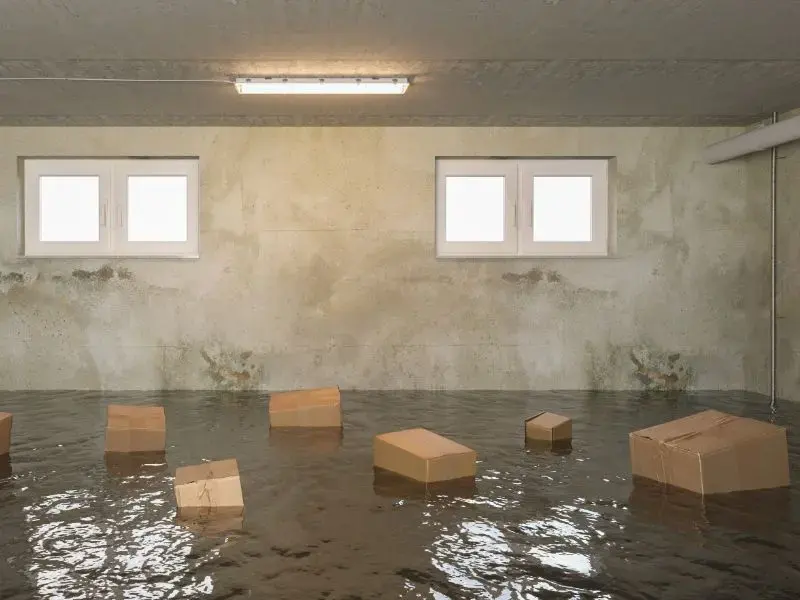
A basement in the West End holds more than boxes and a furnace. It holds a century of stone, brick and old framing that soaks up water and gives it back slowly. This post follows the first day of a flooded basement, from the first look at the water to the first round of drying readings.
Key takeaways
- Stay off a flooded basement floor until the power to that area is off, because water and live circuits are the first danger.
- The extraction crew removes standing water before anything else, since every hour of standing water pushes moisture further into walls and floors.
- Stone and brick foundation walls in older West End homes dry more slowly than newer block walls.
- Water that came from the ground or a drain is treated as contaminated, so soaked carpet, pad and low drywall usually come out.
- Drying is finished when moisture readings reach the goal, not when the surface looks dry.
Why older West End basements flood and dry differently
Many West End homes date from the late 1800s and early 1900s. Their basements were built with stone and brick foundation walls, and those walls behave very differently from a modern poured wall.
The ground under the western side of the city has its own history too.
What the walls are made of
Brick, stone and old mortar are porous. They take on water through the face of the wall and hold it deep inside.
A wall can feel dry to the hand while the core is still wet. That is why a surface check is never enough to call a basement dry.
What the ground has been through
The 2011 Missouri River flood kept the river at flood stage for months and left high groundwater under the western floodplain.
That history is why a wet basement on the west side deserves a careful look, not a quick mop up.
The first hour: make the space safe
Before anyone wades in, the basement has to be safe to enter. A flooded basement can hide live outlets, a running furnace and a floor that is slick under murky water.
The furnace and water heater often sit in the same basement. Leave them off until the water is gone and the equipment has been checked, because a wet burner or control board is not safe to restart.
- Shut off power to the basement at the main panel, and only if the panel is dry and reachable from dry ground.
- If the panel stands in water, stay out and call an electrician or the utility.
- Turn off the water supply if a pipe is the source.
- Keep people and pets out of the water and off the stairs.
- Photograph the water level, the walls and anything stored on the floor before it is moved.
What the restoration team extracts first
Standing water comes out first. The extraction crew uses pumps for deep water and wet vacuums for the last film on the floor.
Pulling the bulk of the water early matters because it stops the flood from soaking further into the walls, the wood framing and anything porous. Details on this step are on the water extraction page.
Speed matters more here than in most rooms of the house. A basement is the lowest point, so water from the rest of the home and from the ground ends up there, and it does not drain on its own.
Once the floor is clear, the team moves the contents that can be saved and sorts out what cannot.
- Boxes, furniture and stored items are lifted off the wet floor.
- Soaked cardboard and fabric are set aside for the insurance record.
- Carpet and pad are cut and removed when the water was dirty or has soaked through.
What comes out and what stays
Water that rises through a floor or wall from the ground, or comes back up a drain, is treated as contaminated. It carries soil and bacteria that porous materials cannot be cleaned of.
So the restoration team removes what cannot be cleaned and keeps what can. The full process is laid out under basement flooding cleanup.
Usually removed
- Carpet, pad and soaked rugs
- Drywall and insulation along the lower part of the walls
- Particleboard shelves, cabinets and stored paper goods
Usually kept and dried
- Stone, brick and concrete walls and floors
- Solid wood framing and floor joists
- Hard items that can be cleaned and disinfected
Why stone and brick walls dry slowly
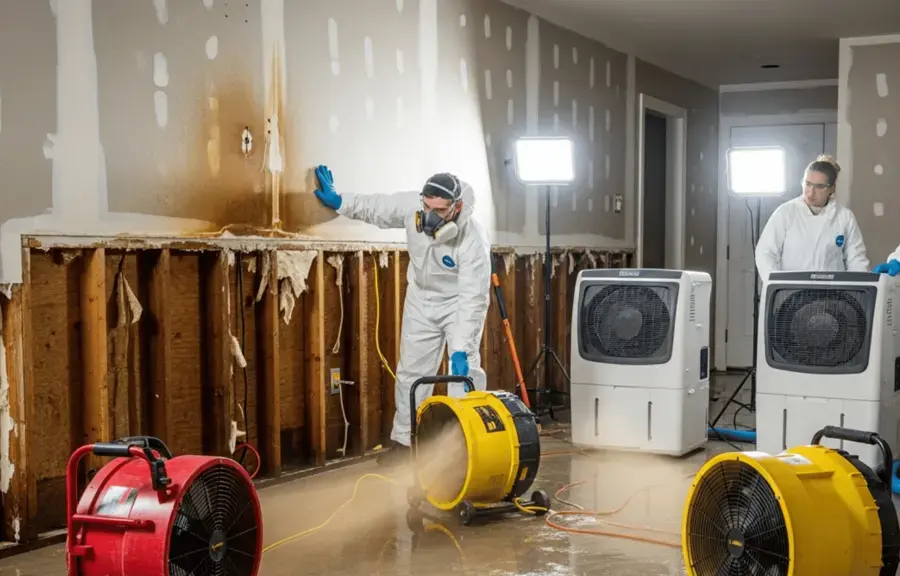
Drying a masonry wall is slower than drying a drywall surface. The water sits deep in the stone and mortar, and it moves out only as fast as the air around the wall can take it.
The drying crew sets air movers to push dry air across the walls and dehumidifiers to pull the moisture out of the room. The goal is a steady drop in readings, day after day.
Old basements often have little ventilation, so the equipment is placed to move air through corners, under stairs and along the base of the walls, where moisture lingers longest.
Moisture meters are used on the walls, the framing and the floor, and the numbers are logged each visit. The work is done when the readings reach the drying goal. The structural drying page covers how that is measured.
Drying that stops early leaves damp walls and a musty smell, and it invites mold in a space with little airflow.
What to document for the insurance claim
A claim goes better when the record starts on the first day. The restoration team photographs the loss, logs each moisture reading and lists what was removed, and the homeowner can add to that record.
Anything that cannot be saved should be photographed before it is thrown out.
- Wide photos of each wall and the floor, with the water level visible.
- Close photos of damaged items, with brand names or model numbers where possible.
- A short list of what was stored in the basement and roughly when it was bought.
- The date and time the water was found, and the date power was shut off.
- Copies of every drying log and moisture reading from the restoration team.
A first day checklist
The first 24 hours go best when the order is clear. Here is the short version.
- Make the area electrically safe and find the source of the water.
- Photograph everything, then move valuables to dry ground.
- Call a restoration team to start extraction as early as possible.
- Let the team set the drying equipment and leave it running.
- Expect follow up readings until the walls reach the goal.
- Contact the insurance company and keep every photo and record.
If the water came from the street or a drain
Treat it as sewage until proven otherwise and keep out of it. Basement floods in the Omaha area follow the same steps, as shown on the Omaha basement flooding cleanup page.