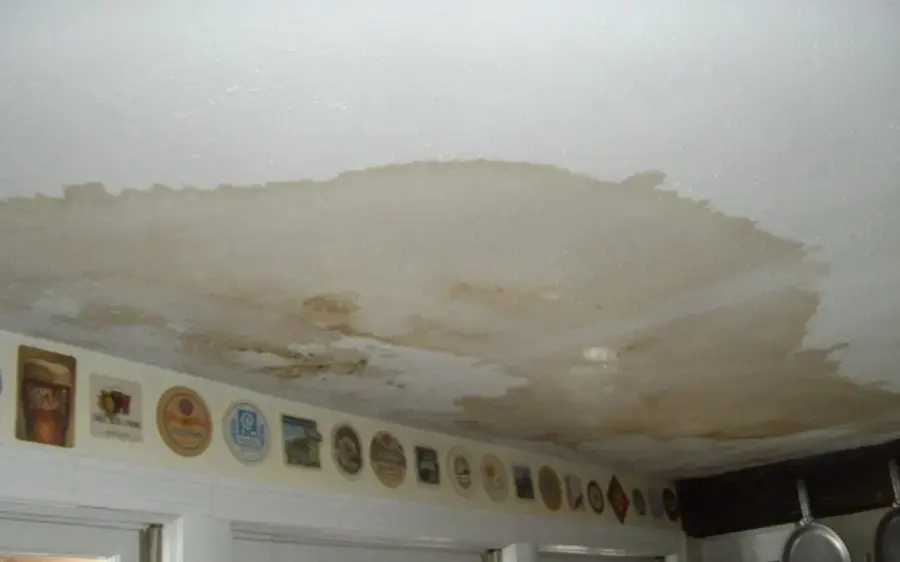
A brown stain spreading across the ceiling is the first sign. Behind it, water from the unit above may be pooling in the drywall and the cavity. This post is for renters and property managers in La Vista apartment buildings who need to find the source, document it and get the ceiling dried.
Key takeaways
- A ceiling leak in an apartment usually comes from a pipe, fixture or appliance in the unit above, but a roof leak is possible on the top floor.
- A sagging ceiling holds water and can fall, so keep people out from under it and do not poke at it.
- Thermal imaging and a moisture meter trace the water to its source without opening the whole ceiling.
- Renters and managers both need dated photos and written notice, because several units can be involved.
- The ceiling cavity and the unit below are dried to moisture readings, not just the visible stain.
Why apartment ceilings leak in La Vista
La Vista has 6,958 housing units, and 3,301 of them are renter occupied. A large share sit in multi unit buildings.
Counts by building size show the pattern: 956 units are in buildings of 5 to 9 units, 1,000 are in buildings of 10 to 19, 394 in buildings of 20 to 49 and 559 in buildings of 50 or more.
In any of them, a ceiling leak from the unit above is a common way for water to reach a home.
Common sources above the ceiling
- A bathroom supply pipe, drain or tub overflow.
- A dishwasher, washing machine or refrigerator supply hose.
- A water heater in a closet or utility room.
- A roof leak, for units on the top floor.
Why it spreads
Water follows the framing. It can run along a joist and show up in a room far from the actual leak. That is why a stain is only a clue, not a location.
What a renter does first
A wet ceiling is a hazard. Water adds weight, and drywall can give way.
- Move people, pets and furniture out from under the stain.
- Do not turn on a light or fan on that ceiling if it is wet.
- Place a bucket under any drip and use towels for the floor.
- Tell the property manager right away, in writing if possible.
- Photograph the stain, the sag and any dripping with the date visible.
- Call the restoration team if the leak is ongoing or the ceiling is sagging.
What a property manager does first
The manager has to stop the water at the source and protect the units around it. That often means reaching the unit above.
- Contact the unit above and shut the water off to the fixture or the unit.
- Send a plumber for the repair once the water is isolated.
- Notify the units on each side and below.
- Keep a written log of who was told and when.
- Call the restoration team to start drying while the repair is made.
Finding the source with thermal imaging
A thermal camera reads surface temperature. Wet drywall is cooler than dry drywall, so a wet patch shows as a distinct shape on the screen.
A moisture meter confirms what the camera suggests. Together they show how far the water has spread, and often point to the source above. The service is described on the ceiling leak water damage page.
- The camera scans the ceiling, the walls and the floor.
- The meter reads at the stain and at points outside it.
- The restoration team marks the wet area and records the readings.
- Only the wet drywall is opened, not the whole ceiling.
Drying the ceiling cavity and the unit below
The stain is only the surface. Water also soaks the insulation, the framing and the cavity above the drywall.
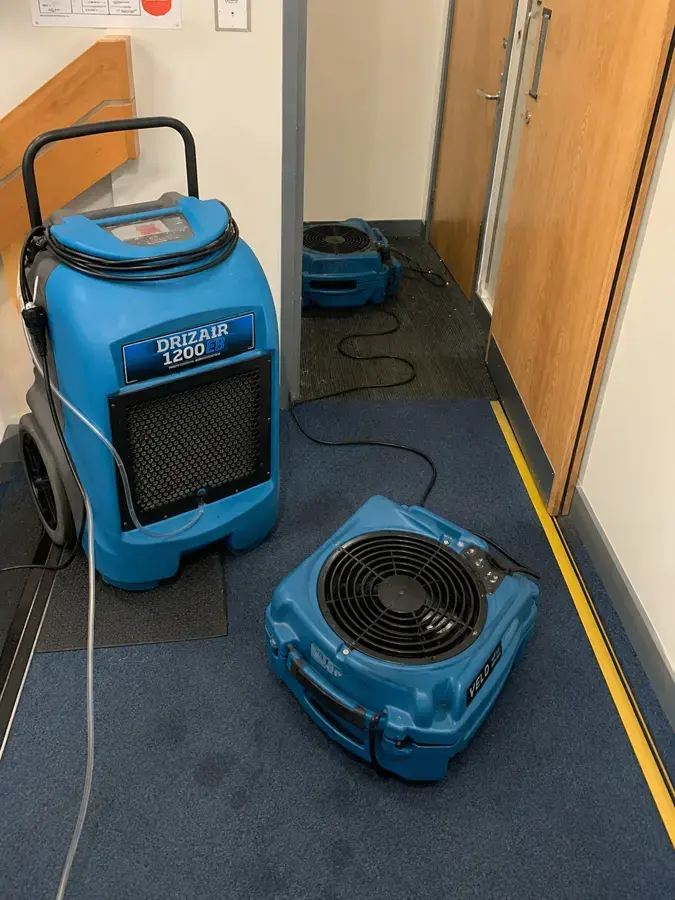
The restoration team cuts open the wet part of the ceiling, removes soaked insulation and drywall, and sets air movers and dehumidifiers.
The drying crew also checks the walls and floor in the unit below, since water can run down a wall. The structural drying page explains how readings drive the work.
In the unit with the stain
- Wet drywall and insulation are removed.
- The cavity is dried until the framing reads dry.
- The ceiling is rebuilt after the readings are met.
In the units around it
- Walls and floors are checked with a meter.
- Carpet and pad are checked for moisture.
- Equipment is placed where readings show water.
What a sagging ceiling means
Drywall is heavy when wet, and a ceiling that bulges is holding water in a pocket. The longer it holds, the weaker the board gets.
Water also soaks the insulation above it. Wet insulation stays wet for a long time and keeps feeding moisture into the drywall.
Releasing the water is a job for the restoration team. A small controlled opening lets the water drain into a container, and the wet board comes down in a planned way instead of all at once.
- A bulge or a sag means water is trapped.
- A brown ring around the stain shows the water has dried and returned more than once.
- A musty smell points to a leak that has been there a while.
- Peeling paint or a crack in the ceiling is a sign of long term moisture.
Documentation, permits and next steps
Good records protect renters and managers. They show when the leak started, who was told and what was done, and they make an insurance claim easier to file.
La Vista requires plumbing permits for replacement of plumbing fixtures and piping systems, so a plumber working on the source should handle that. For the whole town, see water damage restoration in La Vista.
Renters on the Iowa side can read about ceiling leaks in Council Bluffs.
- Keep dated photos of the stain and the repair.
- Save every message with the manager or the neighbors.
- Ask the restoration team for the moisture logs and the scope of work.
- Renters should check whether renters insurance covers belongings damaged by the water.