Drying to the S500 standard
Structural Drying in La Vista, NE
A floor that feels dry can still be wet inside. The drying team treats the framing, subfloor and concrete behind the surface, and the machines stay until readings, not a calendar, confirm the job is done.
(888) 599-2961Wet structure? Call the drying team- 24/7 dispatch
- IICRC S500 drying standard
- Readings logged every visit
StandardIICRC S500
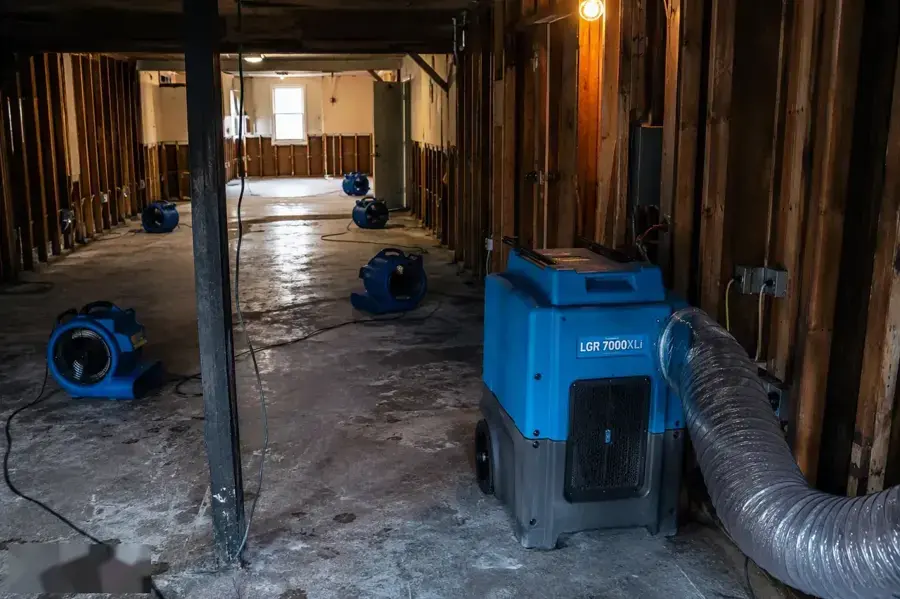
MachinesAir movers, LGR dehumidifiers
Proof of dryLogged readings
AvailabilityAround the clock
Drying is where a water loss either ends or quietly keeps going. Extraction clears the pooled water, yet studs, subfloors, drywall and concrete still hold plenty. La Vista homes date from the 1960s through the 2000s, so the materials differ from one address to the next, and drying wall cavities and subfloors is steered by moisture readings rather than by assumptions about what a building should contain. A house is dried one way and an apartment another, since neighbors on the far side of a shared wall still live there.
How structural drying is handled in La Vista
- 1
Map and rate
The wet area is mapped, and the loss receives a category and a class.
- 2
Build the zone
Containment and air movers are set to match each room's evaporation load.
- 3
Remove the humidity
LGR units, with desiccants for the densest materials, pull water from the air.
- 4
Record to the goal
Air and material readings are written down each visit until the goal is reached.
What does structural drying cost in La Vista, NE?
Structural drying in La Vista, NE usually runs $1,000 to $6,000 on its own. The class of loss, the rooms in the drying zone, the number of machines and the time the readings need set where a job falls.
One or two rooms
$1,000 to $2,500
- Mapping and setup
- A few air movers
- One dehumidifier
Lower level or several rooms
$2,500 to $4,500
- Larger drying zone
- More equipment
- Daily readings
Class 4 materials
$4,500 to $6,000+
- Desiccant dehumidifiers
- Dense materials dried
- Extended monitoring
For a closer planning number, try the water damage cost calculator. A firm figure comes after the walkthrough and moisture map.
What goes into a plan
- Mapping with meters and a thermal camera, so equipment goes only where water actually is
- A class rating from 1 to 4, which describes how much water the materials took on and how easily it leaves
- Air movers sized to each room's evaporation load
- LGR dehumidifiers to take the evaporated water out of the air, plus desiccant units for the densest materials
- Containment that narrows the drying zone so the machines are not wasted on dry space
Numbers on a log sheet
On every visit the crew writes down temperature, relative humidity and grains per pound inside the zone and outside it, plus moisture readings on the wet materials. Together they show whether air is pulling water out and whether the materials are trending dry. The target is a reading within 2 to 4 points of a dry reference material somewhere else in the same building.
No calendar promise
Dense materials such as concrete hold water deeper than thin drywall and take longer. A schedule that names a set number of days ignores the readings, so machines are removed only when the goal is met.
Living with the machines
The equipment hums around the clock, and doors and windows in the zone stay as set. In a multi-unit building, the manager and the neighbors hear what is running and why. Drying comes after water extraction on every job, whether the cause is a flooded lower level or foundation seepage after long rain. Businesses are covered under commercial water damage.
Coverage
Structural Drying across La Vista, NE
The restoration team covers all of La Vista, from Echo Hills and Val Vista to Southwind and Cimarron Woods, plus the Corridor 84 businesses, City Centre and Southport, and the Central Park area along Thompson Creek.
See every area servedQuestions
Structural Drying questions in La Vista
What does structural drying cover?
The building itself: framing, subfloors, drywall and concrete, using air movers, dehumidifiers and readings. It begins once extraction is done and ends when the materials reach the drying goal.
What is IICRC S500?
The industry standard for professional water damage restoration. It sets out how water categories and loss classes are handled, how drying is planned and how the goal is measured.
Why not open windows and run household fans?
Fans move air but do not remove moisture from it, and outdoor humidity can add water back. Dehumidifiers with controlled airflow dry faster and carry the water out of the building.
How can I tell the building is dry?
The readings show it. Moisture meters on wet materials are compared with a dry reference elsewhere in the building, and the daily logs trace the trend toward that number.
Is the equipment loud, and can I stay home?
It hums and moves a lot of air, so some people find it noisy at night. Staying home is usually fine. Apartment neighbors are told what is running so no one is surprised.
Who pays for the electricity?
The machines draw power from the building. Some insurers account for it in a claim, so the insurer is the place to ask.
24/7 emergency dispatch
Wet structure in La Vista? Dry it to a reading.
Moisture left inside framing and subfloors keeps causing harm after the surface looks fine. The drying team maps it, dries it and records readings until the structure matches a dry reference.