Standing water removal
Emergency Water Extraction in La Vista, NE
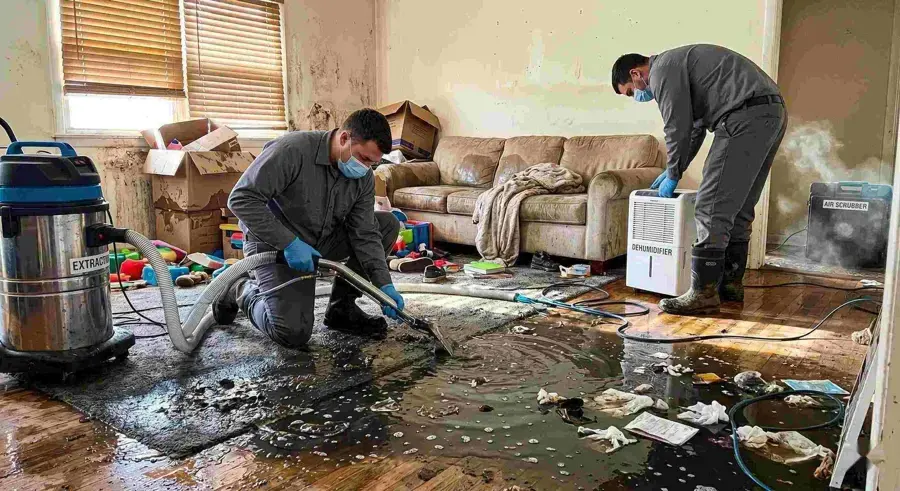
In a city of apartments and homes built from the 1960s to the 2000s, water reaches the next unit fast. The extraction crew pumps it out first, so drying starts on wet materials.
(888) 599-2961Water on the floor? Call extraction now- 24/7 dispatch
- Pumps and extraction tools
- Readings logged daily
Where it startsFloors and carpet
Housing mixHouses and apartments
Drying standardIICRC S500
AvailabilityAround the clock
La Vista fits a lot of living space into 3.28 square miles: 3,841 detached houses, apartment buildings of every size and a median build year of 1993. That variety changes how a loss behaves. In a house, water usually pools on one floor and drifts to the lowest corner. In an apartment building it can drop through the floor assembly into the home below. Either way, the extraction crew takes the bulk water out first, since pumps pull out more in a single pass than evaporation manages in days.
How emergency water extraction is handled in La Vista
- 1
Trace the wet edge
A thermal camera and pinless meters follow the water's path, including toward a neighboring unit.
- 2
Pump, then press
Submersible pumps take down deep water; extraction tools then press the remainder from carpet and flooring.
- 3
Sort what stays
Pad, floating floors and anything touched by contaminated water is photographed, then removed.
- 4
Hand off to drying
Air movers and LGR dehumidifiers are set during the same visit, and the first readings are written down.
What does emergency water extraction cost in La Vista, NE?
Expect emergency water extraction in La Vista, NE to land between $300 and $2,500. A shallow spill on one floor sits low, while deep water, soaked pad or a contaminated source sits high.
One wet room
$300 to $800
- Portable extraction
- A quick moisture check
- Nothing torn out
Carpet and several rooms
$800 to $1,800
- Pad pulled and logged
- Wall bases checked
- Drying started
Deep or dirty water
$1,800 to $2,500+
- Pumps for standing depth
- Porous materials removed
- Protective gear worn
For a closer planning number, try the water damage cost calculator. A firm figure comes after the walkthrough and moisture map.
Why water leaves before anything gets dried
Pooled water keeps doing harm. It creeps up the bottom of drywall, saturates the base plate of a wall and slides beneath vinyl plank and laminate. Getting it out early decides how much material must be cut out afterward, and it spares the drying equipment a losing fight against a puddle.
- Truck-mounted units send the water outside, not into a bucket in the next room
- Weighted tools squeeze carpet and pad until they stop running
- Submersible pumps take down deeper water in a lower level
- A moisture map shows how far the water traveled before any fan goes down
Carpet, pad and flooring after a leak
Carpet from a clean supply leak can frequently be extracted and left in place, while the pad beneath it is usually replaced. Floating floors trap water underneath and tend to come up. After sewage or storm runoff, every porous covering the water reached is removed. The walkthrough sorts this out room by room, with photos taken before anything leaves the building.
Extraction is only half the job
A floor that looks and feels dry can still hold water in the subfloor and wall base. The crew keeps taking readings after the pumps are shut off, and equipment stays until those numbers match a dry reference.
What follows extraction
When the standing water is gone, the job moves to structural drying. If the source was upstairs, read about ceiling leak water damage; if a pump gave out in a storm, read about sump pump failure cleanup. A flooded lower level is covered under basement flooding cleanup, and every other service is listed on the La Vista water damage restoration page.
Coverage
Emergency Water Extraction across La Vista, NE
The restoration team covers all of La Vista, from Echo Hills and Val Vista to Southwind and Cimarron Woods, plus the Corridor 84 businesses, City Centre and Southport, and the Central Park area along Thompson Creek.
See every area servedQuestions
Emergency Water Extraction questions in La Vista
How quickly does standing water need to go?
Fast. Wood and drywall drink in water for as long as it sits, and a damp structure left alone for a couple of days invites mold. Early extraction keeps the final tear-out small, which is why it opens almost every job.
Will a shop vacuum handle it?
A shop vacuum suits a spilled pot, not a soaked room. Its small tank fills in minutes and it cannot draw water from pad or under planks. Pumps and extraction tools move far more and leave less for the dehumidifiers to chase.
Can the carpet stay?
Often, when the water was clean: the carpet is pressed dry and dried in place while the pad is replaced. If the water came from a sewer or from outside, carpet and pad are both bagged because they cannot be cleaned to a safe level.
Does water from the apartment above change anything?
Yes. Water falling through a ceiling runs along joists and into wall cavities, so extraction in the lower unit is paired with mapping both homes. Each unit gets its own photos and readings.
Is extraction paid for by insurance?
After a sudden pipe or appliance failure it is commonly part of a covered claim, while rising outside water usually needs flood coverage. The policy decides, so the insurer is the place to confirm.
What happens once the water is out?
Drying equipment is set, readings begin and materials that cannot dry are removed and documented. Extraction opens the dry-out, and structural drying finishes it.
24/7 emergency dispatch
Standing water in La Vista? Get it pumped out now.
Each hour of waiting lets water travel into drywall, subfloors and the home next door. The extraction crew clears it, hands off to drying and records everything for the claim.