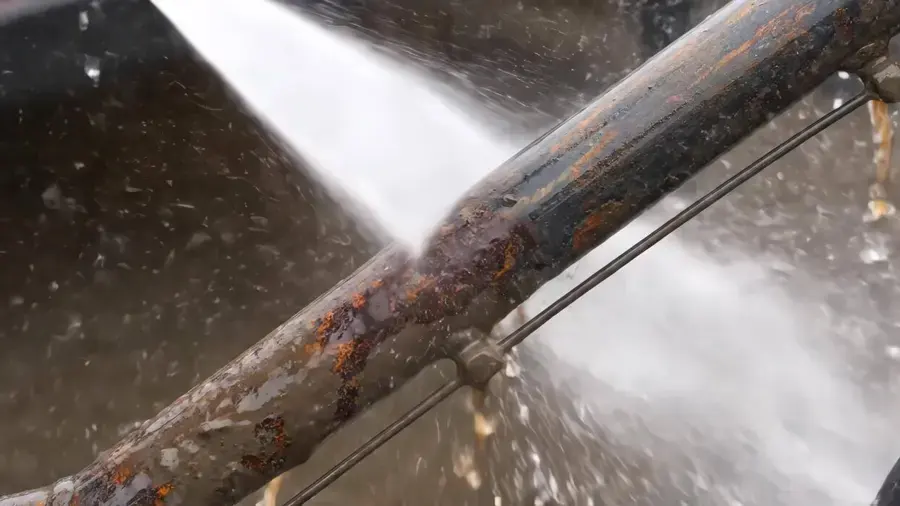
A supply pipe that bursts beside the water meter is one of the fastest ways to flood a basement. The pipe is under full pressure, so it can put a lot of water on the floor in a short time. This post covers how to stop the flow and what the restoration team does next.
Key takeaways
- The City of Papillion says residential water meters are inside the house, in the basement along the water pipe, so the shutoff and the break are often in the same area.
- Stop the water first, then deal with the power, the contents and the cleanup.
- The restoration team extracts the standing water, removes soaked materials and dries the structure.
- Clean supply water is Category 1 at first, but it can turn into Category 2 if it sits or crosses dirty surfaces.
- The longer the water sits in a finished basement, the more flooring, drywall and cabinets are at risk.
Why the meter area matters in Papillion
The City of Papillion says residential water meters sit inside the house, in the basement along the water pipe. That puts the main shutoff, the meter and the first stretch of supply pipe all in one corner of the basement.
It also means a failure there happens next to a lot of finished space. The median Papillion home was built in 1991, so many basements are finished with carpet, drywall and built in cabinets.
Stopping the flow
The first job is to stop the water. Everything else waits until the flow is off.
Find the shutoff
Look along the supply pipe where it enters the basement, near the meter. The main shutoff is usually a valve with a round wheel handle or a lever.
Turn a wheel handle clockwise until it stops, or turn a lever a quarter turn so it sits across the pipe.
If the valve will not close
An old valve can stick or leak when it is turned. If it does not stop the flow, the water supplier has to shut it off at the street.
The City of Papillion provides water and sewer service, so a call to the city is the next step. In the meantime, keep people and belongings away from the spray.
After the water stops
- Shut off power to the basement if the panel is dry and reachable from dry ground.
- Open a faucet upstairs to drain the pipe pressure, once the main is closed.
- Photograph the break, the meter area and the water before moving anything.
What the restoration team extracts
A burst pipe puts down a lot of water quickly, and it travels. It runs across the floor, under walls and into carpet and drywall.
The extraction crew starts with pumps and wet vacuums to take the standing water off the floor. The burst pipe cleanup page describes the process.
- Standing water is pumped or vacuumed out of the room.
- Carpet is lifted and the pad is checked, and removed if it is soaked.
- Furniture and stored items are moved off the wet floor.
- Water in wall bases is traced with a moisture meter and a thermal camera.
What gets removed and what gets dried
Clean supply water is the best case in a flood. The materials it touches can often be saved if they are dried quickly.
That window closes as the water sits. Drywall wicks water upward, pad holds it against the subfloor, and cabinet bases swell.
The restoration team also checks the area around the meter and the supply pipe, since water often follows the pipe along the wall.
Often removed
- Pad under carpet when it is soaked through.
- The lower part of drywall that wicked water.
- Swollen particleboard in cabinet bases and shelves.
Often dried in place
- Concrete floors and masonry walls.
- Wood framing and solid wood trim.
- Carpet that was lifted and treated promptly.
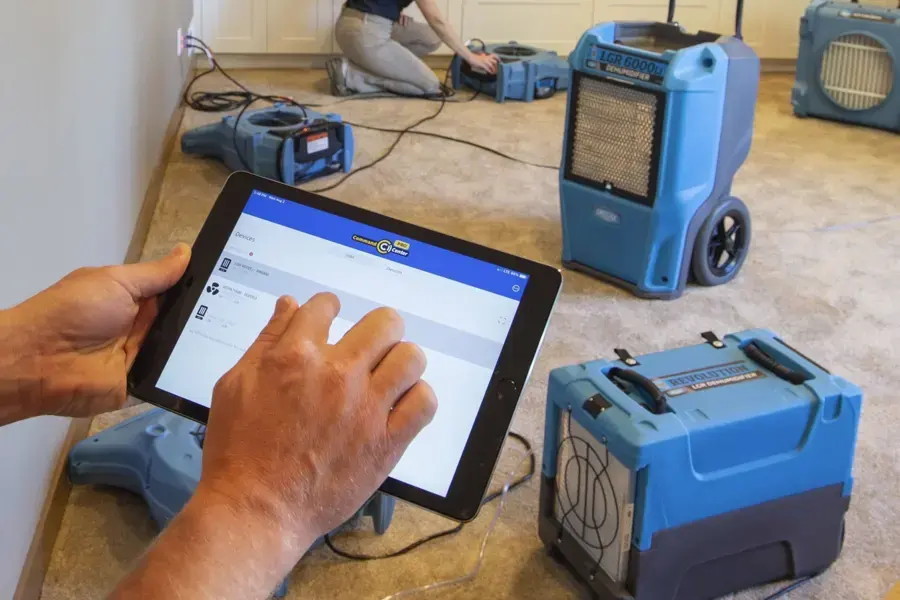
Drying the basement
After extraction, the drying crew sets air movers and dehumidifiers. Basements dry slowly because they have less airflow and cooler air than upstairs rooms.
The crew checks moisture readings in the walls, the framing and the floor each visit. The goal is a steady drop until the numbers match dry materials.
More on how this is measured is on the basement flooding cleanup page. Stopping early leaves damp walls, and wet materials left too long can grow mold.
How a burst pipe damages a finished basement
A burst supply pipe sprays under pressure, so water lands on walls, shelves and furniture, not just the floor. It then runs down the wall into the carpet and under the baseboards.
In a basement with a finished ceiling, the spray can also soak the ceiling tiles and the insulation above.
- Spray reaches shelves, electronics and stored boxes at several heights.
- Water running down walls collects behind baseboards and cabinets.
- Carpet pad holds water against the concrete slab, where it dries slowly.
- A drop ceiling or drywall ceiling can sag if it takes on enough water.
- Stored cardboard and paper break down within a day.
What to do after the cleanup starts
A plumber has to repair the pipe or replace the failed fitting. Drying can continue while the repair is made, as long as the water is off.
The restoration team documents the loss with photos, readings and a scope of work. Those records help with an insurance claim.
For the rest of the services in town, see water damage restoration in Papillion. Homes on the Iowa side can read about burst pipe cleanup in Council Bluffs.
- Keep the broken fitting or pipe section for the plumber and the insurer.
- Save receipts for the plumber and any emergency supplies.
- Ask the plumber whether other fittings near the meter should be replaced.
- Ask the insurance company what documents are needed to file.