Dark, foul smelling water rising through a basement floor drain is one of the worst surprises a homeowner can face. It is not ordinary flood water, and it is not a job for a mop and a bucket. This post explains why a floor drain backup is treated as sewage and what the restoration team does about it.
Key takeaways
- Sewage that comes up a floor drain or toilet is Category 3 water, the most contaminated class in the S500 standard.
- Stay out of the water, keep people and pets away and do not run water down any drain in the house.
- Carpet, pad, drywall and other porous materials that touched sewage are removed, not cleaned.
- Hard surfaces are cleaned, disinfected and dried, and readings show when the space is back to normal.
- A backup in an older home often points to a failing drain or sewer pipe, so the cause needs a plumber after the cleanup starts.
Why a floor drain backup is treated as sewage
A floor drain connects the lowest level of the house to the sewer. When that pipe is blocked or the sewer cannot carry the flow, the water has only one way out, and that is back up through the lowest drain.
The water that comes up is a mix of household waste, soap, grease and bacteria. The cleaning industry classes it as Category 3, or black water.
What Category 3 means
Category 3 water is grossly contaminated and can carry disease causing organisms. Anything porous that it touches is considered unsafe to keep.
That is why the response looks different from a clean supply pipe leak, even when the amount of water is small.
How this differs from a flood or a sump overflow
Flood water and sump pit water come from outside the plumbing system. A floor drain backup comes from inside it, from the sewer pipe itself.
Those other causes are covered under basement flooding cleanup. This post stays on the drain.
Why older Council Bluffs homes see backups
Council Bluffs has a large stock of older homes in the West End and around downtown. Many of those homes have aging cast iron drains and clay sewer laterals.
Pipes of that kind can crack, shift, collect scale or let roots in over time. Any one of those problems can narrow the pipe until it clogs, especially during heavy rain when the system is under strain.
- Slow drains that gurgle when another fixture runs.
- Water backing up in the lowest tub or floor drain when a washing machine empties.
- A sewer smell near the basement drain.
- Backups that happen more than once in the same spot.
What to do in the first hour
The steps below keep the contamination from spreading and keep people safe until the crew arrives.
- Stop using sinks, toilets, the dishwasher and the washing machine. More water down the drain means more water on the floor.
- Keep everyone, including pets, out of the affected area.
- Turn off power to the area only if the panel is dry and reachable from dry ground.
- Do not walk through the water, and do not try to wet vacuum it with a household vacuum.
- Photograph the water and the area before anything is moved.
- Call the restoration team and tell them the water came from a drain.
Protecting health during a sewage backup
Sewage carries bacteria and viruses, and contact is the main risk. Skin contact, splashes and dried residue all count.
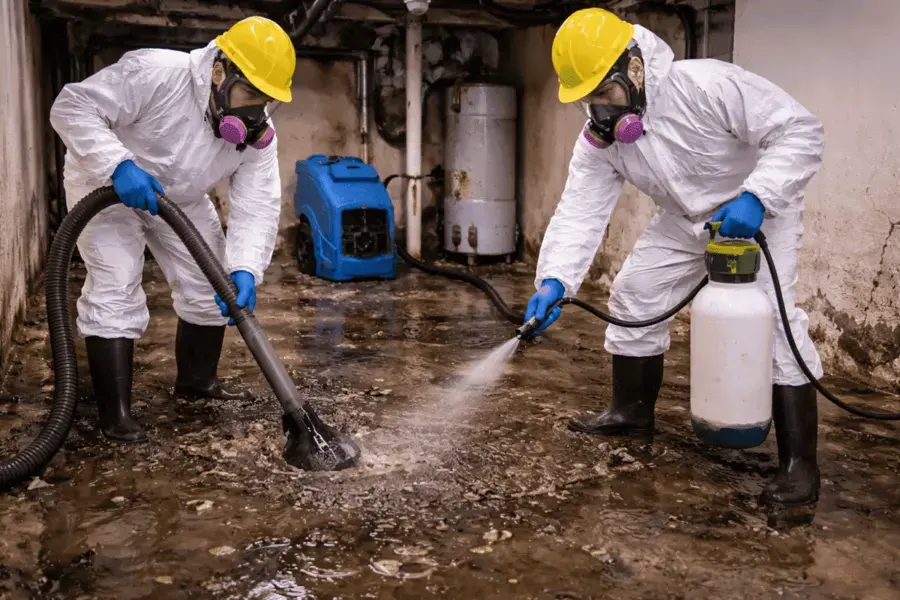
The restoration team works in protective suits, gloves, boots and respirators for that reason. The people who live in the home need to take simple steps too.
- Wash hands with soap and clean water after any contact with the water or items it touched.
- Keep food, dishes and cooking tools away from the affected area.
- Keep older adults, infants and anyone with a weakened immune system out of the home during the cleanup if possible.
- Do not run the household heating or cooling fans through the affected area, since they can spread droplets and odor.
- Wear rubber boots and gloves for any short trip into the area, and wash them afterward.
What the restoration team removes and cleans
A sewage job follows a fixed order. The crew wears protective gear, contains the area and then removes the contaminated water and materials.
The full service is outlined on the sewage backup cleanup page.
Extraction and removal
- Pumps and wet vacuums pull the water out of the room and the drain area.
- Carpet, pad, soaked drywall, insulation and cardboard are cut out and bagged.
- Furniture and belongings that cannot be cleaned are listed and photographed before disposal.
Cleaning and disinfecting
- Concrete floors and masonry are scrubbed and treated with an antimicrobial.
- Wood framing is cleaned and, where needed, sanded or treated.
- Hard goods that can be cleaned are washed and disinfected.
Drying after the cleanup
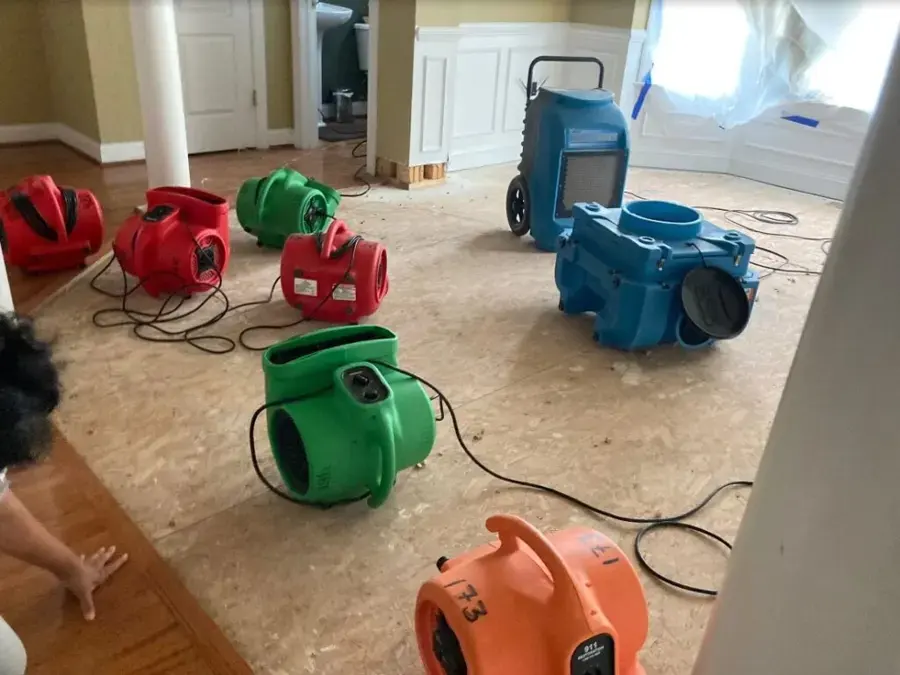
Once the contaminated materials are out and the surfaces are clean, the space still has to be dried. Moisture left in the framing and the floor invites odor and mold.
The drying crew places air movers and dehumidifiers and checks the walls and floor with moisture meters. The readings are logged until they match the drying goal. The structural drying page explains that process.
Because the pipe that failed is older, the plumber should look at the drain and the sewer pipe before the space is rebuilt. Fixing the walls without fixing the pipe leaves the same risk in place.
Insurance, records and the next backup
Coverage for a sewer backup is often separate from a standard homeowners policy, so the policy should be checked early. The restoration team can supply photos, a scope of work and moisture logs to support a claim.
Across the river, homes in the Omaha area deal with the same problem, and the Bellevue sewage backup cleanup page shows how it is handled there: sewage backup cleanup in Bellevue.
- Keep the dated photos from the first hour.
- Save any plumber report that names the cause.
- Ask the insurance company in writing what a sewer backup claim requires.
- Ask the plumber whether a backwater valve makes sense for the home.