Category 3 sewage water
Sewage Backup Cleanup in Bellevue, NE
When sewage rises through a floor drain or toilet in Bellevue, it is Category 3. The restoration team extracts it, removes what it touched and sanitizes before drying.
(888) 599-2961Sewage coming up? Call a Bellevue crew now- 24/7 dispatch
- Containment and protective gear
- Verified before rebuild
Water typeCategory 3
Where it risesFloor drains and toilets
Porous finishesRemoved, not dried
AvailabilityAround the clock
Sewage in a home is a health hazard first and a drying job second. The City of Bellevue says homes with basements, or with the lowest level near sewer height, can see overflow come out of lower drains and toilets. It lists grease, tree roots, hair, wipes, diapers and debris as the common causes of blockages.
How sewage backup cleanup is handled in Bellevue
- 1
Contain the area
Plastic barriers and filtered air machines keep contamination from reaching clean rooms.
- 2
Extract the sewage
Pumps and truck-mounted units remove the water, and solids are bagged.
- 3
Remove porous materials
Carpet, pad, insulation and low drywall that touched sewage are cut out and hauled away.
- 4
Sanitize and dry
Hard surfaces are cleaned and sanitized, then dehumidifiers dry the structure and readings confirm it.
What does sewage backup cleanup cost in Bellevue, NE?
In Bellevue, NE, sewage backup cleanup commonly runs $2,000 to $12,000 or more. How much floor the sewage covered, how much drywall, carpet and insulation has to come out and how long it sat decide the cost.
Small, bare floor
$2,000 to $4,000
- Solids and water out
- Surfaces disinfected
- Dehumidifier run
Finished level
$4,000 to $8,000
- Barriers and air scrubbing
- Carpet and drywall hauled
- Sanitized and dried
Large or long-standing
$8,000 to $12,000+
- Entire level stripped
- Longer containment
- Verified before rebuild
For a closer planning number, try the water damage cost calculator. A firm figure comes after the walkthrough and moisture map.
Why sewage is handled differently
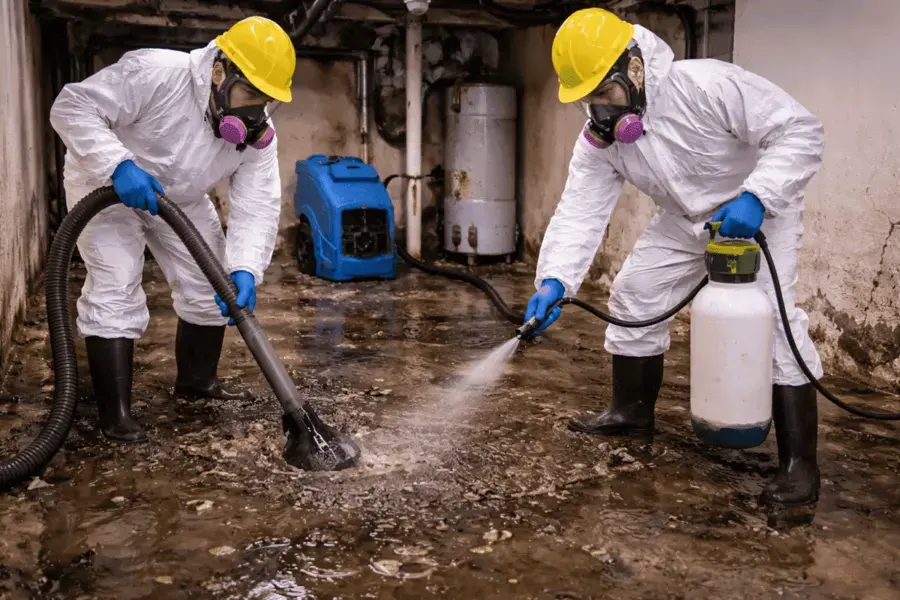
Category 3 water can carry bacteria and viruses, so the response is built around containment. Ordinary drying does not make sewage-soaked material safe. Carpet, pad, insulation and drywall that touched it come out and are bagged, and hard surfaces are cleaned and then sanitized.
- Protective suits, gloves and respirators for the crew
- Plastic containment so the rest of the house stays clean
- Filtered air machines running during demolition
- Contaminated materials bagged and removed, never stored
Where the blockage sits
The City of Bellevue says the owner is responsible for maintaining and repairing the sewer lateral, the pipe between the house and the city main. The city plans to clean its own gravity sewer mains twice a year. A plumber can run a camera through the pipe to find the cause, and fixing it comes before the cleanup is called finished.
Keep out until it is cleaned
Do not flush, run water or use drains in the building until the blockage is cleared, and keep people and pets out of the affected area. Handling sewage without protection risks illness.
Stopping the next backup
The City of Bellevue recommends a backflow prevention valve on the lowest drain, and it says a special insurance rider is usually needed for sewage backup coverage. Keeping grease, wipes and diapers out of drains cuts the number of blockages. For related losses see storm flood cleanup, basement flooding cleanup and structural drying.
Coverage
Sewage Backup Cleanup across Bellevue, NE
The restoration team works all of Bellevue: Olde Towne, Fontenelle Hills, Hyda Hills, Twin Creek, Tregaron and Twin Ridge, plus the shops and offices along Fort Crook Road and Highway 370.
See every area servedQuestions
Sewage Backup Cleanup questions in Bellevue
Sewage is coming up a floor drain. What now?
Stop using water in the house, because every flush or tap adds to the flow. Keep people and pets away, leave the sewage alone and call. A plumber will need to clear the blockage while the restoration team handles the cleanup.
Can a small backup be cleaned without help?
Sewage carries disease-causing germs, and porous materials cannot be made safe by wiping. A very small spill on a bare floor can be handled with protective gear and a disinfectant, but anything that touched carpet or drywall needs a trained crew.
What usually causes a sewer backup here?
The City of Bellevue lists grease, tree roots, hair, wipes, diapers and debris as common causes. A blockage in the owner's sewer lateral, or a problem in the main, can push sewage into the lowest drains and toilets.
Will insurance cover sewage backup?
The City of Bellevue says a special insurance rider is usually needed for sewage backup coverage, so a standard homeowners policy often does not pay. Check your policy, ask your insurer, and keep photos and readings either way.
What is a backflow prevention valve?
It is a valve on the lowest drain that lets wastewater leave the house but stops it from coming back. The City of Bellevue recommends one, and a plumber can advise on the right type for the home.
Why do carpet and drywall have to be thrown out?
Sewage soaks deep into porous material, and drying does not remove what it carries. Carpet, pad, insulation and low drywall are removed and bagged so nothing contaminated stays behind the walls.
24/7 emergency dispatch
Sewage backup in Bellevue? Get a protected crew on it.
Sewage keeps contaminating whatever it touches until it is removed. The restoration team contains the area, removes the water and soiled materials, sanitizes and dries to a verified reading.