Standing water removal
Emergency Water Extraction in Bellevue, NE
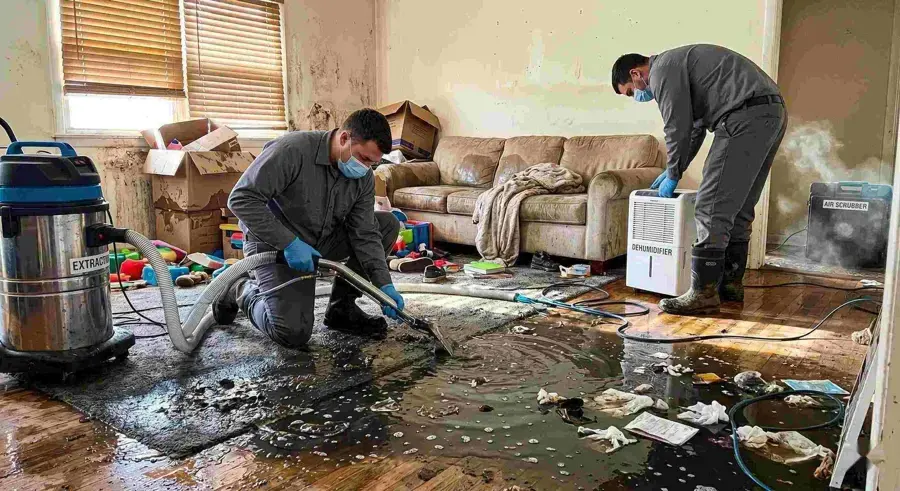
Papio Creek rain and high Missouri River flows can leave water sitting on Bellevue floors for a while. The extraction crew pulls it out with pumps and truck-mounted units, and the drying team takes over.
(888) 599-2961Water on the floor in Bellevue? Call for extraction- 24/7 dispatch
- Truck-mounted extraction
- Readings logged daily
Starts withBulk water removal
EquipmentPumps and truck units
Local triggerCreek rain, river backwater
AvailabilityAround the clock
In Bellevue, water that lands on a floor rarely leaves by itself. Papio Creek runs through town, Offutt Ditch carries storm runoff toward the Missouri River, and a USGS study found that backwater from high river flows kept standing water on Offutt Air Force Base for much of the year after March 2019. A floor that stays flooded keeps soaking whatever sits under it. Whether the cause is a supply pipe, a creek overflow or a washer hose, the first hour is about getting the water out of the building.
How emergency water extraction is handled in Bellevue
- 1
Trace the wet edge
A thermal camera and pinless meters show how far water traveled under floors and into walls.
- 2
Pump the depth
Portable pumps lower deep water, and truck-mounted units take the rest out of the house.
- 3
Sort what stays
Carpet, pad and flooring are judged one room at a time, with photos before removal.
- 4
Start the drying
Air movers and LGR dehumidifiers follow, and the first readings are logged on the first visit.
What does emergency water extraction cost in Bellevue, NE?
In Bellevue, NE, emergency water extraction commonly runs $300 to $2,500. A thin layer on one carpeted room sits low; deep water, several rooms or soaked pad and flooring push toward the top.
One room
$300 to $800
- Clean water on carpet
- Spot extraction
- Moisture check
Lower level or several rooms
$800 to $1,800
- Pumps plus extraction
- Pad removal
- Wet edge mapped
Deep or contaminated
$1,800 to $2,500+
- Portable pumps
- Category 3 handling
- Porous flooring disposal
For a closer planning number, try the water damage cost calculator. A firm figure comes after the walkthrough and moisture map.
Why Bellevue floors need pumps before fans
Fans and dehumidifiers dry the surface of wet material, but they cannot lift an inch of water off a floor. In a split-entry or tri-level home, a style found in Fontenelle Hills, the lowest level is where runoff and failed plumbing tend to end up. Removing the water first shortens everything that follows.
- Truck-mounted units carry the water outside, away from the structure
- Portable pumps bring deep water down in a lower level
- Weighted tools squeeze water out of carpet and pad
- Moisture mapping marks the wet edge before any fan runs
Carpet, pad and flooring decisions
The source decides what stays. Clean water from a supply fitting usually leaves carpet salvageable, though the pad rarely survives. Water from Papio Creek, a flooded yard or a sewer overflow is Category 3, and the porous floor coverings it reached are removed. The crew sorts this out room by room and photographs each call.
A dry reading closes the job
The restoration team measures wet areas against an unaffected reference spot in the same building. Equipment leaves when the structure matches that reading, not when the surface feels dry.
After the pumps shut off
Next comes structural drying. If the water came from a failed sump pump or a flooded basement, that cause is handled first so the room does not refill. Moisture readings then decide how much carpet, pad or baseboard comes out, so each cut stays small and the claim file shows why a piece went. Every other service is listed on the Bellevue water damage restoration page.
Coverage
Emergency Water Extraction across Bellevue, NE
The restoration team works all of Bellevue: Olde Towne, Fontenelle Hills, Hyda Hills, Twin Creek, Tregaron and Twin Ridge, plus the shops and offices along Fort Crook Road and Highway 370.
See every area servedQuestions
Emergency Water Extraction questions in Bellevue
How soon does standing water need to come out?
Right away if possible. Drywall, wood and subfloor keep drinking from a wet floor, and the longer water sits, the more material has to be cut out afterward. Pumping is the step that limits the scope of the whole job.
Does creek or river water change how it is pumped?
Yes. Water from Papio Creek, a flooded yard or the Missouri River is Category 3, so the crew works in protective gear and removes the porous flooring it touched instead of trying to dry it.
Can carpet in a Bellevue home be saved?
After a clean supply leak, carpet is often extracted and dried in place while the pad is replaced. After storm or river water, carpet and pad both go, since neither can be cleaned to a safe level.
Why does water linger in some low spots after a flood?
A USGS study of Offutt Air Force Base tied many drainage problems to backwater from high Missouri River flows. Ground and drains that cannot shed water keep it standing, and pumping removes it without waiting on the river.
Will insurance pay for extraction?
Extraction after a sudden accidental loss, such as a failed supply pipe, is commonly part of a covered claim, while rising surface water is usually a flood matter. Bellevue is an NFIP participating community, and coverage depends on your own policy.
What happens once the water is out?
The drying team sets air movers and LGR dehumidifiers, takes readings and removes materials that cannot dry. Extraction opens the dry-out, and the job ends only when the readings match an unaffected reference.
24/7 emergency dispatch
Standing water in Bellevue? Get it pumped out and dried.
Water left standing keeps moving into subfloor, drywall and insulation. The extraction crew removes it, the drying team brings the structure to a dry reading, and each step is photographed for the claim.