Dried to a measured reading
Structural Drying in Bellevue, NE
After Missouri River or Papio Creek flooding, walls and floors can stay wet once the standing water is gone. The drying team uses meters and dehumidifiers to prove each material is dry, not just dry to the touch.
(888) 599-2961Wet structure in Bellevue? Call for drying- 24/7 dispatch
- Meters and thermal imaging
- Readings logged daily
GoalDry reference reading
EquipmentAir movers, LGR units
ProofDaily meter logs
AvailabilityAround the clock
Drying is where a water loss is won or lost. The Missouri River floods of 2019 and 2024 and the Papio Creek flash flooding on May 21, 2024 showed Bellevue how long ground and structures can stay wet. A building that looks dry can still hold water in wood, block and insulation, and that hidden moisture is what drying is built to find. Surfaces dry first, which makes a room feel finished while the framing behind it is still wet.
How structural drying is handled in Bellevue
- 1
Map the wet zone
Meters and thermal imaging mark every wet material and set a dry reference.
- 2
Place the equipment
Air movers and LGR dehumidifiers are sized to the volume of the affected space.
- 3
Monitor each day
Readings are logged daily, and equipment is moved or adjusted as areas dry.
- 4
Release at the goal
Equipment comes out only when wet materials match the dry reference.
What does structural drying cost in Bellevue, NE?
In Bellevue, NE, structural drying on its own commonly runs $1,000 to $6,000. The size of the drying zone, the number of air movers and dehumidifiers needed, how dense the materials are and how long the readings take to reach the goal set the figure.
One or two rooms
$1,000 to $2,500
- Wet zone mapped
- Fans and one dehumidifier
- Logged meter checks
Lower level or several rooms
$2,500 to $4,500
- Containment barriers
- Several dehumidifiers
- Cavity airflow
Dense materials
$4,500 to $6,000+
- Hardwood or masonry
- Desiccant units
- Extended monitoring
For a closer planning number, try the water damage cost calculator. A firm figure comes after the walkthrough and moisture map.
How the drying plan is built
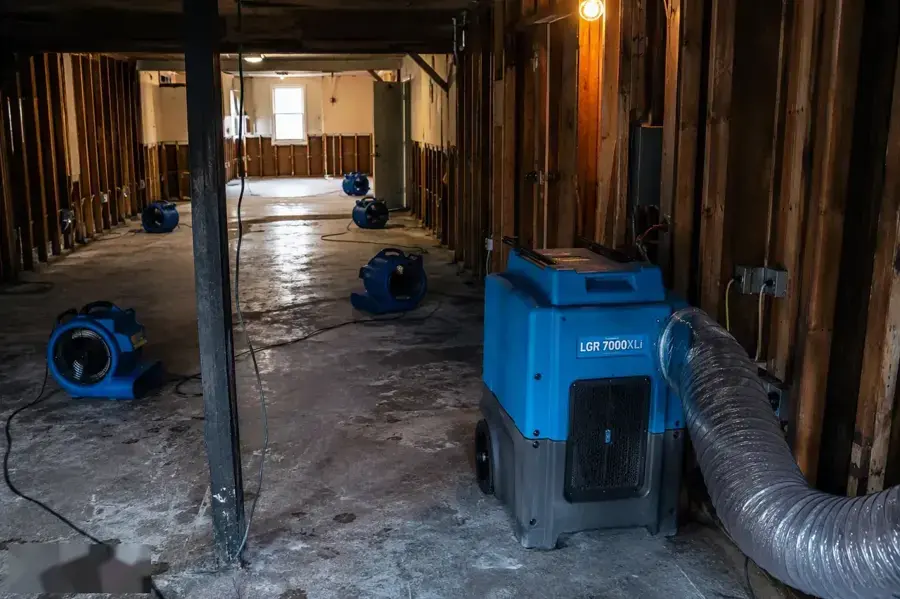
Placement starts with a map. Meters and thermal imaging show which materials are wet, and the plan sizes air movers and dehumidifiers to the volume of the affected space. Equipment is not added by guess, because too little leaves moisture behind and too much wastes power. As rooms dry, units are moved or removed so the remaining equipment keeps working where the water is.
- Air movers across wet floors and wall bases to speed evaporation
- LGR dehumidifiers to pull moisture out of the air
- Small access holes so air reaches wall cavities
- Containment that keeps the drying zone together
Readings, not guesses
A reading on a wet wall means little without a comparison. The drying team measures an unaffected wall in the same building as the dry reference, then logs the wet areas daily until they match. Equipment leaves when the numbers agree, not because a set amount of time has passed.
Why concrete and masonry take longer
Dense materials such as concrete, block and hardwood release water slowly. Extra dehumidification and monitoring keep them from putting moisture back into the air after the equipment is gone.
Where drying fits in the job
Drying follows extraction in every loss, whether the water came from a split pipe, a creek or a river. See water extraction, basement flooding cleanup and foundation seepage cleanup for the steps before it, and commercial water damage for larger buildings.
Coverage
Structural Drying across Bellevue, NE
The restoration team works all of Bellevue: Olde Towne, Fontenelle Hills, Hyda Hills, Twin Creek, Tregaron and Twin Ridge, plus the shops and offices along Fort Crook Road and Highway 370.
See every area servedQuestions
Structural Drying questions in Bellevue
What exactly is structural drying?
It is the controlled removal of moisture from framing, subfloor, drywall and concrete using air movers, dehumidifiers and meters. The goal is to bring every material back to a dry reference reading, not just to remove visible water.
Why not just open windows and run fans?
Household fans move air but do not pull moisture out of it, and outdoor air is often as humid as the room. Dehumidifiers remove the moisture, and a placement plan keeps air moving across every wet surface.
How do I know the building is really dry?
The restoration team compares readings on wet materials with a dry reference in the same building and logs them daily. Equipment leaves when they match, and the log goes into the claim file as proof.
Is the equipment loud, and can I stay home?
Dehumidifiers and air movers make steady noise, and running equipment adds warmth to the space. Many people stay home, though some prefer to stay elsewhere during a larger job.
Who pays for the electricity?
The extra power use is often part of the claim when a covered loss caused the water. Keep a note of the equipment and the dates, and ask your insurer how it handles the electric bill.
Why does the equipment stay after the water is gone?
Water soaks into wood, block and insulation where it cannot be seen. After a river or creek flood, materials hold moisture for a long time, so readings, not appearance, decide when the equipment comes out.
24/7 emergency dispatch
Wet structure in Bellevue? Dry it to a reading.
Water hidden in framing, subfloor and block keeps causing damage after the surface dries. The drying team places the equipment, logs the readings and releases it only at the goal.