Seepage in lower levels
Foundation Seepage Cleanup in Bellevue, NE
Bellevue sits on the Missouri River, and when the river runs high, wet ground can keep pressing water into lower levels. The drying team finds how far it spread and dries floors and walls to a reading.
(888) 599-2961Damp floor edge after rain? Call about seepage- 24/7 dispatch
- Thermal imaging along every wall
- Readings logged daily
Water typeCategory 2 groundwater
Where it showsWall base and slab edge
Local driverHigh Missouri River flows
AvailabilityAround the clock
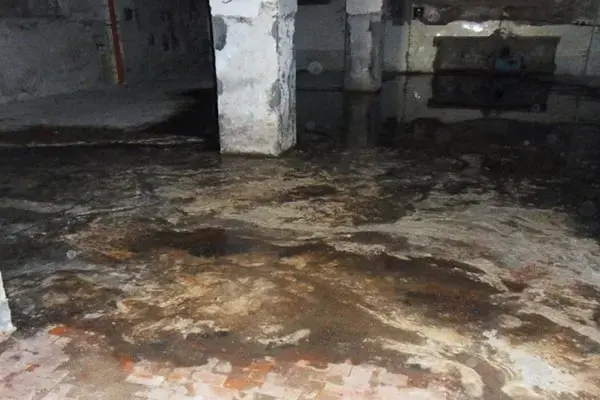
Seepage is the slow kind of water damage. Instead of a pipe letting go, groundwater works through a foundation wall or up at the edge of the slab. Bellevue is bounded on the east by the Missouri River, and after the March 2019 flood a USGS study found standing water persisted for much of the year on Offutt Air Force Base, with many drainage problems traced to backwater from high river flows. Wet ground like that can keep water pressing on lower levels long after the river drops.
How foundation seepage cleanup is handled in Bellevue
- 1
Map each foundation wall
A thermal camera and pinless meters follow every exterior wall to the wet edge.
- 2
Pull out soaked materials
Soaked carpet pad, trim and the bottom of the drywall are cut out only where the meters say.
- 3
Dry the concrete
LGR dehumidifiers and air movers stay on concrete and block longer, since masonry releases water slowly.
- 4
Record the seepage path
Photos and daily readings show where the water entered, for the waterproofing contractor and the claim.
What does foundation seepage cleanup cost in Bellevue, NE?
In Bellevue, NE, foundation seepage cleanup commonly runs $800 to $5,000. One damp unfinished wall sits near the low end; a finished lower level where seepage went unnoticed for weeks sits near the top.
One damp wall
$800 to $1,800
- Moisture mapping
- Water extraction
- Concrete drying
Finished lower level
$1,800 to $3,500
- Pad and trim removed
- Low drywall cut
- Wall cavities dried
Weeks of seepage
$3,500 to $5,000+
- Several walls opened
- Antimicrobial applied
- Longer dehumidification
For a closer planning number, try the water damage cost calculator. A firm figure comes after the walkthrough and moisture map.
Signs of seepage in a Bellevue lower level
- A damp band along the base of a foundation wall after heavy rain
- A white, powdery crust on bare concrete or block
- Water at the slab edge when no pipe is leaking
- Carpet that is wet along the walls but dry in the center
- A damp smell that returns whenever the ground stays soaked
How the drying team handles seepage
Seepage hides. Pad under carpet, the bottom edge of finished drywall and boxes stored against a wall can sit wet for weeks with no visible stain. The walkthrough starts with a thermal camera and pinless meters along each foundation wall to find the wet edge, and the extraction crew removes any standing water. On finished walls, wet pad, baseboard and the lowest strip of drywall usually come out so the cavity behind can dry. Concrete and block give up water slowly, so dehumidifiers run longer here than after a clean supply leak.
Drying the space is not fixing the wall
The restoration team dries the lower level and records the damage. Stopping the water at its source is separate work done by a waterproofing contractor: grading, longer downspouts, drain tile or a sump pit.
When the river or Papio Creek runs high
Bellevue has seen Missouri River flooding in 2011, 2019 and 2024, and Papio Creek flash flooding on May 21, 2024. During the June 2024 river flood, the Papio NRD set up a flood wall barrier along railroad tracks in Bellevue. After any high water, check lower-level walls for a damp band, and try the basement seepage risk check. A pump that cannot keep up is a sump pump failure, and seepage that turns into standing water calls for basement flooding cleanup. Every other service is listed on the Bellevue water damage restoration page.
Coverage
Foundation Seepage Cleanup across Bellevue, NE
The restoration team works all of Bellevue: Olde Towne, Fontenelle Hills, Hyda Hills, Twin Creek, Tregaron and Twin Ridge, plus the shops and offices along Fort Crook Road and Highway 370.
See every area servedQuestions
Foundation Seepage Cleanup questions in Bellevue
Is a damp stripe along the wall after rain a real problem?
A stripe that dries on its own may be minor. When seepage soaks carpet pad, drywall or stored boxes, those materials stay wet long enough to smell and break down. If water reaches anything finished, have the moisture mapped before the next rain.
Why do lower levels near the Missouri River take on groundwater?
A USGS study after the March 2019 flood found standing water persisted for much of the year on Offutt Air Force Base and tied many drainage problems to backwater from high river flows. Saturated ground pushes water toward the easiest path, often the slab edge.
Can seepage be dried without tearing out walls?
Bare concrete and block dry in place with dehumidifiers and air movers. On finished walls, the baseboard and the bottom of the drywall often come out so the cavity can dry, and the cut stays at the lowest height the meters allow.
Will insurance cover seepage in Bellevue?
Gradual seepage and groundwater are commonly excluded on homeowners policies. Bellevue is an NFIP participating community, so flood coverage is available, but it has its own rules. Coverage depends on your policy, so ask your insurer before work starts.
Does a sewer backup look like seepage?
Sometimes. The City of Bellevue notes that homes with a lowest level near sewer height can see overflow from floor drains and toilets. Sewage is Category 3 and needs a different protocol, so the source is confirmed before drying starts. See sewage backup cleanup.
Who fixes the cause so the seepage does not return?
A waterproofing or foundation contractor handles drain tile, grading and sealing. The restoration team dries the space and documents where the water came in, which gives that contractor a clear starting point.
24/7 emergency dispatch
Damp lower level in Bellevue? Get it dried properly.
Seepage keeps feeding moisture into pad, trim and drywall until someone finds the wet edge. The drying team maps it, removes what cannot dry and runs equipment until the readings match a dry wall.