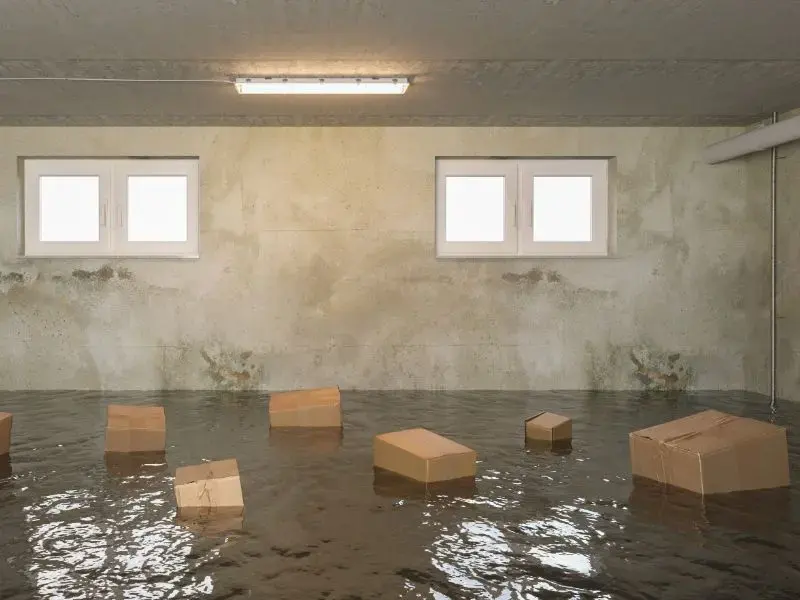
Flooded lower level
Basement Flooding Cleanup in Bellevue, NE
Water in a lower level threatens the furnace, the water heater and finished rooms together. The restoration team pumps it down, names the water category and dries to a reading near the Missouri River.
(888) 599-2961Water in the basement? Call a Bellevue crew- 24/7 dispatch
- Pumps and truck-mounted extraction
- Readings logged daily
Typical sourceRain, drains, pumps, pipes
Water typeClean to Category 3
Local pressureRiver, creek, sewer height
AvailabilityAround the clock
A flooded lower level in Bellevue can have more than one possible cause, and the cause decides how the cleanup goes. The City of Bellevue notes that a home with a basement, or with its lowest level near sewer height, can see overflow come up through lower drains and toilets. Heavy rain on Papio Creek and high Missouri River flows add a second path, through the ground and around the foundation.
How basement flooding cleanup is handled in Bellevue
- 1
Identify the source
The walkthrough names where the water entered and whether it is clean, gray or sewage.
- 2
Pump to the slab
Portable pumps and extraction units bring the floor back to bare concrete.
- 3
Open only what must dry
Wet pad, trim and low drywall come out where the meters point.
- 4
Dry and verify
Fans and LGR dehumidifiers stay in place until block, framing and slab hit the drying target.
What does basement flooding cleanup cost in Bellevue, NE?
In Bellevue, NE, basement flooding cleanup commonly runs $1,500 to $10,000 or more. The depth of the water, a finished level with drywall and flooring to remove, and whether the water was clean or contaminated decide where a job lands.
Unfinished, clean water
$1,500 to $3,500
- Pump-down to bare slab
- Block and concrete dehumidified
- Meter readings every day
Finished level
$3,500 to $7,000
- Pad and low drywall cut
- Studs and cavities dried
- Belongings logged and moved
Deep or contaminated
$7,000 to $10,000+
- Sewage safety steps
- Porous finishes hauled out
- Sanitizer before drying
For a closer planning number, try the water damage cost calculator. A firm figure comes after the walkthrough and moisture map.
Where lower-level water comes from in Bellevue
- Storm runoff that overwhelms window wells and downspouts after creek rain
- A sump pump that quits or cannot keep pace
- A supply pipe or water heater letting go on the floor above
- A floor drain or toilet pushing up sewer water, which is Category 3
- Saturated ground pressing in at the wall and slab joint when the river runs high
The source sets the water category, and the category sets the plan. A pipe supply leak calls for one drying plan, and water that rose through a drain or crossed the yard calls for a stricter one. Slow wall seepage has its own page, foundation seepage cleanup.
Finished and unfinished levels
Bare concrete and block usually dry well once the water is pumped out. A finished level asks more of the crew: wet pad, baseboard, the bottom of the drywall and soaked insulation often come out so the cavity can dry. Fontenelle Hills was built with split-entry, multi-level and tri-level homes, where a finished lower floor keeps carpet and framing close to the slab. The drying team cuts only to the height the meters call for, and photos document each cut.
Power and mechanicals come first
Water around the furnace or water heater means the restoration team keeps everyone back until power is cut and a technician has inspected the equipment. Any gas appliance that was submerged gets tested before anyone relies on it.
After the dry-out
Look at the downspouts, the window well covers and the slope of the ground beside the house, and ask a plumber about a backflow prevention valve on the lowest drain, which the City of Bellevue recommends. See structural drying for the drying phase and sewage backup cleanup when the water came up through a drain. Backup power for the pump is inexpensive protection.
Coverage
Basement Flooding Cleanup across Bellevue, NE
The restoration team works all of Bellevue: Olde Towne, Fontenelle Hills, Hyda Hills, Twin Creek, Tregaron and Twin Ridge, plus the shops and offices along Fort Crook Road and Highway 370.
See every area servedQuestions
Basement Flooding Cleanup questions in Bellevue
What should happen first when a lower level is flooding?
Stay out of the water near outlets, cords or the furnace. Cut basement circuits only if the panel sits in a dry spot, stop the source if it is reachable, take photos and call for pumping. Do not wade through deep water to save belongings.
Can water really come up through a drain in Bellevue?
The City of Bellevue says a home with a basement, or a lowest level near sewer height, can see overflow come out of lower drains and toilets. That water is Category 3 and calls for sewage protocol, not ordinary drying.
Will a finished lower level be a total loss?
Often not. Framing and concrete can dry where they stand, while carpet pad, trim, the low strip of drywall and wet insulation usually leave so the cavities can breathe. Clean water saves far more than contaminated water, which pushes toward fuller removal.
Is a flooded basement covered by insurance?
The source drives the answer. A sudden pipe failure is often on the covered side. The City of Bellevue says a special rider is usually needed for sewage backup, and river or surface water falls under flood coverage, which Bellevue offers as an NFIP participating community. Check your own policy.
Why does the lower level smell sour after a flood?
Soaked pad, drywall and framing keep their moisture and slowly turn sour. The odor means something is still wet, and no spray cures that. Only drying, plus removing whatever cannot dry, clears it and holds back mold.
Should the room be emptied before help comes?
Carry up electronics and valuables if the path is safe, but leave heavy wet items and deep water alone. The crew logs contents with photos for the claim and moves the rest.
24/7 emergency dispatch
Flooded lower level in Bellevue? Start the pump-out now.
Water standing in a lower level keeps climbing into drywall, framing and insulation. The restoration team pumps it out, dries the structure to a verified reading and documents each step for the claim.