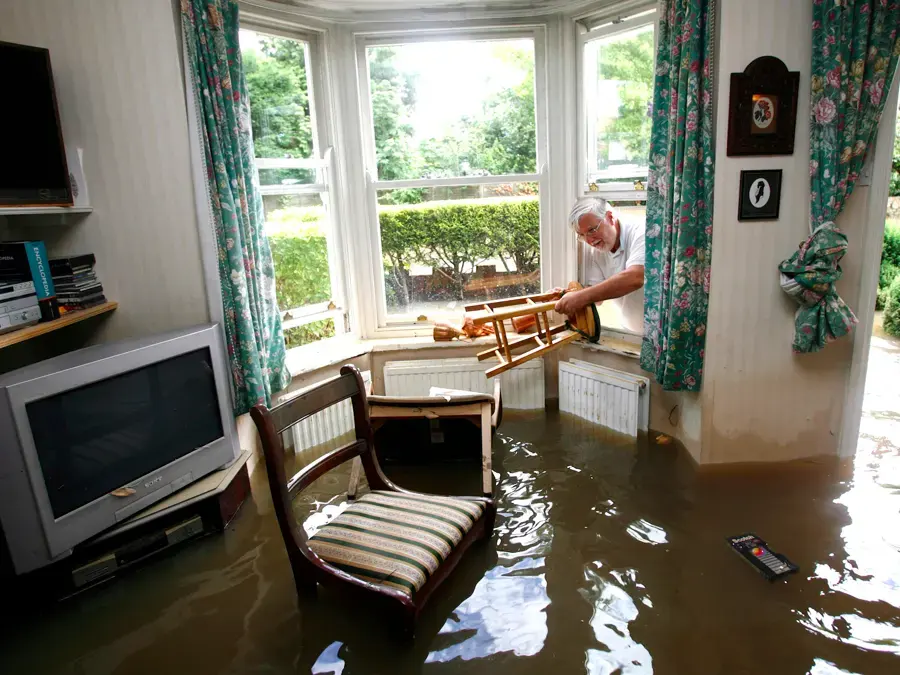
Water from a creek behaves nothing like water from a broken pipe. It arrives fast, it carries mud and debris, and it is treated differently from the first minute. This post explains how creek water that enters a Bellevue home is handled as contaminated flood water.
Key takeaways
- Creek water is flood water that carries soil, debris and bacteria, so it is treated as contaminated from the start.
- A clean supply pipe leak is Category 1 water, while creek flood water is classed as Category 3.
- Porous materials soaked by creek water, such as carpet, pad and drywall, are removed rather than dried in place.
- Mud and silt must be cleaned out, and hard surfaces are cleaned and disinfected before drying starts.
- The home is dried to moisture readings, and the records support a flood insurance claim.
What happened on Papio Creek in May 2024
On May 21, 2024, flash flooding on Papio Creek in Bellevue covered fields and golf courses, including Tranquility Park. Water also flooded the 36th Street bridge north of Highway 370.
Papio Creek runs through Bellevue, and the Big Papillion and West Papillion Creeks join near 36th Street and Gilmore Road. When heavy rain falls on the upstream ground, the creek can rise quickly.
Why flash flooding is different
A flash flood moves in hours, not days. Water can rise around a house before the owner has time to react.
It leaves silt, grass and debris behind, which is a different kind of mess from a leak.
Creek water versus a plumbing leak
When a supply pipe leaks, the water is clean at the start. When a creek enters a house, it has already crossed fields, yards, roads and storm drains.
That trip adds bacteria, pesticides, oil and soil. The restoration industry classes that water as Category 3, the same class as sewage.
- A pipe leak starts as clean water and can be dried in place if caught quickly.
- Creek flood water starts contaminated and cannot be made clean by drying.
- A pipe leak is usually one spot, while creek water covers the whole lowest level.
- Creek water leaves mud, and a pipe leak does not.
What to do first
Safety comes before cleanup. Flood water can hide electrical hazards and weak floors.
Wear boots and gloves for any short trip into the home, and keep clothing that touched the water apart from the rest of the laundry.
- Do not walk into standing flood water until the power to that area is off.
- Keep people and pets out of the water, and wash hands after any contact.
- Photograph the water level, the rooms and the damage before moving anything.
- Stay out of the home if the water is still rising or the structure looks unsafe.
- Call the restoration team and report the source as creek water.
Why creek flooding hits some homes harder
Bellevue sits between the Missouri River on the east and Papio Creek, which runs through the city. When both are high, water has few places to go.
Homes near the creek, and low basements anywhere that water backs up, are the first places it shows.
The 2024 flooding shows the pattern. Fields and golf courses took the water first, then a bridge on 36th Street flooded, and low ground collected more.
- Basements and walkout levels are the lowest part of a home and fill first.
- Window wells can overflow when the ground is soaked.
- Garages and attached rooms on slabs take in water at the door.
- Crawl spaces and under floor areas hold water out of sight.

What the restoration team does with creek water
The work follows a clear order. The team starts with the water, then the mud, then the materials.
The extraction crew pumps out the standing water and pulls the last water from floors. The water extraction page describes that step in detail.
Extraction and mud removal
- Pumps move deep water out of the basement or lower level.
- Wet vacuums pull the remaining water and thin silt.
- Mud and debris are shoveled and hauled out before they dry on the floor.
Removing what cannot be saved
- Carpet, pad and soaked insulation.
- Drywall that the water reached, cut above the water mark.
- Particleboard cabinets, paper goods and soaked upholstery.
Cleaning and disinfecting
Floors, framing and masonry are washed, scrubbed and treated with an antimicrobial before any drying equipment runs. Drying contaminated surfaces without cleaning them locks the contamination in.
Drying after a creek flood
After the cleanup, the structure is still holding water. The drying crew sets air movers and dehumidifiers and starts logging moisture readings.
Walls, subfloors and framing are checked at set points each visit. The drying work is finished when the readings reach the goal, not when the floor looks dry.
The full service is described under storm and flood cleanup. Delay matters here, because wet materials left in place can grow mold within a short time.
Records, insurance and next steps
Homeowner policies often do not cover flood damage, so the policy should be read early. The restoration team supplies photos, scope of work and moisture logs to support a claim.
Bellevue is a participating community in the National Flood Insurance Program. Flood insurance is a separate policy from standard homeowners coverage.
For the rest of the Bellevue services, see water damage restoration in Bellevue. Homes on the Iowa side deal with storm flooding too, and the storm flood cleanup in Council Bluffs page covers it.
- Keep dated photos of the water mark and the damage.
- Keep receipts for emergency expenses.
- Save the drying logs and the scope of work.
- Ask the insurance company how flood claims are filed before any items are thrown out.