Pump-out around the clock
Emergency Water Extraction in Papillion, NE
Papillion sits among creeks with a flood history, and storm water only does more harm the longer it sits. The extraction crew pumps it out so drying starts on wet material, not a puddle.
(888) 599-2961Water on the floor? Ask Papillion dispatch- 24/7 dispatch
- Pumps and truck-mounted units
- Readings logged daily
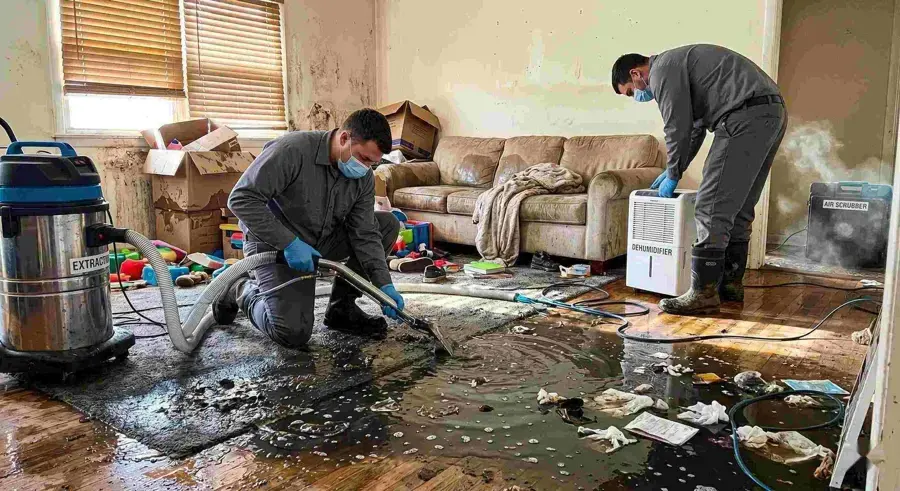
First moveGet the water out
EquipmentPumps, truck-mounted units
Local pressureCreek-fed storm water
AvailabilityAround the clock
Papillion's records show how quickly water can arrive. A flood in June 1964 killed seven people in the area, and in early July 2024 heavy rain flooded roads and trails at Walnut Creek Recreation Area. Whether water came off a soaked lawn or out of a split pipe, the first job is identical: remove the bulk of it before any fan or dehumidifier starts. One pass with an extractor lifts more from a floor than days of evaporation could.
How emergency water extraction is handled in Papillion
- 1
Trace the wet edge
Pinless meters and a thermal camera show where the water has traveled.
- 2
Pump the deep water
Portable pumps drop the level, then truck-mounted units clear floors and carpet.
- 3
Sort what stays
Pad, floating floors and anything Category 3 are photographed, then pulled.
- 4
Start the drying
Air movers and LGR units go down and readings begin on the first visit.
What does emergency water extraction cost in Papillion, NE?
In Papillion, NE, emergency water extraction commonly runs $300 to $2,500. Depth, the number of rooms, soaked carpet and pad, and the water category move it up or down.
One room
$300 to $800
- Clean thin water
- Carpet pulled dry
- Quick moisture check
A basement or more
$800 to $1,800
- Pump-down, then extraction
- Soaked pad removed
- Meter mapping
Deep or dirty
$1,800 to $2,500+
- Deep-water pumps
- Category 3 protocol
- Disposal of soaked flooring
For a closer planning number, try the water damage cost calculator. A firm figure comes after the walkthrough and moisture map.
Why the pump-out comes first
Water on a slab never stays put. It crawls up drywall, soaks the bottom plate of a wall and slides beneath vinyl and laminate. Taking it out early shrinks the amount of material that has to be cut away later.
- Portable pumps lower deep water in an unfinished basement
- Truck-mounted units carry the water out of the house, not into the next room
- Weighted tools press water out of carpet and its pad
- Moisture mapping shows how far the water went before fans are placed
Carpet, pad and flooring after a pump-out
Clean-water carpet frequently survives: it is extracted and dried right where it lies, though the pad under it is normally swapped because pad behaves like a sponge. Floating floors tend to trap moisture beneath and have to be lifted. If the water was sewage or overland creek water, each porous covering it touched is taken out. The tech doing the walkthrough decides this room by room and photographs every call before anything is removed.
A meter decides
A moisture meter, not a hand on the wall, tells the drying team when to pull equipment. The target is a reading near a dry sample from a part of the house the water never reached.
What follows the extraction
With the standing water gone, the job continues as structural drying using air movers sized to each room. If the source was a failed sump pump or a flooded basement, that cause is handled first so the room does not refill. Every other Papillion service is listed on the Papillion water damage restoration page.
Coverage
Emergency Water Extraction across Papillion, NE
The restoration team covers all of Papillion, from Downtown Papillion and Eagle Hills to Savanna Shores, Settlers Creek, Shadow Lake and Southern Pointe, plus the Walnut Creek area and the Highway 370 corridor.
See every area servedQuestions
Emergency Water Extraction questions in Papillion
How soon does standing water have to come out?
As early as possible. Drywall and framing keep drinking water while it sits, and after a day or two of wet conditions mold becomes a real concern. Pumping is the step that decides how much material must be removed later.
Is a shop vacuum enough for a flooded basement?
A shop vacuum handles a spill but holds only a few gallons and cannot draw water from pad or from beneath flooring. Pumps and truck-mounted units move far more and leave the floor much drier before drying equipment goes in.
Can my carpet be saved once the water is out?
Often, when the water was clean and the carpet is lifted quickly. Sewage or creek water changes that: carpet and pad from those losses are discarded because neither can be disinfected well enough to stay.
Should I clear the room before the crew comes?
Raise what is safe to lift and tuck foil or blocks beneath furniture feet, so tannins and dye do not stain the carpet. Heavy pieces can wait, and nobody should haul anything out of deep water.
Does flood insurance matter for a creek-fed loss?
The City of Papillion states that standard homeowners policies do not cover flood damage and that flood insurance has a 30-day waiting period. Plumbing failures are treated separately, so ask your insurer about your own policy.
What comes after the pump-out?
Drying gear is set, readings are logged each day, and anything that cannot dry is removed and itemized. Pumping opens the dry-out; it is not the finish.
24/7 emergency dispatch
Water in a Papillion home? Get it pumped out now.
Each hour water sits, it spreads deeper into framing, drywall and insulation. The restoration team pumps it out, dries the structure to standard and logs every step for the claim.
(888) 599-2961Reach a Papillion extraction crew now
Papillion, NE · Find us on Google