Drying by the numbers
Structural Drying in Papillion, NE
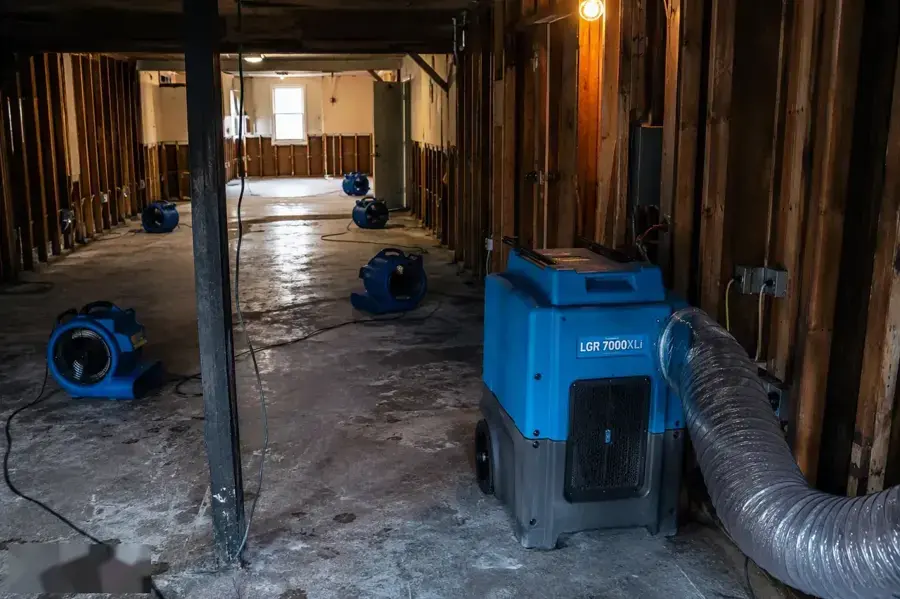
A surface that feels dry can still hold water in the framing. The drying team dries the studs, subfloor and masonry behind it, and the equipment stays until readings, not the calendar, say finished.
(888) 599-2961Wet walls or floors? Ask Papillion dispatch- 24/7 dispatch
- LGR dehumidifiers and air movers
- Daily psychrometric logs
RulebookIICRC S500
GearFans, LGR dehumidifiers
ProofLogged moisture readings
AvailabilityAround the clock
Extraction removes standing water, but the drying phase decides whether a loss is really over. After heavy rain like July 2024's, walls and subfloors in affected Papillion homes need drying to a moisture reading, not to a feeling. Homes of the median 1991 vintage typically have wood framing, drywall and often a finished basement, and these materials drink water and release it slowly. Concrete slabs and block walls are slower still, and cool basements slow evaporation further.
How structural drying is handled in Papillion
- 1
Map, then classify
Readings define the wet area, and the loss is given a category and a class.
- 2
Build the zone
Containment and air movers are arranged around each room's evaporation load.
- 3
Pull water from the air
LGR units dehumidify, with desiccants brought in for Class 4 materials.
- 4
Log until done
Psychrometric and moisture readings are recorded daily until the goal is reached.
What does structural drying cost in Papillion, NE?
In Papillion, NE, structural drying commonly runs $1,000 to $6,000 on its own. The class of loss, the number of rooms in the drying zone, how many air movers and dehumidifiers are needed, and the days it takes to reach the goal all shift the figure.
A small zone
$1,000 to $2,500
- Mapped wet zone
- Fans plus one LGR unit
- Daily logs
A whole lower level
$2,500 to $4,500
- Zone containment
- More than one LGR unit
- Wall cavities dried
Dense materials
$4,500 to $6,000+
- Hardwood or masonry
- Desiccant units
- Longer monitoring
For a closer planning number, try the water damage cost calculator. A firm figure comes after the walkthrough and moisture map.
How the plan is built
- Pinless meters and thermal imaging map the wet zone before anything is plugged in
- Class 1 through 4 describes how much water and how dense the materials are, which sets the equipment count
- Air movers are matched to each room's evaporation load
- LGR dehumidifiers remove moisture from the air, and desiccant units take over for dense materials and cold spaces
- Containment keeps the drying zone small so the machines work on what is wet
Readings, not guesses
Each day the drying team logs temperature, humidity and grains per pound inside and outside the drying zone, plus moisture readings on the wet materials. Those psychrometric logs show whether the air is pulling water out and whether materials are heading toward dry. The goal is a reading close to a dry sample from an unaffected part of the same house, and gear is pulled when that goal is reached.
Why a day count can mislead
A contained Class 1 or 2 loss often reaches the goal in three to five days, but hardwood, plaster, thick concrete and block hold water deeper. A schedule that fixes a day count ahead of time ignores what the meters say.
Where drying fits
Drying follows emergency water extraction on every job, whether the cause was a frozen pipe or foundation seepage. Fast drying also limits mold growth in damp framing, and a dry structure is the only sound starting point for rebuilding.
Coverage
Structural Drying across Papillion, NE
The restoration team covers all of Papillion, from Downtown Papillion and Eagle Hills to Savanna Shores, Settlers Creek, Shadow Lake and Southern Pointe, plus the Walnut Creek area and the Highway 370 corridor.
See every area servedQuestions
Structural Drying questions in Papillion
What does structural drying actually dry?
The building itself: framing, subfloor, drywall, plaster and concrete, not only the visible surface. Fans, dehumidifiers and daily readings return those materials to their normal moisture level.
What does IICRC S500 require?
It is the industry rulebook for water damage work. It defines categories and classes, how a drying plan is built and how the goal is proven with readings.
Why not just open the windows and run box fans?
Box fans push moisture around, and without dehumidification the water simply returns to the air and to other materials. On humid days, open windows can add moisture instead of removing it.
How can I tell the house is truly dry?
The drying team compares wet materials with a dry sample from the same house and logs readings daily. When the wet area matches that sample, the goal is met. Ask to see the log.
Can I live in the house while the equipment runs?
It is loud and steady and runs around the clock, but most people stay home during a clean-water dry-out. A Category 3 loss with containment may call for a different plan.
Who covers the electricity?
The equipment runs on household power, and many claims include an allowance for the extra use, so keep your bills. Check your own policy, since coverage depends on it.
24/7 emergency dispatch
Wet framing in your Papillion home? Dry it properly.
Moisture left in framing and subfloors keeps feeding odor and decay long after the surface looks fine. The drying team runs equipment until the readings, not a guess, say the structure is dry.
(888) 599-2961Start Papillion structural drying
Papillion, NE · Find us on Google