Leaks from household appliances
Appliance Leak Water Damage in Bellevue, NE
With 8,771 renter households and 25.6% of homes in multi-unit buildings, an appliance leak in Bellevue often reaches a neighbor. The drying team finds the hidden water and dries both units.
(888) 599-2961Appliance leaked in Bellevue? Call for drying- 24/7 dispatch
- Hidden moisture detection
- Readings logged daily
Common sourcesWasher, dishwasher, fridge
Hidden waterUnder cabinets and floors
Multi-unit riskWater reaching neighbors
AvailabilityAround the clock
Appliance leaks are quiet. A cracked washer hose or a failing dishwasher seal can drip behind a machine for a long time, and the water goes under cabinets and flooring where no one looks. Bellevue has 8,771 renter households, and 25.6% of its housing units are in buildings of two or more units, so one leaking appliance can soak the ceiling of the unit below.
How appliance leak water damage is handled in Bellevue
- 1
Find the source
The crew tracks the leak to the hose, seal or fitting that failed.
- 2
Extract the water
Wet vacs and extraction tools clear the floor, cabinets and nearby rooms.
- 3
Open the hidden spots
Toe kicks come off, and small access holes let air reach water under cabinets and flooring.
- 4
Dry both spaces
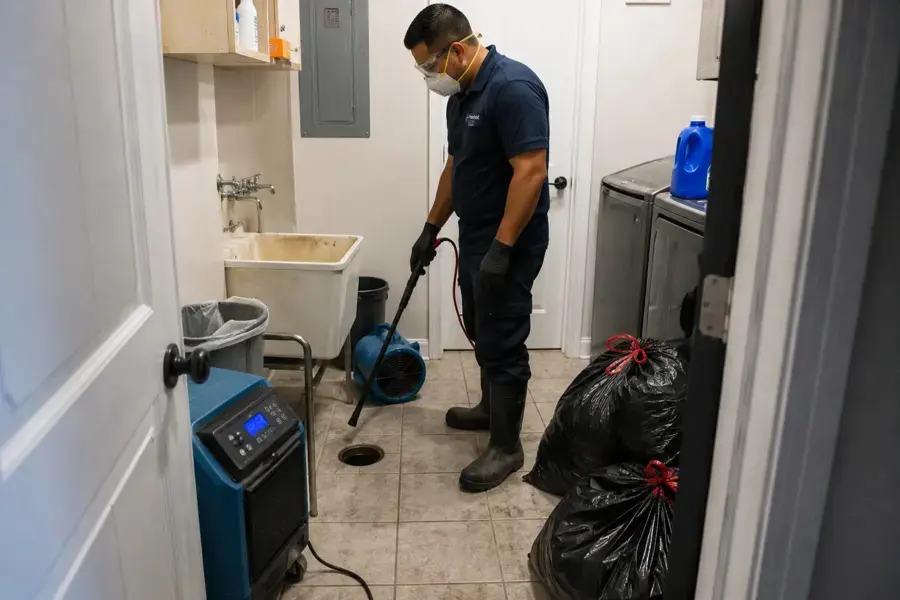
Fans, mats and dehumidifiers run in the unit and any space below until readings match the target.
What does appliance leak water damage cost in Bellevue, NE?
In Bellevue, NE, appliance leak water damage cleanup commonly runs $500 to $4,000. How long the leak ran, whether water got under cabinets or floating floors and whether it reached a room below decide the total.
Caught quickly
$500 to $1,200
- Spill pulled out
- Toe kicks off
- Cabinet bases dehumidified
Beneath the flooring
$1,200 to $2,800
- Floating planks lifted
- Subfloor dried
- Wood floor mats
Down to the unit below
$2,800 to $4,000+
- Lower ceiling dried
- Both units monitored
- Longer readings
For a closer planning number, try the water damage cost calculator. A firm figure comes after the walkthrough and moisture map.
Where appliance water comes from
- A washing machine hose that cracks or pops off its fitting
- A dishwasher door seal or pump hose that weeps
- A refrigerator ice maker supply tube that drips behind the unit
- A water softener, humidifier or condensate pan that overflows
Each source puts water in a different place, so the drying team starts by finding where the leak began and which way the water traveled from there.
Drying under cabinets and floors
Water from an appliance hides where a mop cannot reach. It runs under toe kicks, behind cabinet bases and beneath floating or vinyl floors. The crew removes the toe kick, drills small access holes and uses meters to see how far it went. Hardwood is dried with mats, and laminate that has swelled often has to come up.
Check the hose before it fails
Washer hoses wear out quietly. Braided metal replacements and a habit of closing the valves before long trips are inexpensive ways to avoid a repeat.
In shared buildings
When the leak reaches another unit, each space gets its own moisture map, photos and readings. The restoration team documents the source and the spread so owners, tenants and insurers can sort out responsibility. That separate record matters in a building where one tenant's washer can wet another tenant's ceiling, and it keeps each claim tied to the space it belongs to. Related pages: ceiling leak water damage and water heater leak cleanup.
Coverage
Appliance Leak Water Damage across Bellevue, NE
The restoration team works all of Bellevue: Olde Towne, Fontenelle Hills, Hyda Hills, Twin Creek, Tregaron and Twin Ridge, plus the shops and offices along Fort Crook Road and Highway 370.
See every area servedQuestions
Appliance Leak Water Damage questions in Bellevue
My washing machine flooded the floor. What should I do?
Close the supply valves, unplug the machine only if the outlet is dry, and pull rugs and boxes off the floor. Soak up the standing water, photograph the spread and call for extraction before it reaches the subfloor.
Is washing machine water dirty?
Supply water is clean at first, but drain water from a washer is gray, and either one picks up dirt as it spreads. The source decides the category, so the crew checks which hose failed.
The floor near the fridge is cupping. Is that water?
Cupping, where board edges rise, is a common sign of moisture below a wood floor. A slow leak from an ice maker tube can cause it, and a meter confirms whether water is still there.
Do kitchen cabinets have to come out?
Rarely. The toe kick usually comes off, and small access holes let drying air reach the cabinet base. Cabinets come out only when swelling, delamination or readings say they cannot dry.
Does insurance cover an appliance leak?
A sudden hose or supply failure is commonly covered, while a leak that ran for months often is not. Ask your insurer how the policy treats the cause, and keep photos, readings and the failed part.
What if the leak soaked a neighbor's unit?
The restoration team documents each affected space separately with photos and readings. Responsibility is for owners, tenants and insurers to sort out, and a clear record of the source and the spread makes that simpler.
24/7 emergency dispatch
Appliance leak in Bellevue? Dry the hidden water.
Appliance water keeps spreading under cabinets and floors long after the surface looks fine. The restoration team finds it, dries it and records readings for the claim.