Water from above
Ceiling Leak Water Damage in Bellevue, NE
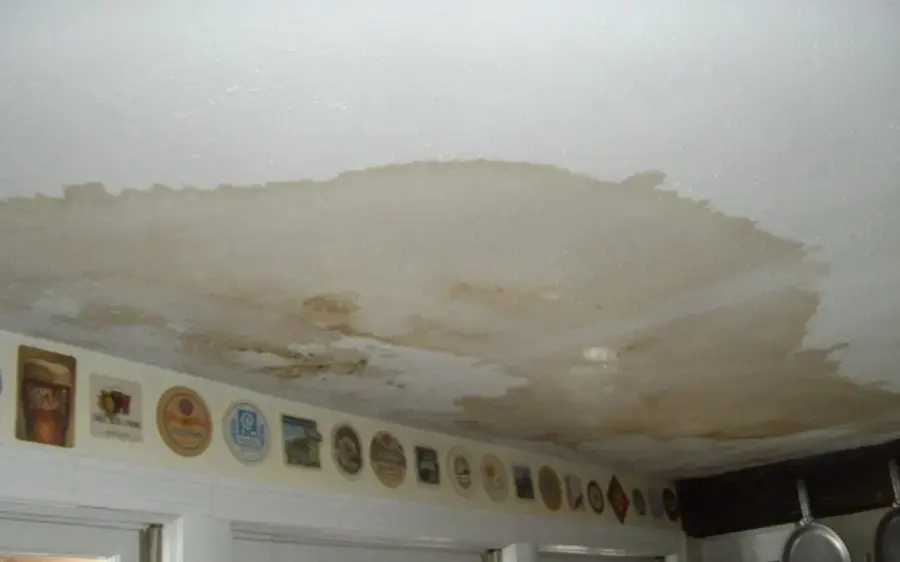
A stained or sagging ceiling in Bellevue usually traces back to an upstairs fixture, a unit overhead or a storm-damaged roof. The drying team finds the source, dries the cavity and takes down only the ceiling that will not recover.
(888) 599-2961Wet ceiling in Bellevue? Call for a dry-out- 24/7 dispatch
- Thermal source tracing
- Readings logged daily
Common sourcesUpstairs baths, units, roofs
Tool usedThermal camera
Water typeClean at first
AvailabilityAround the clock
A ceiling leak means water is sitting above the drywall, and drywall does not hold it for long. In Bellevue the source is often upstairs plumbing, a unit overhead in a multi-unit building, or a roof that took storm damage. About 25.6% of Bellevue housing units are in buildings of two or more units, so a stain can start in a neighbor's bathroom and not in your own.
How ceiling leak water damage is handled in Bellevue
- 1
Locate the leak
A thermal camera and meters trace the wet path back to its source.
- 2
Control the water
Standing water is drained from the ceiling and extracted from the floor below.
- 3
Open what cannot dry
Sagging drywall and wet insulation come out, and sound framing is left in place.
- 4
Dry the cavity
Air movers and dehumidifiers run until the joist bays and walls hit their readings.
What does ceiling leak water damage cost in Bellevue, NE?
In Bellevue, NE, ceiling leak water damage cleanup commonly runs $600 to $4,500. Whether the ceiling can dry in place, how much drywall or plaster has to come down and whether the walls and floor below got wet decide the figure.
Dry in place
$600 to $1,500
- Leak traced
- Small access holes
- Joist bays dehumidified
One section down
$1,500 to $3,000
- Wet ceiling piece cut
- Insulation removed
- Subfloor and framing dried
Ceiling, walls, floor
$3,000 to $4,500+
- Both levels dried
- Wall cavities opened
- Flooring below checked
For a closer planning number, try the water damage cost calculator. A firm figure comes after the walkthrough and moisture map.
Finding the source
A stain shows where the water landed, not where it started. A thermal camera and a pinless meter trace the wet area back along the joists to a tub, a toilet supply, a shower pan, an ice maker or the roof. Fixing the source comes first, or the new ceiling gets wet too. In split-entry and tri-level homes like those in Fontenelle Hills, an upstairs floor can sit over a living area, so a bath leak can land in a ceiling below.
When a ceiling has to come down
Drywall that is sagging, soft or stained through usually has to come down, because it will not dry flat. Smaller wet patches can often dry in place through small access holes.
- Sagging or bulging, which means water is trapped above
- A soft, crumbly surface when pressed
- Stains that keep growing between visits
- Wet insulation above, which holds water against the drywall
Do not poke it without a bucket
A bulging ceiling can hold a lot of water. Setting a bucket and piercing the lowest point lets it drain in a controlled way and spares the rest of the ceiling and the floor below.
When the leak has company
Plumbing under pressure is a burst or fixture failure, covered under burst pipe cleanup, while a stained ceiling after hail may be a roof leak. Washers and dishwashers upstairs fall under appliance leak water damage, and the drying process is described on the structural drying page.
Coverage
Ceiling Leak Water Damage across Bellevue, NE
The restoration team works all of Bellevue: Olde Towne, Fontenelle Hills, Hyda Hills, Twin Creek, Tregaron and Twin Ridge, plus the shops and offices along Fort Crook Road and Highway 370.
See every area servedQuestions
Ceiling Leak Water Damage questions in Bellevue
A brown stain showed up on my ceiling. Is it still wet?
Possibly. A brown ring can mean an old leak that dried, or a leak that is still feeding it. A pinless meter or thermal image tells the difference, and a stain that grows or feels damp is still active.
Does a ceiling always have to come down?
No. A small, firm wet patch can dry through access holes. Sagging, soft or crumbling drywall usually has to go, since it will not dry flat or hold paint.
How can I tell which fixture is leaking above?
Watch whether the stain grows only when someone showers, flushes or runs a dishwasher. A plumber can pressure-test the supply and drain. In a multi-unit building, the source may sit in a neighboring unit.
Does insurance cover a ceiling leak?
A sudden leak from a pipe or a storm is commonly covered, while a long, slow drip often is not. Dated photos and the drying records help show when the damage started. Ask your insurer how the policy treats the cause.
Can a leak from a unit above be handled by the restoration team?
The restoration team dries the affected unit and documents the damage with photos and readings. Who pays is a matter between the owner, the neighbor and the insurers, so a clear record helps everyone involved.
Why does the ceiling smell musty after a leak?
Wet insulation and drywall sour quickly, and mold can follow if they stay wet. The smell means moisture is still trapped above the ceiling, and drying the cavity is what removes it.
24/7 emergency dispatch
Wet ceiling in Bellevue? Find the leak and dry it.
A leaking ceiling keeps dropping water into insulation, walls and floors below. The restoration team traces the source, dries the cavity and documents each step for the claim.