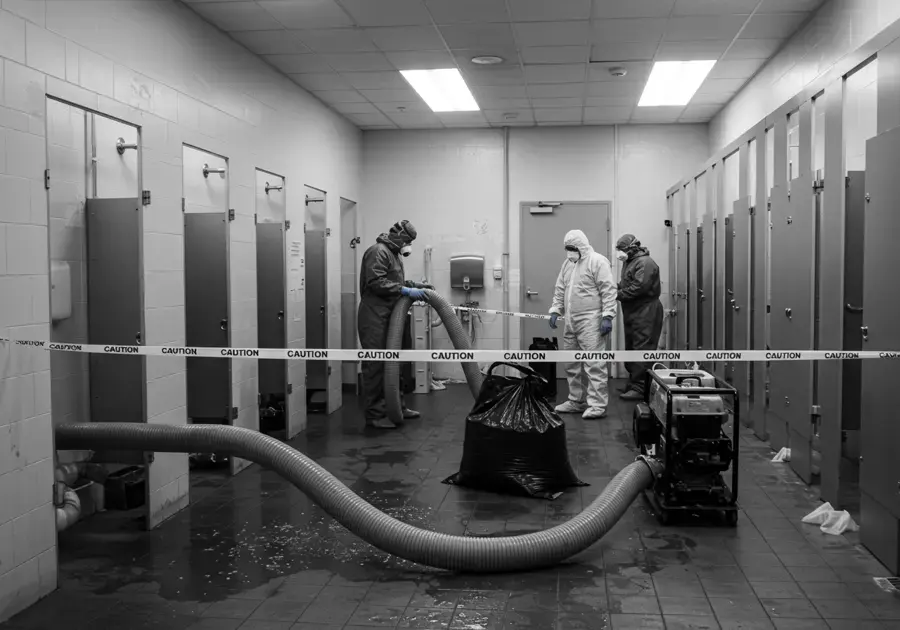
A leak in an Old Market building is rarely just a leak. It can reach stock on the floor, records in a back room, a restaurant kitchen or an apartment upstairs, all inside the same old brick shell. This post is for the shop, restaurant or apartment owner deciding what to do in the first hours.
Key takeaways
- Stop the water first: shut the valve for the leaking pipe, or the main shutoff, and move people away from wet floors and fixtures.
- Protect stock, equipment and records by lifting them off the floor and photographing them before they are moved.
- The extraction crew removes standing water, then the drying crew works on the floors, walls and framing.
- Historic brick and old framing hold moisture deep inside, so drying is confirmed by readings, not by touch.
- Records of the loss, the readings and the repairs matter for insurance, tenants and downtime.
Why Old Market buildings are a special case
The Old Market is a historic wholesale warehouse district in downtown Omaha. Its streets are paved in brick, and its buildings have been converted into shops, restaurants, galleries and apartments.
The district was listed on the National Register of Historic Places in 1979. Many of those buildings pair heavy brick walls with old framing, and a single leak can travel through both.
Mixed use under one roof
A shop on the ground floor may share a ceiling with an apartment above. A leak from one tenant can become another tenant's ceiling stain within the hour.
That makes quick, clear communication between owners, tenants and managers part of the response.
Old structure, new finishes
Converted spaces often have modern floors, display fixtures and kitchens set into old brick and timber. Water can get behind a new finish and sit against the old structure where nobody can see it.
The first steps for a business owner
The first hour sets the cost of the loss. These are the steps that matter most.
- Shut the valve for the leaking fixture, or the main water shutoff for the building.
- If the leak is from the roof, move items out from under the drip and use covers where it is safe.
- Turn off power to wet areas only if it can be done from dry ground.
- Tell tenants, the property manager and the building owner right away.
- Photograph the leak, the wet areas and the damaged items with the date visible.
- Call the restoration team before opening walls or ceilings.
Protecting stock, equipment and records
A restaurant owner worries about the walk in cooler and the kitchen. A shop owner worries about inventory on low shelves. An apartment manager worries about the next unit down.
In each case the rule is the same: get valuable items off wet floors before the water spreads.
- Lift paper records, receipts and documents into plastic bins above floor level.
- Move electronics, registers and devices away from wet areas, and do not plug them in until checked.
- Pull stock from low shelves and keep it in a dry room if possible.
- Keep a written list of what was moved and what was lost.
- Do not discard damaged goods until they are photographed and listed.
Water, power and the building systems
Water in a commercial building rarely stays in one system. It reaches electrical outlets, floor boxes, kitchen equipment and sometimes a basement level under the shop.
A leak above a ceiling grid can wet lighting, wiring and insulation before anyone sees a stain below.
That is why the first walk through looks at more than the floor.
- Check where wiring, outlets and light fixtures sit under or near the wet area.
- Keep staff and customers out of rooms with a sagging ceiling or standing water.
- Tell the building owner about shared systems, such as a sprinkler or heating pipe, that may be involved.
- Leave kitchen and refrigeration equipment off until it has been checked.
What the restoration team extracts and dries
Standing water comes out first. The extraction crew uses pumps and wet vacuums on hard floors, then pulls water from carpet and padding where it is salvageable.
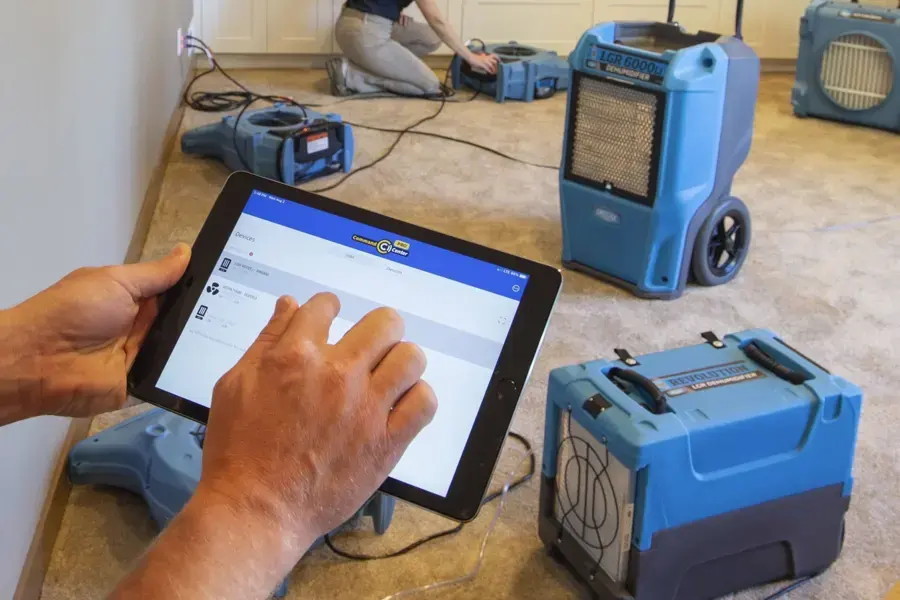
After extraction, the drying crew sets air movers and dehumidifiers and opens up wall or ceiling cavities where water got in. The service is described on the commercial water damage page.
What gets opened up
- Ceilings that sag or stain below a leak.
- Wall bases where water wicked up from the floor.
- Floor coverings that trap water against the subfloor.
What gets measured
- Moisture content of brick, plaster and framing.
- Humidity in the room and the air coming out of the equipment.
- Daily readings that show whether the building is drying.
Why historic brick and old framing need readings
Brick and old framing hold water deep in the material, so a wall can look and feel dry while moisture is still inside.
Guessing when to pull the equipment is how a building ends up with damp walls and a second repair bill.
Moisture readings take the guesswork out. The drying crew takes a reading at set spots, logs it and repeats it until the numbers match the drying goal. The structural drying page covers how this works.
For a business, the readings also show when it is safe to rebuild, restock and reopen.
Keeping the business running
A water loss does not have to close the doors for long. Planning the work around the business keeps downtime short.
The restoration team can work in sections, dry the busiest areas first and document everything for the insurance carrier. For an overview of the whole Omaha area, see Omaha water damage restoration.
Businesses on the Iowa side can read about commercial water damage in Council Bluffs.
- Ask for a written scope that lists each room and the drying plan.
- Keep a log of lost sales and extra costs during the work.
- Tell customers and tenants what to expect, including noise from the equipment.
- Hold off on rebuilding until readings show the structure is dry.