Standing water removal
Emergency Water Extraction in Omaha, NE
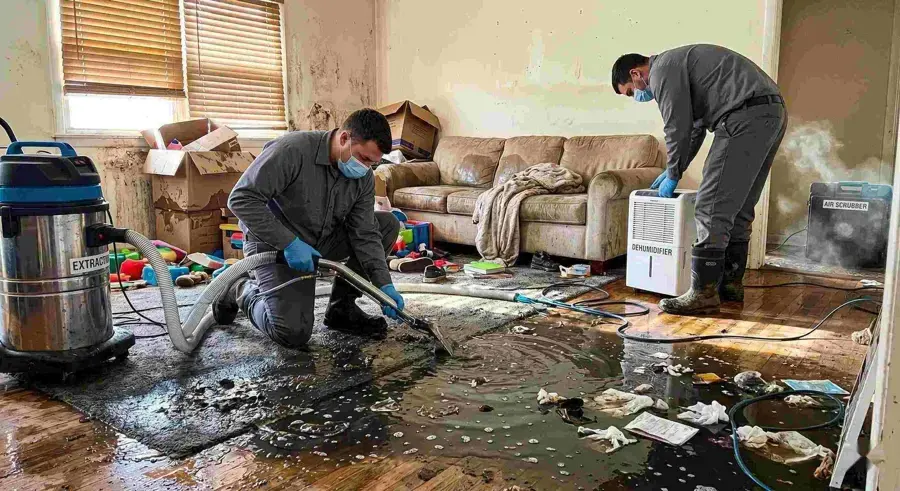
Omaha sits in the Missouri River valley, and storms and river rises have left standing water here before. The extraction crew pumps it out so the drying team can work on wet material, not a pool.
(888) 599-2961Standing water on the floor? Call about extraction- 24/7 dispatch
- Truck-mounted extraction
- Moisture readings after pump-out
Water typeClean to black
Works onCarpet, pad and hard floors
Local driverRiver and storm flooding
AvailabilityAround the clock
Extraction is the first move in any wet loss, and in Omaha it usually follows a burst pipe, a heavy storm or a river rise. The Missouri River flooded the area in 2011 and again in March 2019, so the extraction crew knows what standing water looks like in this valley.
How emergency water extraction is handled in Omaha
- 1
Survey the wet area
Meters and a thermal camera mark every wet floor and wall before the pumping starts.
- 2
Pump and extract
Truck-mounted units remove the pool, and hand wands pull water from carpet and pad.
- 3
Remove what cannot dry
Soaked pad and contaminated materials come out and are logged for the claim.
- 4
Hand off to drying
Air movers and LGR dehumidifiers take over, with readings logged each day.
What does emergency water extraction cost in Omaha, NE?
In Omaha, NE, emergency water extraction commonly runs $300 to $2,500. A small area of clean water sits near the low end; deep or contaminated water across several rooms sits near the top.
Small area
$300 to $800
- One room, shallow water
- Wet vacuum extraction
- Pad lifted and checked
Basement or several rooms
$800 to $1,800
- Truck-mounted pump-out
- Carpet and pad removed
- Wet edge mapped
Deep or contaminated
$1,800 to $2,500+
- Category 3 protocol
- Protective gear
- Handoff to drying
For a closer planning number, try the water damage cost calculator. A firm figure comes after the walkthrough and moisture map.
Why pumping comes before drying
Water left on a floor wicks into pad, baseboard and the bottom of the drywall. Each hour it sits, more material has to be removed instead of dried. Extraction pulls the pool out so the dehumidifiers work on damp surfaces rather than on a puddle.
Depth matters less than spread. A thin sheet of water across an open basement can reach more wall and flooring than a deep pool in a corner, which is why the extraction crew traces the edges before choosing pumps, wands or both.
What happens to carpet, pad and wood floors
- Clean water on carpet can often be extracted with the carpet kept in place
- Pad is usually removed, because it holds water like a sponge
- Hardwood is read with meters before anyone decides on replacement
- Floors touched by sewage or street water are treated as Category 3
- Furniture is lifted onto blocks so the legs stop wicking water upward
Extraction is not drying
Pumping removes the water that can be seen and measured on the surface. Moisture inside walls and subfloors still needs air movers and dehumidifiers, which the drying team sets up next and reads daily.
When the water came from outside
On June 16, 2011, the Missouri River stood at 33.33 feet at Omaha, and pumps went in along Abbott Drive to protect access to Eppley Airfield. River, street and storm drain water is contaminated by the time it enters a building, so protective gear is standard. If it is still rising, see storm flood cleanup. Once it is out, structural drying finishes the job, and every service is listed on the Omaha water damage restoration page.
Coverage
Emergency Water Extraction across Omaha, NE
The restoration team works the whole city: Downtown Omaha and the Old Market, Midtown, Dundee, Florence and East Omaha, along with corridors such as Abbott Drive and Interstate 29.
See every area servedQuestions
Emergency Water Extraction questions in Omaha
How fast does standing water need to come out?
As fast as possible. Wet pad and drywall keep drawing water upward, and mold can begin within 24 to 48 hours of a wet loss. Pumping first leaves less material to tear out and a shorter drying job afterward.
Can a shop vacuum handle it?
A shop vacuum handles a spill, not a flooded floor. It leaves water in the pad and subfloor, and mixing a household vacuum with standing water near outlets is a shock risk. Truck-mounted extraction removes far more water in far less time.
Does wet carpet have to be thrown out?
Not always. Clean water that is caught early can often be extracted from carpet while the pad is replaced. Carpet that touched sewage or floodwater is a different case, because porous materials in contact with Category 3 water usually come out.
Is flood or street water treated differently?
Yes. Water from rivers, streets and overflowing drains is Category 3 from the start. Protective gear, disposal of soaked porous materials and disinfection are part of the job, and the work is documented so the insurance claim can be sorted correctly.
What happens once the water is out?
The drying team maps moisture, sets air movers and LGR dehumidifiers, and reads the walls and floors daily. Equipment stays until wet areas match a dry reference reading in the same building, not for a set number of days.
Did river flooding drive claims in Douglas County?
Douglas County's flood insurance claims peaked in 2019 at 225 claims totaling $8.3 million, the high point in records going back to 1978. Rising river water is usually a flood claim, and coverage depends on your policy, so ask your insurer which one applies.
24/7 emergency dispatch
Standing water in your Omaha home? Get it pumped out.
Every hour water sits, it moves deeper into wood, drywall and insulation. The extraction crew pumps it out, the drying team dries the structure to standard, and the claim file grows as they go.