Hose and drain failures
Appliance Leak Water Damage in Omaha, NE
With 43.2% of Omaha homes renter-occupied, a washer or dishwasher leak can reach a neighbor. The drying team maps both units and dries the floors, cabinets and walls.
(888) 599-2961Appliance leaked under the floor? Call now- 24/7 dispatch
- Hidden moisture mapping
- Readings logged daily
Water typeClean or gray
Common sourcesWasher, dishwasher, fridge
Local driverShared buildings
AvailabilityAround the clock
Of 202,635 occupied homes in Omaha, 43.2% are renter-occupied, and the Old Market and other older districts hold many converted apartments. In shared buildings, an appliance leak is rarely just one home's problem.
How appliance leak water damage is handled in Omaha
- 1
Find the path
Meters and a thermal camera follow the water under floors and into cabinets.
- 2
Extract and open
Standing water is removed, then planks or toe-kicks come up where readings say.
- 3
Dry in place
Directed air and dehumidifiers dry the subfloor, cabinet bases and walls.
- 4
Document each unit
Photos and readings are kept for every affected home and for the claim.
What does appliance leak water damage cost in Omaha, NE?
In Omaha, NE, appliance leak water damage cleanup commonly runs $500 to $4,000. A leak caught early sits low; water that ran under floors or reached a room below sits near the top.
Caught early
$500 to $1,200
- Source stopped
- Surface water extracted
- Floor edges dried
Under floors
$1,200 to $2,800
- Planks or toe-kicks lifted
- Subfloor dried
- Cabinet base opened
Leak to the room below
$2,800 to $4,000+
- Ceiling below dried
- Two units mapped
- Contents listed
For a closer planning number, try the water damage cost calculator. A firm figure comes after the walkthrough and moisture map.
The usual suspects
- A washing machine supply hose that bursts or a drain hose that slips out
- A dishwasher door seal, pump or supply fitting that weeps
- A refrigerator ice maker tube that cracks behind the unit
- A water softener or utility sink that overflows
- A drain pan under a unit that fills and spills over
Drying under cabinets and floors
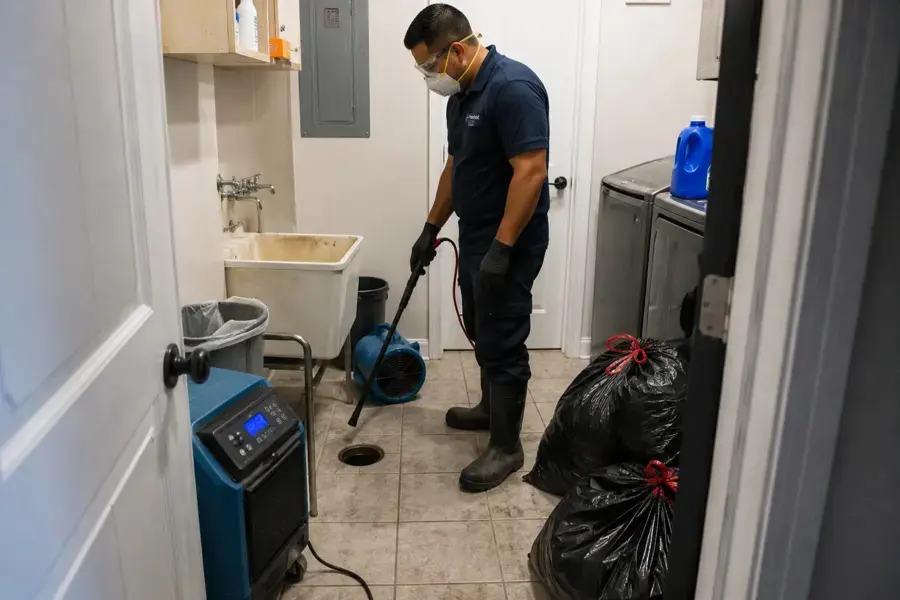
Appliance leaks hide because the water runs under the machine and into the cabinet base or subfloor. Floating floors, laminate and cabinet toe-kicks trap it, and a dry-looking kitchen can still hold a wet layer underneath. Over time, that moisture can swell cabinet bases and loosen flooring, which is why the check should happen soon. The crew uses meters and a thermal camera, lifts planks or removes a toe-kick, and dries the space with directed air.
Shared buildings need a paper trail
If water reached a neighbor, photograph both units and tell the building manager. Daily readings and dated photos show where the leak began and how far it went, and that record supports each party's claim.
After the dry-out
Replace worn hoses and fittings, since most failures come from age and wear. Braided supply hoses and a shutoff that is easy to reach make the next leak shorter. Stand the appliance back only when readings under it match a dry reference. Where water ran into the ceiling of the unit below, see ceiling leak water damage, and a failing tank is a different job, water heater leak cleanup. The whole list is on the Omaha water damage restoration page.
Coverage
Appliance Leak Water Damage across Omaha, NE
The restoration team works the whole city: Downtown Omaha and the Old Market, Midtown, Dundee, Florence and East Omaha, along with corridors such as Abbott Drive and Interstate 29.
See every area servedQuestions
Appliance Leak Water Damage questions in Omaha
What is the most common appliance leak?
Washing machine hoses and dishwasher supply fittings lead the list, followed by refrigerator ice maker lines. Rubber hoses harden with age and crack, so replacing them before they fail is cheaper than the cleanup.
Why does the floor stay damp after wiping up?
Water runs under the appliance and into the subfloor, cabinet bases and wall bottoms, where towels cannot reach. Moisture there keeps wicking back up, so meters and drying equipment are needed to confirm the floor is truly dry.
Can a floating floor be saved?
Sometimes. Laminate and similar floors swell when wet and trap water underneath, so planks may need to come up to dry the subfloor. The crew checks the readings before deciding what can stay.
What if the leak affected a neighbor?
Document everything and tell the building owner. The drying team maps both units, and daily readings and dated photos record where the water began. Shared walls make this more common than people expect.
Is an appliance leak covered by insurance?
Sudden failures are commonly covered, while gradual leaks often are not. Coverage depends on your policy and on who owns the unit, so keep the photos, the appliance model and the plumber's note for your insurer.
Should I keep using the appliance?
Not until the supply is repaired and the area is dried. Running a leaking washer or dishwasher adds water, and a wet floor around a plugged-in machine is an electrical risk.
24/7 emergency dispatch
Appliance leak in your Omaha home? Get the floor dried.
Hidden water keeps soaking into subfloors, cabinets and the unit next door. The extraction crew removes it, the drying team dries every layer to a reading, and records are kept for the claim.