Leaks from above
Ceiling Leak Water Damage in Omaha, NE
In a city with 22,713 units in buildings of 50 or more, an upstairs leak often lands on the ceiling of the unit below. The crew finds the source, extracts water and dries every wet layer.
(888) 599-2961Ceiling stained or dripping? Call about the leak- 24/7 dispatch
- Thermal imaging for hidden water
- Moisture readings daily
Water typeClean to gray
WhereCeiling, walls and floor below
Local driverMulti-unit buildings
AvailabilityAround the clock
Omaha has 22,713 housing units in buildings of 50 or more units, about 10.6% of all units, and 43.2% of occupied homes are rented. In that kind of building, the water that stains one ceiling usually started in a different home above it.
How ceiling leak water damage is handled in Omaha
- 1
Trace with thermal imaging
A thermal camera and meters follow the water from the stain back to the source.
- 2
Open only what is wet
Sagging drywall and soaked insulation are cut out, and firm sections stay.
- 3
Dry every layer
Air movers and dehumidifiers dry ceiling, wall cavities and the floor below.
- 4
Log the chain of damage
Photos and readings show where the water came from, for every party in the building.
What does ceiling leak water damage cost in Omaha, NE?
In Omaha, NE, ceiling leak water damage cleanup commonly runs $600 to $4,500. A ceiling that dries in place sits near the low end; one where walls and the floor below also soaked sits near the top.
Dry in place
$600 to $1,500
- Source traced
- Meters on the ceiling
- Air movers set
Section removed
$1,500 to $3,000
- Wet drywall cut out
- Insulation replaced later
- Cavity dried
Ceiling, walls and floor
$3,000 to $4,500+
- Several layers opened
- Floor below dried
- Contents listed
For a closer planning number, try the water damage cost calculator. A firm figure comes after the walkthrough and moisture map.
Finding the source first
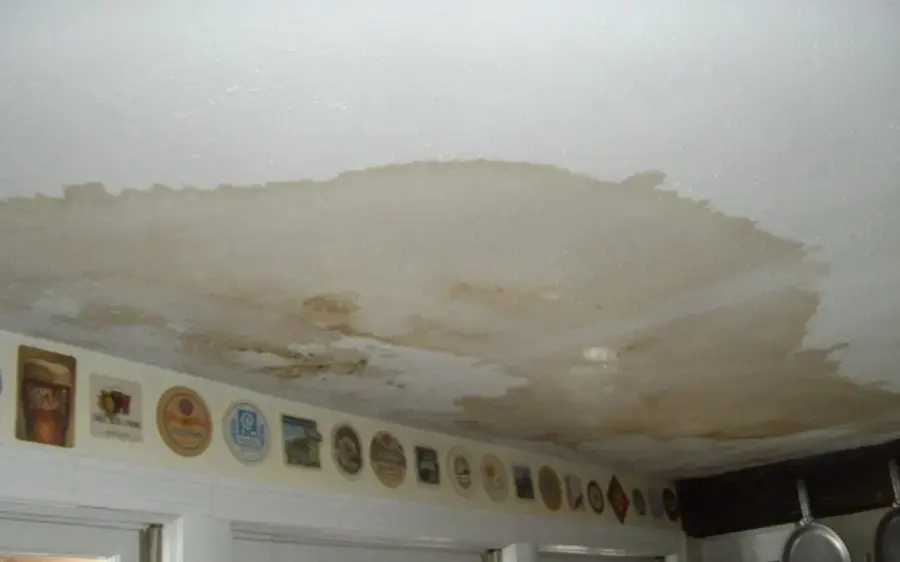
A brown ring on a ceiling shows where water arrived, not always where it began. A bathroom supply pipe, a drain, a dishwasher or a roof opening can all feed the same stain, and in a tall building the source may be several floors up. The first visit uses thermal imaging and pinless meters to trace the wet path before anything is cut.
When a ceiling has to come down
- Drywall that sags, bulges or feels soft to the touch
- Ceilings that carried gray water from a drain or a tub overflow
- Plaster that cracks, flakes or lets go in pieces
- Paint that blisters, which marks water trapped behind the surface
- Insulation above the ceiling that has soaked through
Do not poke the bulge
A bulging ceiling holds a lot of water. Staying out from under it and letting the crew release it in a controlled spot is safer than puncturing it and getting a faceful of dirty water.
Shared walls and floors
Water from above rarely stays in the ceiling. It runs down wall cavities and soaks the floor below, so the crew maps those layers too and documents each for the claim. In multi-unit buildings, the source unit and the affected unit can have different owners. A pipe that let go is burst pipe cleanup, a roof opening is a roof leak, and the whole list sits on the Omaha water damage restoration page.
Coverage
Ceiling Leak Water Damage across Omaha, NE
The restoration team works the whole city: Downtown Omaha and the Old Market, Midtown, Dundee, Florence and East Omaha, along with corridors such as Abbott Drive and Interstate 29.
See every area servedQuestions
Ceiling Leak Water Damage questions in Omaha
Why does a ceiling stain keep growing?
Water is still arriving, or the materials above are still wet. A stain that spreads after the leak stops usually means soaked insulation or drywall is still releasing water. Meters tell whether the ceiling is actually dry.
Does the whole ceiling need to be replaced?
Rarely. The crew opens the wet section and the area around it, and firm dry drywall can stay. Gray water or a tub overflow raises the bar, since drywall that touched it usually comes out.
What if the leak came from an apartment above?
Document everything and tell the building owner or manager right away. The restoration team dries the affected unit and records the damage and the source, which helps sort out who handles the claim.
Is ceiling water dangerous?
It can be. Water above a ceiling can hold dirt and bacteria, and wet drywall can fall. Light fixtures with water inside are an electrical risk, so keep the switches off and stay out from under bulges.
Will insurance cover a ceiling leak?
Sudden pipe or appliance leaks are commonly covered, while wear and tear and slow leaks are often not. Coverage depends on your policy, so photograph the stain, keep the plumber's invoice and ask your insurer.
How long until the ceiling is dry?
It depends on the materials. Drywall dries faster than plaster, and insulation above can stay wet for days. The drying team reads moisture daily and pulls equipment only when a dry reference reading matches.
24/7 emergency dispatch
Leaking ceiling in your Omaha home? Get it dried.
Water from above keeps soaking into drywall, insulation and the walls below. The drying team traces it, opens only what is wet and dries the structure to standard, with records for the claim.