Black water cleanup
Sewage Backup Cleanup in Omaha, NE
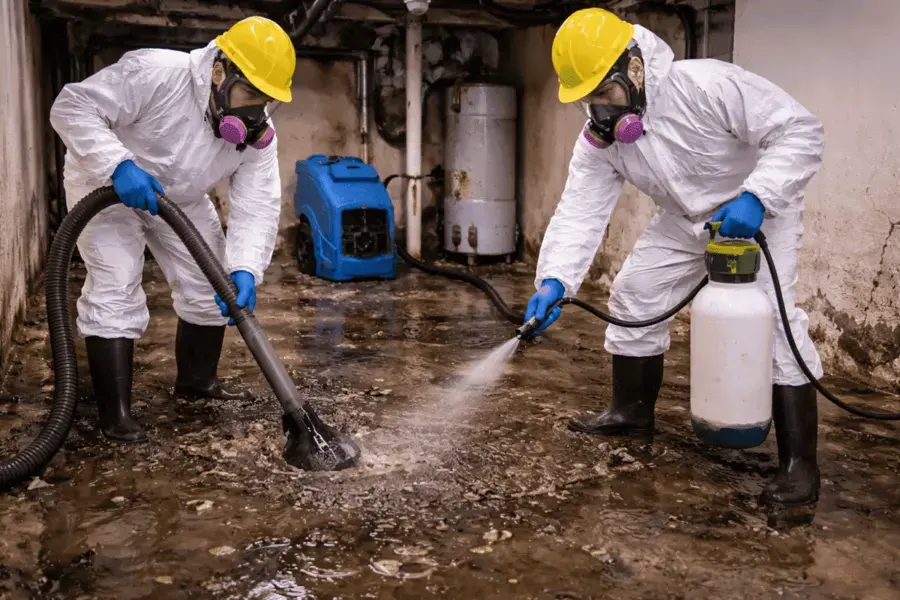
Omaha's combined sewer system can back up in heavy rain, and sewage is Category 3 from the first minute. The crew contains it, removes it and disinfects before drying.
(888) 599-2961Sewage coming up a drain? Call about cleanup- 24/7 dispatch
- Category 3 protocol
- Disinfection before drying
Water typeCategory 3, black water
Where it entersFloor drain, toilet, tub
Local driverCombined sewer, heavy rain
AvailabilityAround the clock
Omaha's combined sewer system covers 43 square miles, and City of Omaha planning documents state that heavy rains can cause street flooding and sewer backups and odors in homes and businesses. A 2025 backup flooded a finished basement in northwest Omaha, according to WOWT.
How sewage backup cleanup is handled in Omaha
- 1
Protect and contain
Crews suit up, seal the area with plastic and start HEPA air filtration.
- 2
Extract and remove
The liquid is pumped out, and carpet, pad and soaked drywall are bagged for disposal.
- 3
Clean and disinfect
Surfaces are washed and treated with an EPA-registered antimicrobial.
- 4
Dry and verify
Air movers and LGR units run with daily readings until walls match a dry reference.
What does sewage backup cleanup cost in Omaha, NE?
In Omaha, NE, sewage backup cleanup commonly runs $2,000 to $12,000 or more. How much floor the sewage covered, how much material has to come out and how long it sat move the total.
Small, bare floor
$2,000 to $4,000
- Liquid extracted
- Hard floor disinfected
- Containment set
Finished lower level
$4,000 to $8,000
- Carpet and pad removed
- Low drywall cut
- HEPA air scrubbing
Large or long-standing
$8,000 to $12,000+
- Several rooms opened
- Antimicrobial applied
- Extended structural drying
For a closer planning number, try the water damage cost calculator. A firm figure comes after the walkthrough and moisture map.
Why sewage is handled differently
Sewage carries bacteria and viruses, so it is Category 3 from the first minute and no amount of drying alone makes it safe. Porous materials it touched, such as carpet, pad, drywall and insulation, are removed and bagged. Hard surfaces are cleaned and disinfected before any equipment goes down. Odor is a clue as well: a sewage smell that lingers after cleanup usually means something porous was missed.
The cleanup sequence
- Contain the area with plastic, and run HEPA air scrubbers
- Extract the liquid and remove soaked porous materials
- Clean, then apply an EPA-registered antimicrobial
- Dry the structure with air movers and LGR dehumidifiers
- Verify with moisture readings before anything is rebuilt
- Document each step with dated photos for the insurer
Who owns the pipe?
M.U.D. describes a sewer lateral as the privately owned pipe that joins a home or business to the city's mainline sanitary sewer under the street. A plumber inspects and repairs that pipe. The restoration team cleans and dries the building, and records what came in and where it went.
The overflow program
The City of Omaha's overflow program has nearly 60 projects and addresses 29 overflow points, 18 to the Missouri River and 11 to Papillion Creek tributaries. It aims to capture or treat 85% of average annual combined sewage volume and will not be complete until 2037. Until then, rain-driven backups remain a risk. Water that arrives from outdoors is storm flood cleanup, and a flooded lower level is basement flooding cleanup. The whole list sits on the Omaha water damage restoration page.
Coverage
Sewage Backup Cleanup across Omaha, NE
The restoration team works the whole city: Downtown Omaha and the Old Market, Midtown, Dundee, Florence and East Omaha, along with corridors such as Abbott Drive and Interstate 29.
See every area servedQuestions
Sewage Backup Cleanup questions in Omaha
Why does a combined sewer matter for my home?
A combined sewer carries household waste and storm water in the same pipes. In heavy rain, the system can fill and push water back through floor drains, which is why City of Omaha documents link rain to sewer backups.
Who is responsible for the pipe from the house?
M.U.D. describes the sewer lateral as privately owned, so the property owner handles the pipe between the house and the main under the street. The restoration team cleans and dries the inside of the building.
Can I clean sewage myself?
It is not recommended. Sewage carries bacteria, and household cleaners do not treat soaked porous materials. Protective gear, containment and an EPA-registered antimicrobial are part of a proper cleanup, along with disposal of what cannot be saved.
Does insurance cover a sewer backup?
Often only with an added endorsement for sewer or drain backup. Coverage depends on your policy, so photograph every wet area before anything is removed and ask your insurer what it covers before the work begins.
What has to be thrown away?
Carpet, pad, insulation and drywall that touched sewage generally come out, as do soaked cardboard and upholstered items. Hard surfaces such as concrete and sealed tile can usually be cleaned, disinfected and dried in place.
Is the city fixing the overflow problem?
The City of Omaha overflow program targets 29 overflow points across nearly 60 projects and will not be complete until 2037. It aims to cut overflows, but a backup into a home can still occur in heavy rain.
24/7 emergency dispatch
Sewage backup in your Omaha home? Get it contained.
Black water keeps moving into porous materials and the air. The crew contains it, removes what cannot be saved, disinfects the space and dries it to standard, with the claim documented.