Tank rupture and drip cleanup
Water Heater Leak Cleanup in Papillion, NE
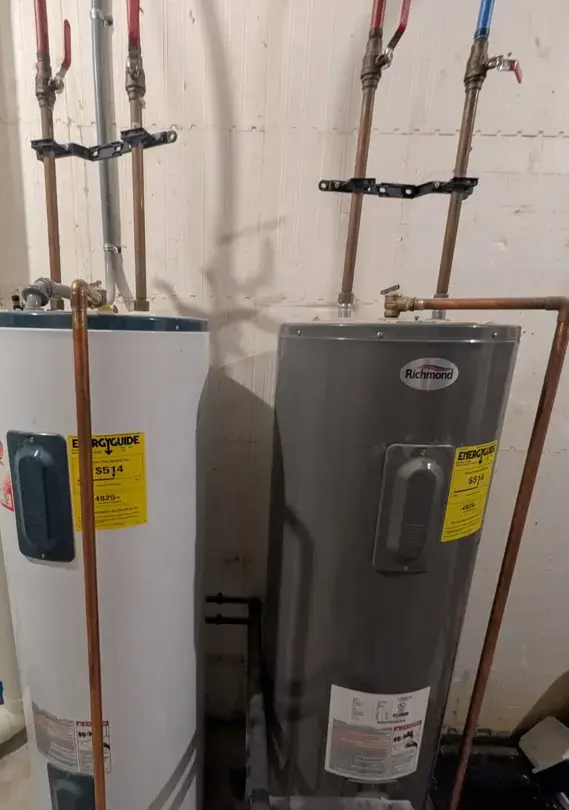
Because the tank refills while it leaks, a failing heater can dump far more than it holds. Extraction clears the utility room first, then the drying team follows the water into everything nearby, from the furnace base to finished walls.
(888) 599-2961Tank leaking? Ask Papillion dispatch- 24/7 dispatch
- Utility room extraction
- Hidden-water checks
Usual spotUtility room
Tank lifespan8 to 12 years
Water typeClean at first
AvailabilityAround the clock
Unlike most leaks, a failing water heater feeds itself: cold water keeps flowing in to refill the tank as the hot water escapes, so the unit can release more than it holds. Papillion's water meters sit in the basement, and the heater usually shares that mechanical space with the furnace, which means a leak starts beside the equipment that can least tolerate it. A pinhole in a rusted tank can soak a finished wall for weeks, while a ruptured tank can flood a level in a short span. Sediment buildup speeds corrosion on the tank floor.
How water heater leak cleanup is handled in Papillion
- 1
Make it safe
Supply, fuel and power to the heater are confirmed off before work starts.
- 2
Clear the level
Extraction takes water out of the utility room and every space it reached.
- 3
Probe hidden spots
Meters check beneath the furnace, under flooring and at the foot of nearby walls.
- 4
Dry and log
Equipment runs with readings logged daily, and it stays until the goal is reached.
What does water heater leak cleanup cost in Papillion, NE?
In Papillion, NE, water heater leak cleanup commonly runs $800 to $5,000. A leak confined to the mechanical room is cheapest, and one that reached finished rooms or ran for weeks costs the most.
Mechanical room only
$800 to $1,800
- Water extracted
- Slab and block dried
- Readings logged
Reached finished rooms
$1,800 to $3,500
- Pad and carpet handled
- Lowest drywall cut
- Wall bays dried
Weeks of dripping
$3,500 to $5,000+
- Broader tear-out
- Antimicrobial wash
- Longer drying runs
For a closer planning number, try the water damage cost calculator. A firm figure comes after the walkthrough and moisture map.
Shutting it down safely
- Shut the cold inlet valve above the tank, or the main by the meter
- Gas unit: shut the gas supply to the heater
- Electric unit: cut power at the panel, but only if the floor around it is dry
- Keep away from scalding water around a ruptured tank
Where the water goes
Heater water begins clean, then carries rust and sediment as it spreads. It creeps beneath the furnace, into adjoining carpet, under laminate and up into the bottom of finished walls. Extraction crews work every one of those spots while meters probe cavities and floor coverings. In finished rooms, pad and low drywall often go, but slab and block dry where they stand.
Inspect the furnace too
A furnace or gas appliance that stood in water needs an inspection before it runs again.
Preventing the next failure
Draining a few gallons yearly clears sediment, exercising the relief valve tests it, and a pan with a leak alarm under the tank gives early notice. Tanks past ten years in service deserve replacement before they fail. When the water has spread, see basement flooding cleanup, and for drying details see structural drying.
Coverage
Water Heater Leak Cleanup across Papillion, NE
The restoration team covers all of Papillion, from Downtown Papillion and Eagle Hills to Savanna Shores, Settlers Creek, Shadow Lake and Southern Pointe, plus the Walnut Creek area and the Highway 370 corridor.
See every area servedQuestions
Water Heater Leak Cleanup questions in Papillion
What is the first step when a heater starts leaking?
Shut the cold inlet valve above the tank, or close the main by the meter. Then cut the fuel: gas supply off, or the electric breaker flipped from a dry panel. Draining the tank through its valve comes afterward.
How much water can a failing tank put out?
Well beyond its capacity, because the supply keeps refilling it until someone closes the valve. A rupture can cover an entire basement floor.
Is heater water damage an insurance matter?
Damage from a sudden rupture is commonly covered, while the heater itself and slow leaks over time usually are not. Look at your own policy before work begins.
Can finished carpet be saved after a tank failure?
Frequently, if the water was clean and the carpet is dried quickly, though the pad is usually replaced. Rusty, sediment-laden water can stain, and the walkthrough will point that out.
Can hot water be used while the tank is out of service?
Not from a failed tank. A plumber repairs or replaces it, while the restoration team handles the wet structure around it.
How many days does the drying take?
A leak confined to the utility room commonly finishes within three to five days. One that reached finished rooms, or dripped for weeks, takes longer.
24/7 emergency dispatch
Water heater failed in Papillion? Get the space dried.
A failing tank can soak the utility room and the walls beside it before anyone notices. The restoration team pulls the water, probes the hidden spots and dries to a verified reading.