Measured against IICRC S500
Structural Drying in Ralston, NE
Ralston buildings range from pre-1940 houses to midcentury ranches, and each dries on its own terms. The drying team sets equipment to the actual loss and keeps it running until readings match a dry reference.
(888) 599-2961Wet structure? Ask for a drying plan- Moisture mapped first
- Air movers and LGR units
- Proof in daily readings
StandardIICRC S500
EquipmentAir movers, LGR dehumidifiers
Proof of dryReadings every visit
AvailabilityAround the clock
Surface dryness proves little. A floor can feel fine while the subfloor under it stays wet, and a wall can look clean with damp insulation inside. Ralston has about 180 homes built in 1939 or earlier, the median home dates to 1972, and 702 housing units went up in the 1960s alone, so a drying plan has to work for old framing and for midcentury ranch construction alike.
How structural drying is handled in Ralston
- 1
Classify the loss
The team sorts the water category and class, then marks the wet edge.
- 2
Set the zone
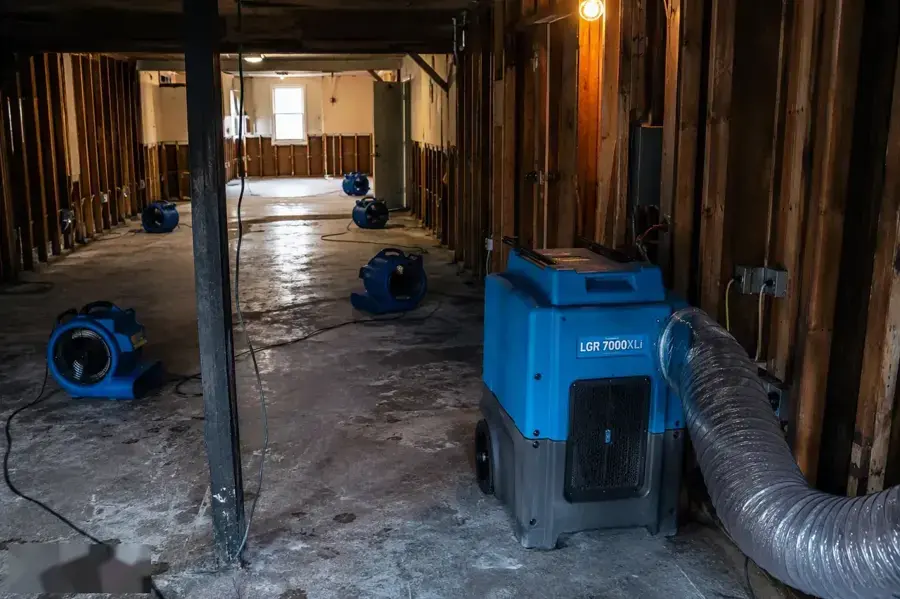
Wet areas are sealed off and air movers are placed to cover every wet surface.
- 3
Dehumidify
LGR units pull the moisture from the air while the air movers lift it from materials.
- 4
Log to the goal
Readings are taken until wet areas match a dry reference.
What does structural drying cost in Ralston, NE?
In Ralston, NE, structural drying on its own typically runs $1,000 to $6,000. The class of loss, the number of rooms in the drying zone, the equipment required and the days of drying needed decide the figure, with dense materials such as hardwood and masonry sitting at the top.
Small zone
$1,000 to $2,500
- Wet edge mapped
- Fans and one LGR unit
- Readings each visit
Lower level or several rooms
$2,500 to $4,500
- Zone contained
- Several LGR units
- Wall cavities dried
Dense materials
$4,500 to $6,000+
- Hardwood or masonry
- Desiccant units
- Long monitoring
For a closer planning number, try the water damage cost calculator. A firm figure comes after the walkthrough and moisture map.
How the drying plan is built
The crew starts by classifying the loss: which water category, how much material is wet and how absorbent that material is. Those answers set the number of air movers, the size of the dehumidifiers and whether any wall or ceiling has to be opened.
- Meters and a thermal camera trace the wet edge
- Air movers are placed to sweep every wet surface
- LGR dehumidifiers pull the moisture out of the air
- Doors, vents and the thermostat are set to keep the zone closed
- A dry sample elsewhere in the building sets the target
Readings, not guesses
The drying team returns on a schedule, records temperature, humidity and moisture content, and adjusts the equipment as the numbers move. Equipment leaves when wet materials sit close to the dry reference, not when the room feels dry. Those logs also become the record an adjuster can follow, and they protect the owner if questions come up later.
Why drying takes the time it does
Water leaves dense materials slowly. Plaster, hardwood, concrete and masonry give up moisture far more slowly than carpet or thin drywall, so no single schedule fits every building.
Where structural drying fits
Drying follows extraction in almost every loss, from emergency water extraction to a flooded lower level. Slow dampness at the wall is covered under foundation seepage cleanup. Use the drying time estimator for a rough sense of the timeline before the walkthrough.
Coverage
Structural Drying across Ralston, NE
The restoration team serves all of Ralston, from Downtown Ralston, Seymour Park and the Hinge redevelopment area to the ranch streets of Bay Meadows and Mockingbird Hills, plus the storefronts along Main Street and Burlington Street.
See every area servedQuestions
Structural Drying questions in Ralston
What does structural drying actually involve?
It is planned moisture removal from framing, floors, walls and ceilings after water has soaked in, using air movers, dehumidifiers and readings. The goal is a building that is dry inside, not only on the surface.
Where does IICRC S500 come in?
S500 is the trade standard for water damage work. It sets out how water categories and classes are treated, how drying is planned and how the finish is confirmed by readings.
Would box fans and open windows be enough?
Fans move air without removing moisture from the building, and humid outdoor air can put water back. LGR dehumidifiers and air movers working in a closed zone dry faster and more thoroughly.
How is dryness proven?
Readings in wet areas are compared with a dry reference in the same building and written down on each visit. Equipment goes when the two sit close together.
Is the equipment noisy, and can I stay?
The units hum steadily and add heat. Most people can stay in unaffected rooms, though a sewage loss or a gutted area may call for a different arrangement.
Does drying raise the power bill?
Equipment draws electricity, and that cost is usually part of a covered claim when the loss itself is covered. Ask your insurer, and the crew can list the equipment in the log.
24/7 emergency dispatch
Wet structure in Ralston? Get a drying plan
Moisture hidden in framing and subfloor keeps causing damage after the surface looks fine. The drying team maps it, dries it and shows the readings that prove the job is done.